NATIONAL
Amit Shah Outlines Government’s Strategy on Illegal Migration: “Identify, Remove and Deport”
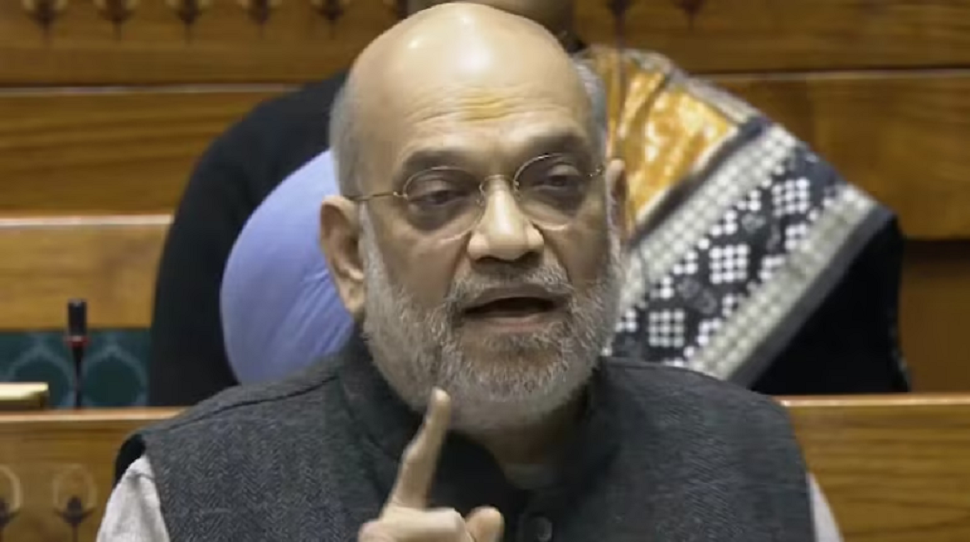
Union Home Minister Amit Shah delivered a forceful address in Parliament on Wednesday, presenting the government’s clear position on illegal migration, voter-list reforms and the ongoing debate surrounding the Special Intensive Revision (SIR) process. His remarks sparked sharp reactions from the opposition, leading to a walkout by members of the INDIA bloc as the session drew to a close.
Shah Accuses Opposition of Vote-Bank Politics
During the discussion on electoral reforms, Amit Shah alleged that certain opposition parties were opposing SIR because they feared the removal of non-citizens from electoral rolls. He argued that these parties have relied on illegal immigrants as part of their voter base.
According to Shah, “Some parties do not receive votes from Indian citizens. They depend on foreigners added to the voter list. Once these names are removed, they will not get those votes. I feel sympathy for them.”
He insisted that the government’s stance on illegal migration is unambiguous: “Identify them, remove them, and deport them.”
Government Defends SIR Exercise
Shah emphasised that the Election Commission’s Special Intensive Revision aims to clean the voter list and ensure that only eligible Indian citizens remain registered. He said the opposition’s resistance shows fear that “wrongly added names” may be removed during the verification exercise.
The Home Minister said there should not be a single foreign national on India’s voter list and assured the House that the government will not allow even one illegal immigrant to remain.
Sharp Exchange Leads to Opposition Walkout
Shah’s comments triggered strong objections from opposition MPs. The INDIA bloc walked out, accusing the government of using divisive rhetoric. Shah, however, maintained that the removal of ineligible voters is essential for free and fair elections.
Population Growth in Border States a ‘Sign of Infiltration’
Citing 2011 Census data, Shah highlighted what he called “abnormal decadal population growth” in certain border districts of Assam and West Bengal. He argued that such increases are not possible without cross-border infiltration and called it a matter of national concern.
He contrasted these trends with other regions such as Gujarat and Rajasthan, where such demographic spikes are not observed.
Difference Between Refugees and Illegal Migrants
Amit Shah clarified that the government distinguishes between persecuted refugees and those who enter the country illegally for economic gain or to create unrest. He said the Citizenship Amendment Act (CAA) was designed to support people who fled religious persecution, whereas illegal migrants will face strict action.
“India is not a dharamshala where anyone can walk in and settle,” Shah said, adding that the government will not hesitate to take action against individuals who pose a threat to national security.
Allegations Against State Government
Shah also criticised the state government in West Bengal, alleging that it has delayed land acquisition for border fencing and has assisted illegal residents in obtaining identity documents. According to him, such political encouragement has allowed infiltration to continue in certain pockets.
He warned that efforts to legitimise illegal migrants by providing Aadhaar cards and other documents undermine national security and weaken border management.
A Larger Debate on Electoral Reforms
The heated debate reflects a broader national discussion on voter-list verification, border management, demographic changes in frontier regions, and the balance between humanitarian responsibilities and internal security.
As the government moves ahead with the SIR process, the political confrontation over illegal migration is expected to intensify, with both sides positioning themselves strongly on the issue.