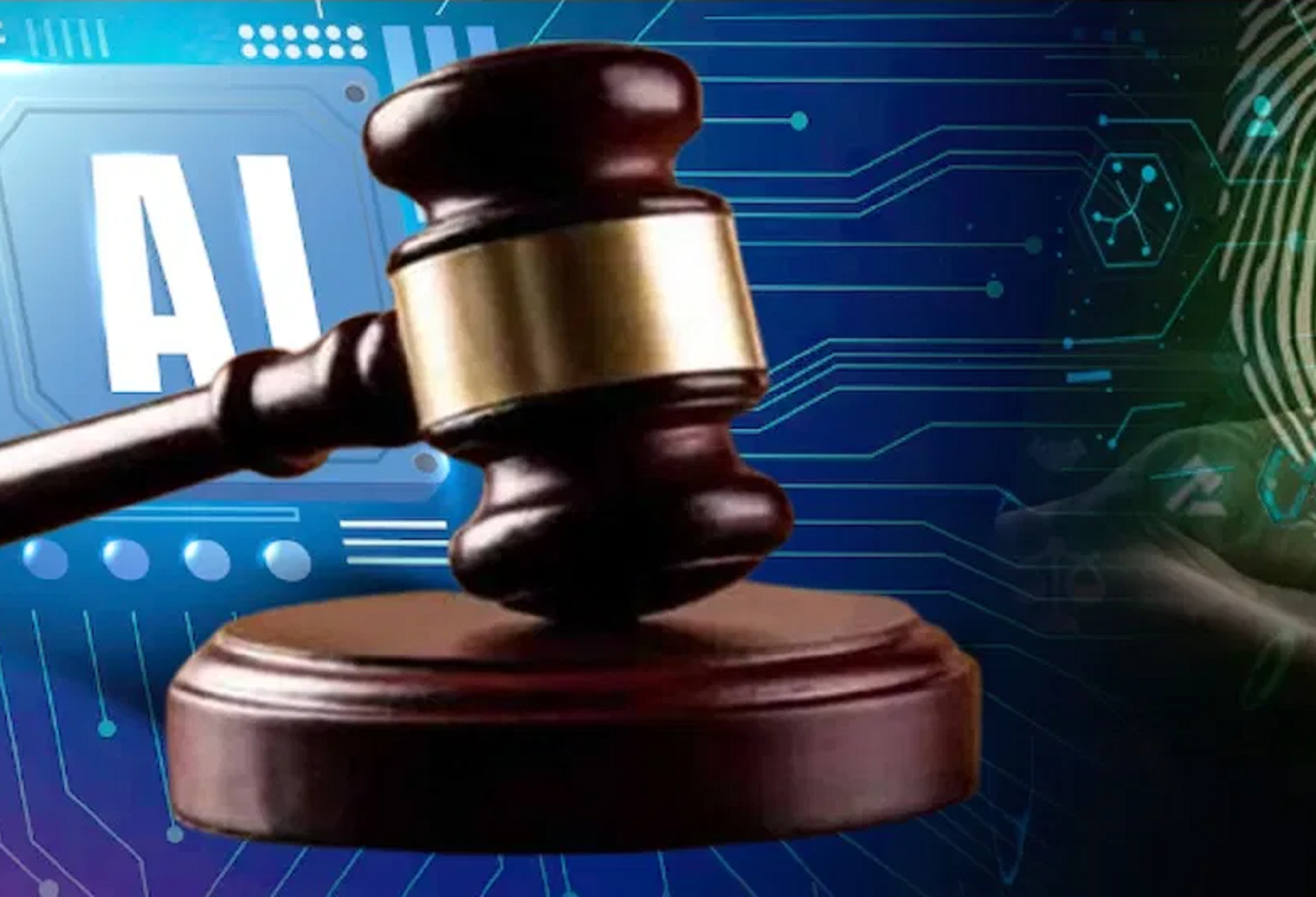
Artificial Intelligence (AI) is transforming many sectors worldwide, and the judiciary is no exception. While AI is helping streamline legal processes and speed up case disposal, concerns over its misuse are growing. A recent incident before the Supreme Court of India highlighted how AI-generated content can potentially mislead courts, prompting global bodies like UNESCO to issue guidelines to prevent such misuse.
India witnessed its first case of AI-related fraud in judicial proceedings when the Supreme Court detected fabricated case laws submitted in a legal response. According to the court, a party had used AI tools to generate hundreds of non-existent precedents, some with real case titles but entirely false legal principles. The discovery triggered alarm within the legal community regarding the risks associated with unverified AI tools.
Attempt to influence the Supreme Court
The matter came up during a major dispute involving Omkara Asset Reconstruction Private Limited and Gstaad Hotels Private Limited, promoted by Deepak Raheja. Senior advocate Neeraj Kishan Kaul informed the bench, led by Justices Dipankar Datta and A.G. Masih, that the opposing side had filed responses filled with fabricated judicial references created using AI.
When confronted, senior advocate C.A. Sundaram, representing the opposing party, expressed deep regret and stated that it was one of the most distressing moments of his career. The Advocate-on-Record submitted an unconditional apology and withdrew the misleading documents.
The incident raised concerns about the potential consequences if overburdened courts unknowingly rely on AI-generated misinformation. With Supreme Court benches hearing 70–80 cases a day, the risk of false entries going unnoticed is significant.
A massive backlog: Over 5.3 crore pending cases
India’s judiciary is currently burdened with more than 53 million pending cases, including thousands that have been stalled for over 30 years. AI has been viewed as a promising tool to expedite legal processes and reduce this backlog. Globally, countries like Argentina and Egypt are already using AI to improve efficiency. Argentina’s AI assistant, Prometea, increased productivity by nearly 300 percent, helping handle around 490 cases a month compared to 130 earlier.
UNESCO issues global guidelines
Recognizing both the promise and risks of AI, UNESCO released guidelines for courts and tribunals worldwide. Developed with legal institutions across multiple countries, the guidelines outline 15 principles for the ethical, transparent, and rights-respecting use of AI. These include human rights protection, non-discrimination, transparency, privacy safeguards, auditability, and mandatory human oversight over digital decision-making.
UNESCO also reported that while 44% of judicial officers have already used AI tools, only 9% have received formal training, highlighting the urgent need for capacity-building and regulation.
AI in Indian courts: Transforming processes
Indian courts face chronic challenges—case pile-ups, linguistic diversity, and slow digitization. AI is now being deployed to assist with machine learning, legal translation, predictive analytics, OCR-based document scanning, and automated research.
Initiatives like the e-Courts Project Phase 3, AI-driven legal chatbots, and predictive policing technologies are accelerating modernization. However, issues related to data privacy, ethical governance, and regulatory gaps remain significant obstacles.
Government investment: ₹7,000 crore push for e-Courts
The Government of India has allocated ₹7,210 crore for the e-Courts Project Phase 3 and over ₹535 million for integrating AI and blockchain into High Court systems. These investments aim to improve case tracking, documentation, digital access, and smart policing.
While AI tools are enhancing legal research, case management, and crime prevention, they also introduce new vulnerabilities. Ensuring strict safeguards against misuse—like the Supreme Court incident—will be crucial as India moves toward an AI-enabled judicial future.