BUSINESS
CKYC 2.0 to Roll Out from August: Here's How Opening Bank Accounts and Making Investments Will Become Easier
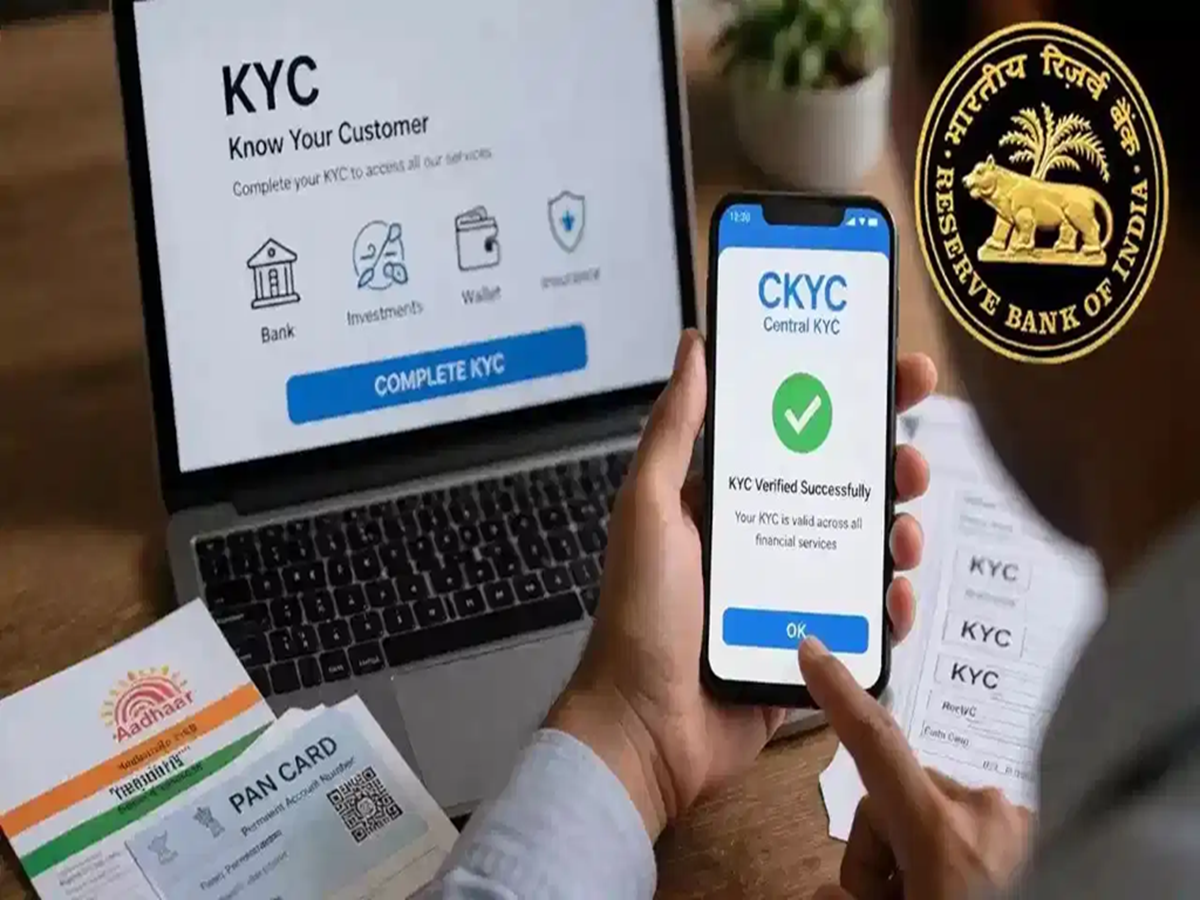
Accessing financial services in India is set to become faster and more convenient with the rollout of Central Know Your Customer (CKYC) 2.0. The upgraded system is expected to begin implementation from August, initially covering banks and insurance companies, while mutual funds and brokerage firms are likely to join later this year.
The new framework aims to eliminate the need for customers to repeatedly submit KYC documents when opening accounts or purchasing financial products.
What Is CKYC 2.0?
CKYC 2.0 is an upgraded version of India's Central Know Your Customer system, designed to create a single, verified digital KYC record that can be accessed by multiple financial institutions with the customer's permission.
Instead of completing KYC separately for every bank, insurer, mutual fund, or brokerage, customers will only need to complete the process once. Once verified, the information can be securely shared with authorised institutions after obtaining customer consent.
Rollout Begins with Banks and Insurance Companies
The first phase of CKYC 2.0 will cover:
-
Banks
-
Insurance companies
In subsequent phases, the system is expected to be extended to:
-
Mutual fund companies
-
Stock brokers
-
Other regulated financial institutions
The initiative is being implemented jointly by the Reserve Bank of India (RBI), the Securities and Exchange Board of India (SEBI), and the Insurance Regulatory and Development Authority of India (IRDAI).
No More Repeated KYC Submissions
At present, customers often have to submit identity and address proof multiple times while opening bank accounts, investing in mutual funds, buying insurance, or accessing other financial services.
CKYC 2.0 is designed to simplify this process. After completing KYC once, customers can allow financial institutions to access their verified records through a secure consent-based system.
Access to the information will require customer approval through an OTP-based authentication process, giving individuals greater control over their personal data.
Confidence Score to Improve Data Quality
A key feature of CKYC 2.0 is the introduction of a confidence score for every customer record.
This score will indicate how reliable and thoroughly verified the stored information is. Financial institutions will be able to assess the quality of KYC records before relying on them, helping address concerns related to duplicate entries, incomplete information, and outdated records.
Benefits for Customers
The upgraded system is expected to offer several advantages, including:
-
Faster account opening.
-
Quicker investment onboarding.
-
Reduced paperwork.
-
One-time KYC for multiple financial products.
-
Secure access through customer consent.
-
Improved user experience across financial services.
Stronger Protection Against Fraud
Experts believe CKYC 2.0 will also strengthen fraud prevention.
A central database containing verified customer information can help reduce the use of fake documents, duplicate identities, and fraudulent KYC records. Since institutions will access authenticated information directly from the central registry, verification processes are expected to become more reliable.
Boost for Investments and Financial Inclusion
The simplified onboarding process could encourage more people to invest in financial products such as mutual funds, insurance policies, and pension schemes.
Although a large majority of Indian adults now have bank accounts, participation in investment products remains relatively low. By making onboarding easier and reducing documentation hurdles, CKYC 2.0 could help bring more first-time investors into the formal financial system.
Final Take
The introduction of CKYC 2.0 marks an important step towards simplifying financial services in India. By enabling one-time KYC verification, secure data sharing through customer consent, and improved record quality, the new system aims to make banking, investing, and insurance purchases faster and more seamless. As the rollout expands beyond banks and insurers, customers can expect a more integrated and efficient financial ecosystem in the months ahead.