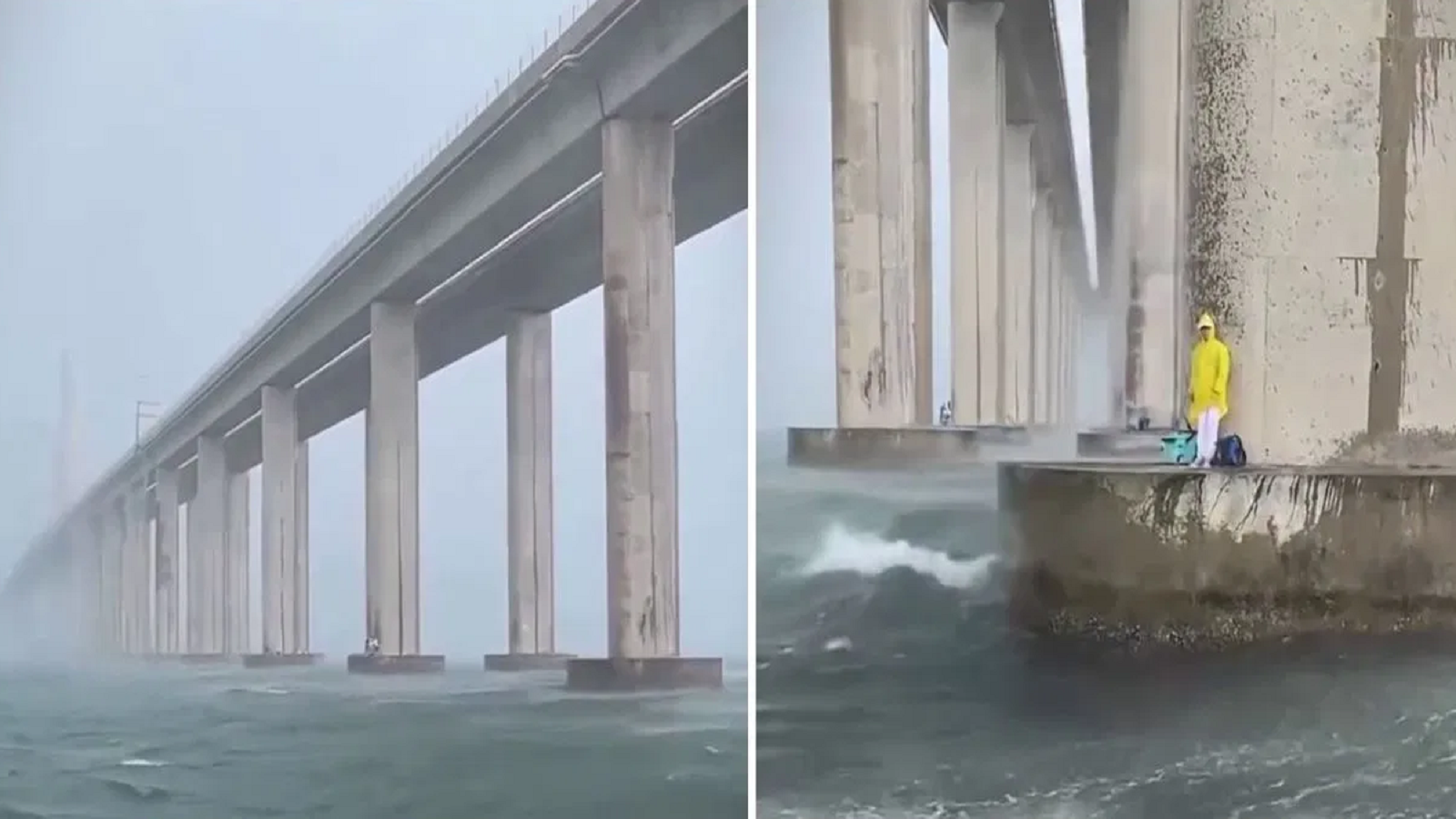
A viral video is showcasing one of the most challenging feats in civil engineering: laying the foundation of a bridge in a deep, flowing river. While constructing pillars on land is relatively straightforward, doing the same in a river’s current and depth is extremely risky, requiring precision and expertise.
Cofferdam Technique: The Secret Behind Underwater Bridge Foundations
The key to this engineering marvel is the cofferdam technique. A cofferdam is a temporary, waterproof structure that creates a dry working area in the middle of a river.
Step 1: Surveying the Site
Engineers first measure the depth of the river, soil strength, and current speed to design the bridge foundation accurately.
Step 2: Constructing the Cofferdam
Steel sheets, each 10–20 meters long, are driven into the riverbed using hydraulic hammers and interlocked to form a circular or square wall. Large pumps then remove water from inside, creating a dry area for workers.
Step 3: Laying the Foundation
Once dry, workers clear sand, mud, and stones. In areas with weak soil, pile foundations—long iron pipes 20–25 meters deep—are installed, and a concrete structure is built on top.
Safety Measures
Due to the risk involved, sensors constantly monitor water levels, and all workers wear life jackets and helmets. Even small mistakes or natural events like earthquakes could compromise the structure.
When Rivers Are Deeper: Caisson Technique
For deeper rivers, engineers use the caisson technique, deploying large watertight boxes that are lowered to the riverbed to create the foundation.
This engineering spectacle has captured the fascination of social media users worldwide. Watch the video of this incredible bridge foundation work, which highlights the skill, precision, and courage of the engineers involved.