BUSINESS
ITR Filing 2026: You Can File Your Income Tax Return Without a CA—But Keep These Things in Mind
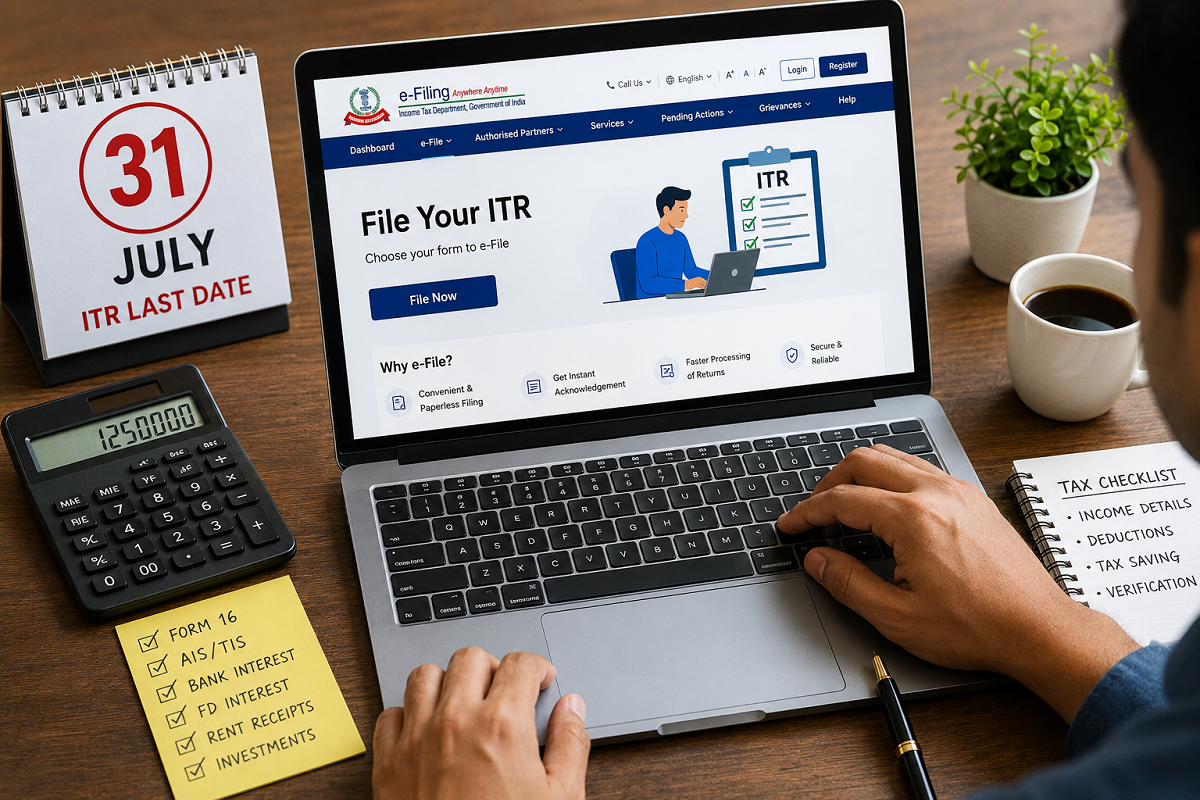
With the ITR filing deadline approaching, taxpayers with straightforward income can usually file returns themselves by carefully verifying income details and supporting documents
ITR Filing 2026: As the income tax return (ITR) filing deadline draws closer, many taxpayers are rushing to complete their returns. While some people prefer to hire a Chartered Accountant (CA), many salaried individuals and taxpayers with simple financial profiles can file their returns on their own using the Income Tax Department's e-filing portal.
However, filing your own return requires careful verification of income details, deductions, and supporting documents to avoid notices or errors later.
Can You File an ITR Without a Chartered Accountant?
Yes. If your income sources are straightforward—such as salary, pension, bank interest, or income from a single house property—you can generally file your ITR yourself using the official Income Tax e-filing portal.
Before submitting the return, make sure all information matches your financial records.
Don't Rely Only on AIS
The Annual Information Statement (AIS) is a useful reference, but taxpayers should not treat it as the only source of information.
Always compare AIS details with your own records, including:
-
Form 16.
-
Salary slips.
-
Bank statements.
-
Interest certificates.
-
Investment documents.
-
Capital gains statements, if applicable.
If any discrepancy is found, verify the information before filing your return.
Report Every Source of Income
One of the most common mistakes taxpayers make is leaving out income that does not appear in AIS.
Make sure you disclose all taxable income, including:
-
Savings bank interest.
-
Fixed Deposit (FD) interest.
-
Recurring Deposit (RD) interest.
-
Rental income, if applicable.
-
Capital gains.
-
Freelance or professional income.
-
Any other taxable income received during the financial year.
Even if a particular income item is missing from AIS, taxpayers remain responsible for reporting it accurately.
Keep Proof of Every Deduction and Claim
If you are claiming deductions or exemptions, preserve supporting documents for future reference.
These may include:
-
Investment proofs under eligible tax provisions.
-
Health insurance premium receipts.
-
Home loan interest certificates.
-
Education loan interest certificates.
-
Donation receipts.
-
Rent receipts, where applicable.
Although these documents may not always need to be uploaded while filing, they should be retained in case the Income Tax Department requests verification.
Check Form 16 and TDS Details
Before filing your return, verify that:
-
Salary details match Form 16.
-
Tax Deducted at Source (TDS) entries are correctly reflected.
-
Advance tax or self-assessment tax payments are properly recorded.
Any mismatch should be resolved before submitting the return.
Cross-Verify Bank Interest
Interest earned from savings accounts and fixed deposits is taxable in many cases and should be reported correctly.
Review:
-
Bank interest certificates.
-
Annual account statements.
-
FD maturity details.
Do not assume that missing information in AIS means the income is exempt from reporting.
DTAA May Be Relevant for Certain Taxpayers
Indian citizens or residents earning income from foreign sources—or those covered under international tax arrangements—may need to evaluate the applicability of the Double Taxation Avoidance Agreement (DTAA).
If you have overseas income, foreign assets, or complex tax matters, consulting a qualified tax professional may be advisable to ensure compliance.
Who Should Consider Professional Help?
While many taxpayers can file returns independently, professional assistance may be useful if you have:
-
Business or professional income.
-
Multiple house properties.
-
Foreign income or overseas assets.
-
Complex capital gains transactions.
-
Tax notices or reassessment proceedings.
-
Uncertainty regarding deductions or tax treatment.
Final Checklist Before Filing
Before clicking the submit button, ensure you have:
-
Verified AIS with your personal financial records.
-
Reported every source of taxable income.
-
Checked Form 16 and TDS details.
-
Kept supporting documents for deductions.
-
Selected the correct ITR form.
-
Reviewed all information carefully.
-
Completed e-verification after filing.
Filing an accurate return not only helps avoid future notices but also ensures faster processing and refund, where applicable.
Disclaimer: This article is intended for general informational purposes only and should not be considered tax or legal advice. Tax rules may vary depending on individual circumstances. If your income involves business, foreign assets, complex investments, or other special situations, consult a qualified tax professional or refer to the latest Income Tax Department guidelines before filing your return.