BUSINESS
Lost Track of Your Old PF Account? EPFO's New Service History Feature Helps You Find It Easily
Employees who have switched jobs multiple times often lose track of their older Provident Fund (PF) accounts, especially if previous records were not correctly linked to their Universal Account Number (UAN). Such issues can create complications while applying for PF withdrawals, transferring balances, or claiming pension benefits in the future.
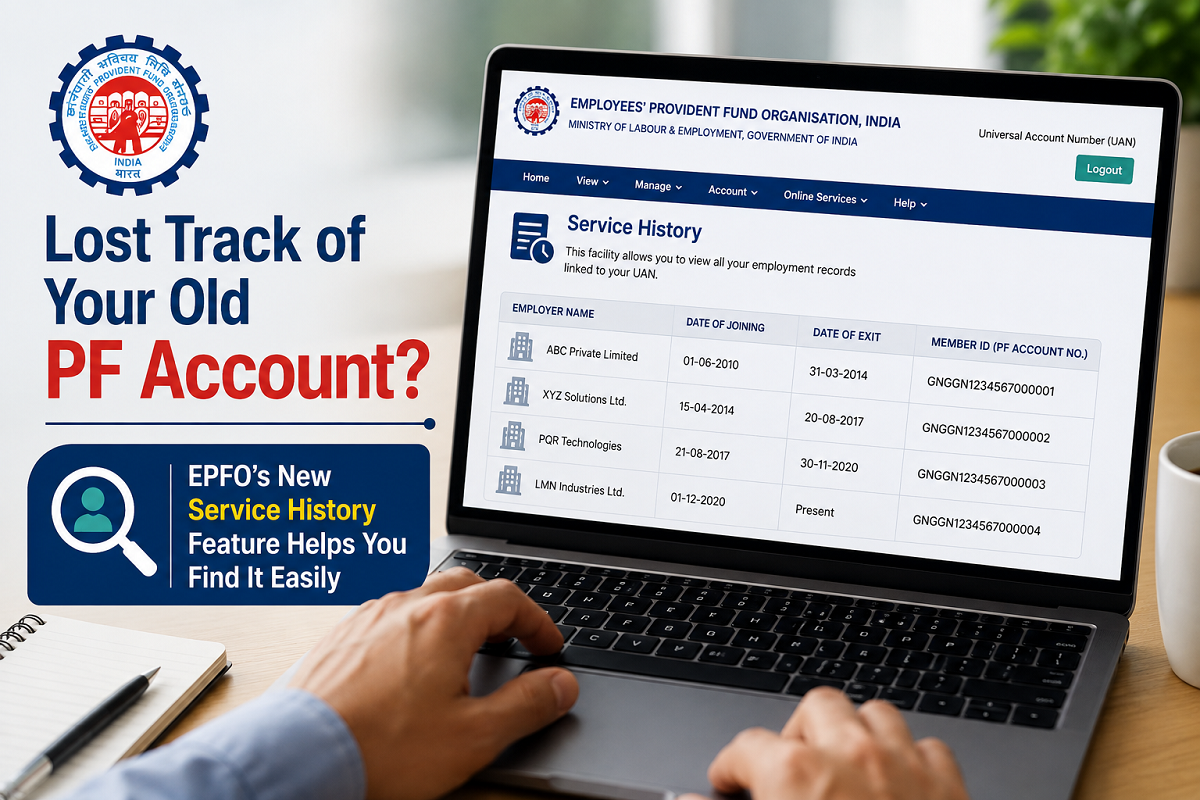
To simplify record management and help members identify missing employment details, the Employees' Provident Fund Organisation (EPFO) has introduced a new Service History feature on its Unified Member Portal. The tool enables users to view their complete employment and PF contribution history in one place, making it easier to detect discrepancies and take corrective action before they become a problem.
Why Your Old PF Records Matter
Every time an employee changes jobs, a new PF account may be created under the same UAN. If the previous employer's records are not properly linked or updated, members could face delays or complications when accessing EPF-related services later.
Incorrect or incomplete PF records can affect:
-
PF balance transfers between employers.
-
Online withdrawal applications.
-
Pension-related claims.
-
Verification of employment history.
-
Overall EPF account management.
Keeping all employment records linked to the UAN helps ensure a smooth experience when using EPFO's online services.
What Is the EPFO Service History Feature?
The newly launched Service History section on the Unified Member Portal provides members with a consolidated view of their employment history associated with their UAN.
Using this feature, employees can:
-
View details of previous and current employers.
-
Check PF account information linked to each job.
-
Verify employment dates and service records.
-
Identify missing or incorrect entries.
-
Review their PF contribution history from different employers.
Instead of searching through multiple records or relying on old documents, members can now access their employment details from a single dashboard.
How the Feature Helps Employees
The Service History tool is designed to help users identify record-related issues before they affect important EPFO services.
If an employee notices that a previous employer or PF account is missing, they can initiate the necessary correction process in time. This reduces the chances of delays when applying for PF withdrawal, transferring funds to a new employer, or processing pension claims.
The feature is particularly useful for professionals who have changed jobs several times during their careers.
How to Check Your Service History
Members can access the feature through the EPFO Unified Member Portal by logging in with their UAN credentials.
The general process includes:
-
Visit the EPFO Unified Member Portal.
-
Sign in using your UAN and password.
-
Navigate to the Service History section.
-
Review the list of employers linked to your UAN.
-
Verify that all employment records and PF accounts appear correctly.
If any information is missing or incorrect, members should contact the concerned employer or follow the EPFO correction process to update their records.
Why Employees Should Review Their Records
Many employees only discover errors in their PF records when they apply for a withdrawal or transfer after leaving a job. By checking the Service History section regularly, members can identify issues much earlier and avoid unnecessary delays.
Accurate employment records can make it easier to:
-
Transfer PF balances after changing jobs.
-
Submit online withdrawal requests.
-
Process pension-related benefits.
-
Maintain a complete employment history under one UAN.
Final Takeaway
EPFO's new Service History feature offers a simple way for members to locate old PF accounts and review their complete employment record from a single platform. If you have changed jobs in the past or are unsure whether all your PF accounts are correctly linked to your UAN, checking this section can help you identify missing records and resolve them before they impact future PF withdrawals, transfers, or pension claims.