LIFESTYLE
Snow has disappeared from the Himalayas! The mountains have turned black due to a lack of snow. Learn what experts are saying

The Gangotri, Yamunotri, and Badrinath Dham areas usually receive snow by this time, in December. But there is no snow, and the mountains appear dry and snow-free.
The month of December has almost passed, but the mountains of Uttarakhand still yearn for a blanket of snow. Peaks at altitudes of 2,500 to 3,500 meters have not yet received any snowfall, while higher elevations have only experienced light snowfall. This "snow famine" in the Himalayan regions is leading to serious climate changes. Images from the past month have further fueled concerns: high mountains appear snowless and dingy, while rivers, waterfalls, and ponds have frozen over due to the harsh cold.
Experts and scientists argue that this situation signals a major shift in the seasonal cycle. Neither rain nor snowfall is occurring on time, and even the timing of summer's arrival has become uncertain. Global warming and rising atmospheric temperatures are believed to be the primary reasons behind this. Rising temperatures are preventing snow from having enough time to freeze on glaciers, and even the snow that does fall to the ground is unable to persist due to the heat. This situation not only threatens the health of glaciers but also points to a future water crisis.
And there is no snow even on Dhauladhar in Himachal.
Dhauladhar hills in Himachal Pradesh await snowfall
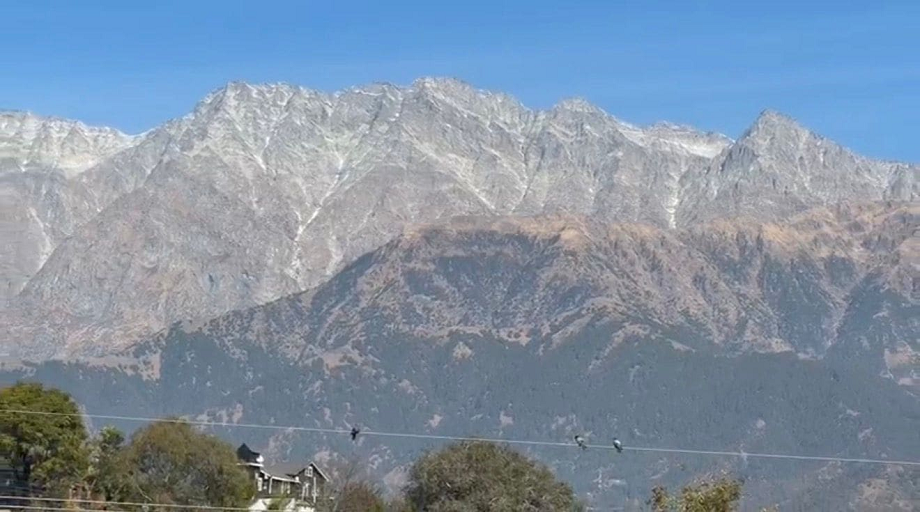
Christmas has passed, and the New Year is about to arrive. However, the Dhauladhar mountains of Kangra district are still waiting for snowfall. Usually, the Dhauladhar peaks are covered in a blanket of white snow during this time, but this time the mountains appear completely bare and black. The state's major tourist destinations—Shimla, Manali, McLeodganj, and Dalhousie—are also currently devoid of snowfall. Hopes of snowfall were raised in Manali before Christmas, but after a light shower, the weather cleared. Although it remained cloudy throughout the day, it seems we will have to wait a little longer to see the white blanket of snow.
The mountains look dry without snow...
This situation isn't just in the Kedarnath region, but also in the Gangotri, Yamunotri, and Badrinath regions. Snow used to fall here by this time, in December. But there's no snow, and the mountains appear barren, because the four Dhams, including Badrinath, Kedarnath, and Gangotri, are located above 3,000 meters. Snow is absent there. All areas above 3,000 meters in Uttarakhand used to receive snowfall twice in December. This is a vivid example of climate change and the shift in the seasonal cycle.
The month of December is about to end, and there are barely five days left for the New Year. Now, this year, November and December will pass without snow. People are hoping to see snow in the New Year. But the lack of snow and rain not only harms the environment, but also could harm not only humans, but also forest resources and wildlife in the coming days.
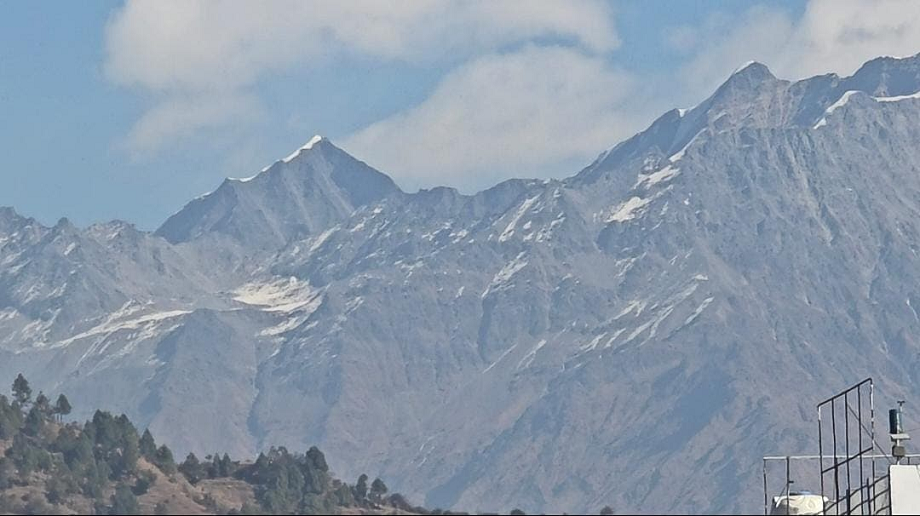
Why is there no snowfall in Uttarakhand and Himachal?
The lack of snowfall is impacting tourist destinations in Uttarakhand. People usually visit the region to witness snowfall. However, when snowfall doesn't occur on time, residents will be forced to move to other regions. Snowfall has occurred in Jammu and Kashmir, but Uttarakhand and Himachal Pradesh have seen neither snowfall nor rain. Scientists attribute this to the summer season's lengthening and the winter season's shrinking, preventing the snow that falls in December from accumulating. This is due to climate change and rising temperatures. Environmentalist and Professor SP Sati says that the seasonal cycle has been rapidly changing over time. Temperatures are rising, which is why snowfall is absent in Uttarakhand and Himachal Pradesh. SP Sati said that areas that previously experienced snowfall are now experiencing rain. SP Sati explained that this situation in Uttarakhand is due to western disturbances.
Rising temperatures on the glacier
Dr. Pankaj Chauhan, a scientist at the Wadia Institute of Himalayan Geology, also stated that temperatures are rising near glaciers. Snow is certainly falling, but the snow isn't getting enough time to freeze because of the increased atmospheric and earth temperatures. Dr. Pankaj Chauhan explained that during his research at the Pindari Glacier, the temperature underground was found to be 1 degree Celsius instead of minus 0. The shifting rate of snowfall has increased by 10 to 15 percent. Furthermore, climate change is having such an impact that rain that used to fall at 2,500 meters is now falling above 3,000 meters.
PC:NDTVINDIA