TECH
The Hidden Summer Bomb: Why Your Air Conditioner Can Explode Like an Explosive Device—And How to Prevent It
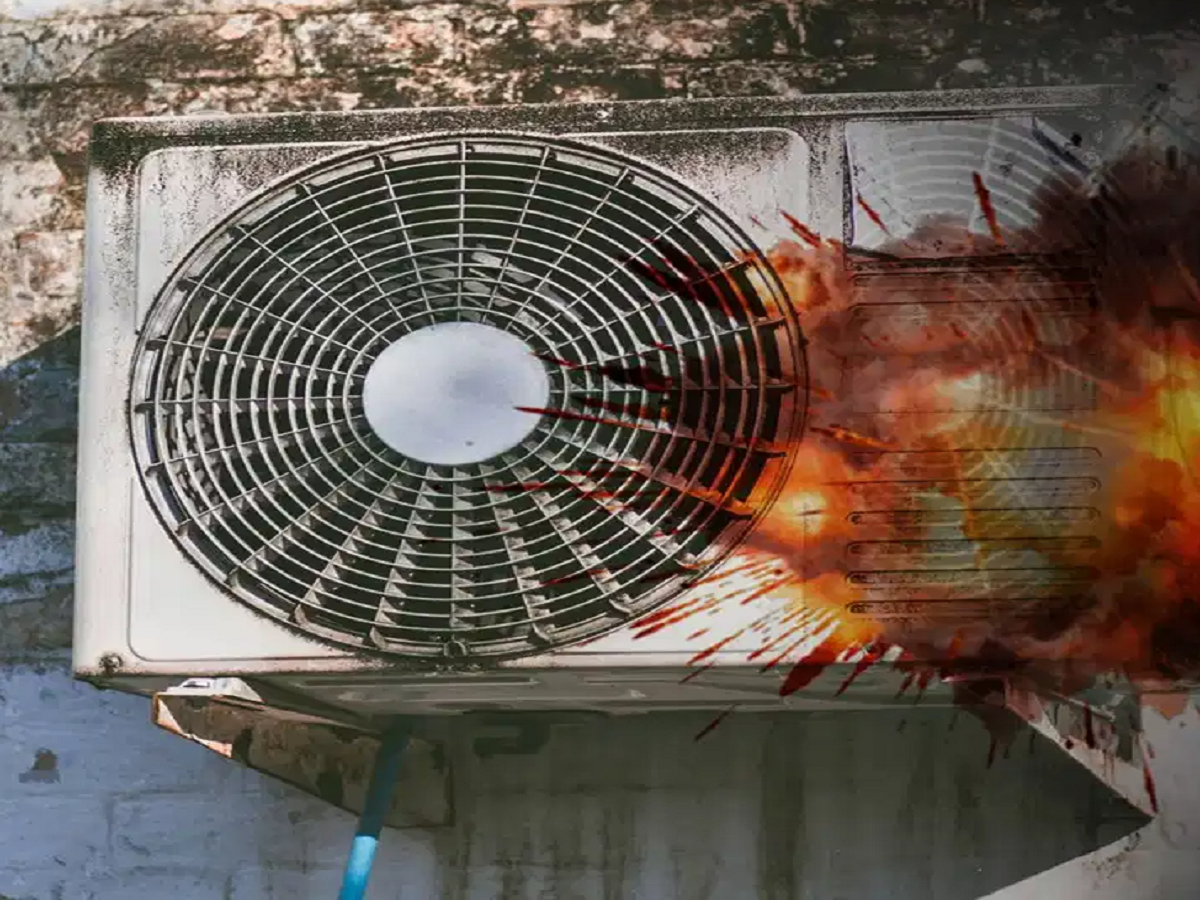
As the summer sun beats down relentlessly across India, temperatures are hitting dangerous highs. In this blistering heat wave, the air conditioner has transitioned from a luxury item into an absolute survival necessity.
However, this vital cooling appliance carries a dark, volatile danger if neglected. A catastrophic split AC explosion in Delhi’s upscale Hauz Khas neighborhood recently sent shockwaves through the country. The blast—which occurred directly inside the indoor unit of a split AC—sparked a massive, fast-moving fire in the home of retired IAS officer and the Competition Commission of India's (CCI) first chairman, Dhanendra Kumar. Tragically, the incident resulted in the loss of his life due to smoke inhalation, while his son sustained severe injuries.
This devastating event serves as a stark, urgent warning to every household: a few simple oversight errors can turn a standard home air conditioner into a deadly thermal hazard. Here are the precise mechanical reasons why AC units explode during extreme summers, and the exact mistakes you must avoid.
The Anatomy of an AC Failure: What Triggers a Blast?
An air conditioner relies on a highly pressurized cycle of chemical refrigerants and high-voltage electrical current to pull heat out of your room. Under peak summer conditions, several factors can cause this system to fail catastrophically.
| Failure Trigger | Mechanical Impact on the AC | The Resulting Explosion Risk |
| Continuous 15+ Hour Runs | Extreme thermal buildup inside the engine casing. | Critical: The compressor overheats under nonstop structural pressure, causing oil degradation and mechanical failure. |
| Unstable Voltage Fluctuations | Sudden electrical spikes and drops slam into sensitive circuits. | High: Scorches internal wiring and overloads the compressor capacitor, triggering electrical fires. |
| Choked Air Filters | Restricts all natural airflow, suffocating the indoor and outdoor units. | Moderate to High: Forces the compressor to work at a much higher thermal threshold, leading to internal shorts. |
| Neglected Servicing | Worn-out wiring degrades, loose connections spark, and faulty parts go unnoticed. | Severe: Creates a perfect storm for localized short-circuits directly next to highly pressurized gas lines. |
1. The Danger of Nonstop 15-Hour Operations
When outdoor ambient temperatures hover near extreme levels, an AC has to work twice as hard to maintain a cool indoor climate. Running your air conditioner continuously for 15 hours or more without a single cooling-off period puts immense stress on the compressor—the heart of the machine. The internal mechanics begin to experience immense physical pressure, overheating the unit's baseline casing and creating a volatile environment where an electrical spark can detonate the pressurized system.
2. Violent Voltage Fluctuations
Summer heat waves trigger a massive surge in power grid usage across neighborhoods, causing frequent voltage drops and sudden power spikes. This unstable power supply is highly destructive to split AC units.
Without a steady current, the sensitive electrical components inside the compressor are forced to endure intense, irregular power loads. These sharp spikes can instantly damage internal circuits, leading to a sudden, highly explosive electrical malfunction.
3. The Choked Filter Chain Reaction
Cleaning your AC filter might seem like a minor chore, but neglecting it is dangerous. A dust-choked filter completely blocks natural airflow through the unit.
When airflow drops, the cooling system is choked, forcing the compressor to run at a significantly higher thermal threshold to try and cool the room. This added strain rapidly cooks the internal machinery, dramatically increasing the risk of an internal electrical short circuit.