Imagine an animal that can return to an earlier stage of its life even after reaching adulthood. It may sound like something from a science-fiction story, but such a creature actually exists in our oceans.
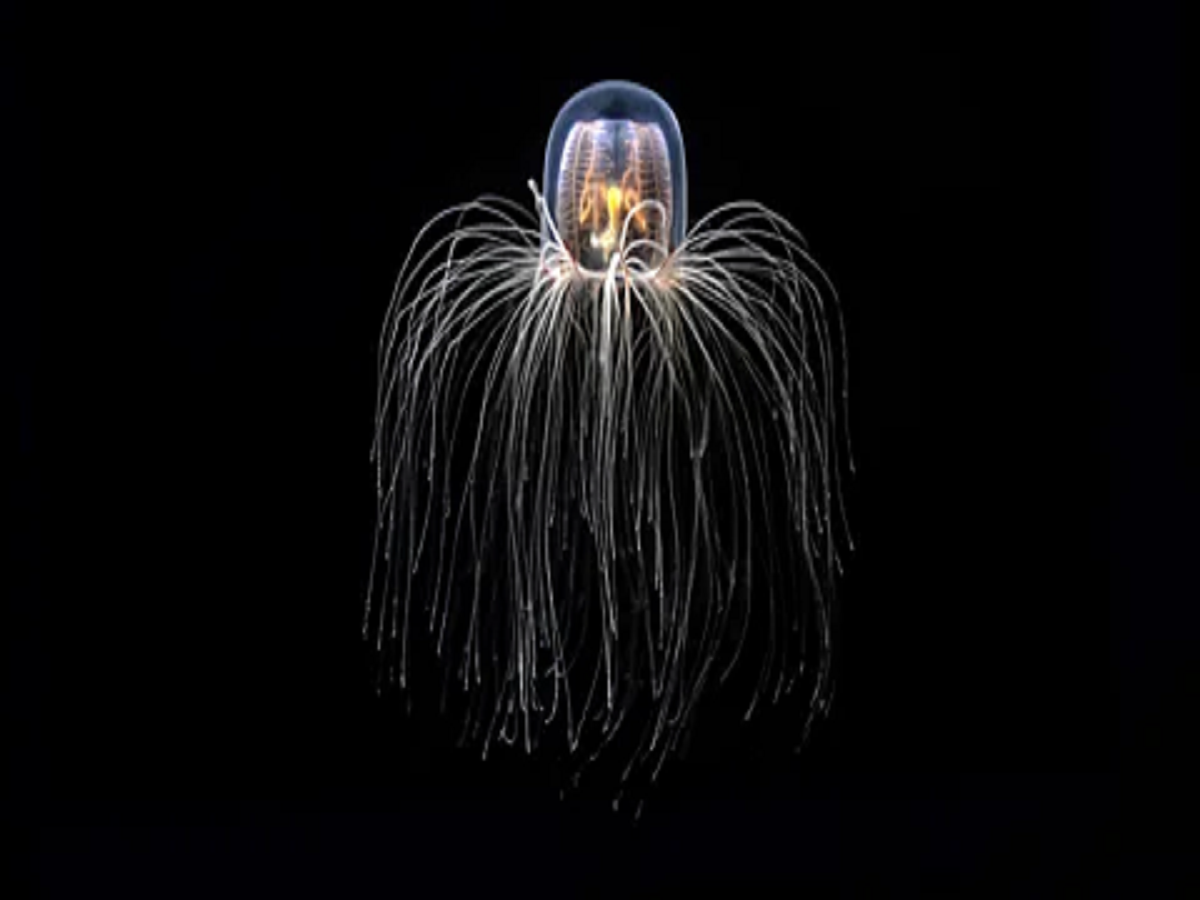
Known as the immortal jellyfish, Turritopsis dohrnii is a tiny marine species with an extraordinary ability to reverse its life cycle under certain conditions. Instead of following the usual process of ageing, it can transform from its adult stage back into an earlier developmental form.
This unusual ability has attracted scientific attention, particularly among researchers studying ageing, regeneration and cellular development.
What Is the Immortal Jellyfish?
Turritopsis dohrnii is a small jellyfish that grows only a few millimetres in size.
Most animals continue moving through different stages of life until they eventually die. However, this jellyfish has a remarkable biological ability that allows it to return to an earlier stage of development.
When exposed to certain stressful conditions, physical damage or other environmental challenges, the adult jellyfish can transform into a cyst-like structure and eventually develop into a polyp, an earlier stage of its life cycle.
How Does It Become Young Again?
The process behind this transformation is known as transdifferentiation, in which certain cells change from one specialised type into another.
The process generally involves several stages:
-
Adult stage: The jellyfish lives as a free-swimming organism called a medusa.
-
Transformation begins: Under certain conditions, it shrinks and loses its swimming ability.
-
Cyst formation: It settles on a surface and develops into a cyst-like structure.
-
Cellular changes: Its cells reorganise and develop into an earlier form.
-
New development: The resulting polyp can grow and produce new jellyfish.
This ability makes the species particularly unusual among marine organisms.
Can This Jellyfish Actually Live Forever?
The name 'immortal jellyfish' can create a misunderstanding. It does not mean that the creature is impossible to kill.
It can still become food for predators, suffer from diseases or die because of unfavourable environmental conditions.
Its special ability allows it to potentially escape the usual ageing process by returning to an earlier stage of development. However, this does not guarantee unlimited survival.
Why Are Scientists Studying This Creature?
The jellyfish has become an interesting subject for researchers because of its unusual cellular behaviour.
Scientists are investigating how its cells change their identities, how its body reorganises itself and which biological mechanisms allow it to reverse its development.
These studies could improve scientific understanding of cellular regeneration, tissue repair and biological ageing.
Could This Discovery Help Humans Reverse Ageing?
One of the biggest questions is whether the jellyfish's unusual ability could eventually help humans.
Researchers are studying the genes and cellular processes associated with its life-cycle reversal. These investigations may provide useful information about DNA repair, cell development and regeneration.
However, humans have very different biological systems from jellyfish. Scientists cannot simply transfer this ability to people, and there is currently no proven method of reversing human ageing using this discovery.
This Unusual Jellyfish Has Also Been Found in Indian Waters
The species is not restricted to distant oceans. Researchers have also documented its occurrence in Indian coastal waters.
A research survey conducted in February 2022 recorded Turritopsis cf. dohrnii near Mandapam in the Gulf of Mannar.
This finding added another interesting example to India's marine biodiversity records and highlighted the remarkable variety of life found in its coastal ecosystems.
Conclusion
The immortal jellyfish is one of the most fascinating examples of nature's extraordinary biological abilities. Its capacity to return from an adult stage to an earlier form challenges conventional ideas about ageing and development.
Although it cannot literally live forever, this tiny marine creature may help scientists understand cellular regeneration and the biological processes associated with ageing.
Sometimes, the most remarkable discoveries are hidden in the smallest creatures of the natural world.