In May 2025, the European Journal of Cardiovascular Medicine published a research article on vitamin B12 deficiency in India.
In this, data from many studies done on Vitamin B12 deficiency has been considered.
The 20 studies included in this meta-analysis included a total of 18,750 participants. Vitamin B12 deficiency was found in 51 percent of the participants. According to the research article, 65 percent of the vegetarians included in the study were also deficient.
What is Vitamin B12? What problems can a Deficiency cause? What can be done to correct it?
To answer these questions, we spoke to Deepti Khatuja, Head Clinical Nutritionist, Fortis Memorial Research Institute, Gurugram and Amrita Mishra, Founder and Nutrition Expert, Delhi Diets.
Why do we need Vitamin B12?
Vitamins are needed for many bodily processes. There are two types of vitamins: fat-soluble vitamins, such as vitamin A, vitamin D, vitamin E, and vitamin K.
Other water-soluble vitamins include vitamin C and the B-complex vitamins, including vitamin B12.
Deepti Khatuja, Head Clinical Nutritionist at Fortis Memorial Research Institute, Gurugram, says, "Vitamin B-12 is a micronutrient. Even though it is required in small quantities, it plays an important role in our body."
Vitamin B12 is essential for every cell in the body. According to Deepti Khatuja, vitamin B12 plays a vital role in essential chemical reactions within cells, such as the conversion of food into energy and the formation of new molecules.
She says that it is also important for the functioning of our nervous system. It helps keep our blood cells healthy. It also affects our immune system.
Amrita Mishra says that Vitamin B12 is necessary for making red blood cells, which carry oxygen throughout the body.
What foods contain Vitamin B12?
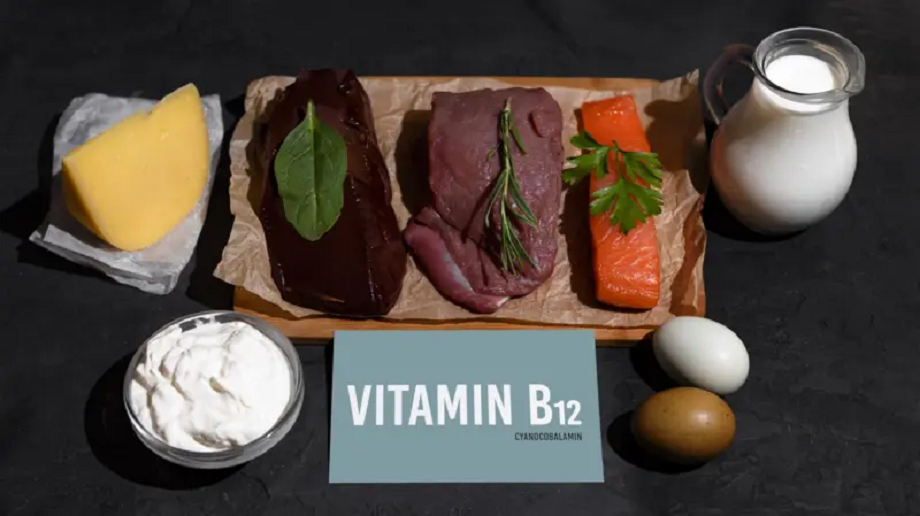
Vitamin B12 is primarily found in meat. Plant foods do not contain vitamin B12 unless they are fortified.
Meat, fish, eggs, milk and other dairy products contain vitamin B-12.
It is found in eggs, chicken, red meat, fish, seafood and milk and dairy products.
Supplements are also available. Amrita Mishra explains that vitamin B12 capsules and injections are also available. However, it is important to consult a doctor before taking any supplements.
Deepti Khatuja says, "Vitamin B12 supplements can be taken for the prescribed period under the guidance of a doctor."
Vitamin B12 deficiency
Amrita Mishra attributes vitamin B12 deficiency to poor eating habits, processed foods, vegan diets, and inadequate intake of dairy products.
A deficiency can also occur in those who consume foods containing vitamin B12 but their body is unable to absorb it. This means that you are eating, but your body is unable to absorb vitamin B12 properly from that food.
How does the body get Vitamin B12?
The absorption of vitamin B12 into our bodies is a complex process. In food, vitamin B12 is bound to proteins.
According to the US National Institutes of Health (NIH), vitamin B12 is absorbed by the body in two steps. In the first step, hydrochloric acid in the stomach separates vitamin B12 from the proteins in food.
In the second step, vitamin B12 separated from the protein binds to a protein produced in the stomach, called intrinsic factor, and is then absorbed into the body.
Vitamin B12 in supplements is not bound to any protein, so it doesn't require the first step for absorption. However, vitamin B12 in supplements must also bind to an intrinsic factor for absorption into the body.
If any part of the vitamin B12 absorption process does not happen properly, the risk of deficiency increases.
According to the NIH, people at risk for vitamin B12 deficiency may be those who do not get enough vitamin B12 or whose bodies do not absorb it properly. For example,
Older people: As we age, many people's stomachs lack sufficient hydrochloric acid, making it difficult to absorb vitamin B12 from food. People over the age of 50 may need vitamin B12 fortified foods or supplements.
People with atrophic gastritis: This autoimmune disease causes a decrease in the production of hydrochloric acid and intrinsic factor in the stomach, which prevents adequate absorption of vitamin B12.
People with pernicious anemia: In this condition, the body doesn't produce intrinsic factor, which is necessary for the absorption of vitamin B12. Such people are unable to absorb vitamin B12 from both food and supplements. Doctors usually treat this condition with vitamin B12 injections.
People who have had stomach or intestinal surgery: Surgery, such as removing part of the stomach, can reduce the body's production of hydrochloric acid and intrinsic factor, making it difficult to absorb vitamin B12.
Vegetarians and vegans: People who eat little or no animal foods may not get enough vitamin B12 from their diet.
Symptoms of Vitamin B12 Deficiency and Effects on the Body
It may take several years for symptoms of vitamin B12 deficiency to appear.
Deepti Khatuja explains, "Vitamin B12 deficiency takes time to develop, so its symptoms also appear gradually and intensify with time."
Symptoms of Vitamin B12 deficiency-
- Feeling strange, numb, or tingling in your hands or feet
- Difficulty walking (balance problems)
- Pernicious anemia
- Swelling of the tongue
- Difficulty thinking and understanding or memory loss
- Weakness
- Tiredness
- Yellowing of the skin
- Mood swings or irritability
- Decreased concentration
Whether someone is deficient in Vitamin B12 can be determined through a Vitamin B12 level test, which is a blood test.
Image source,Getty Images