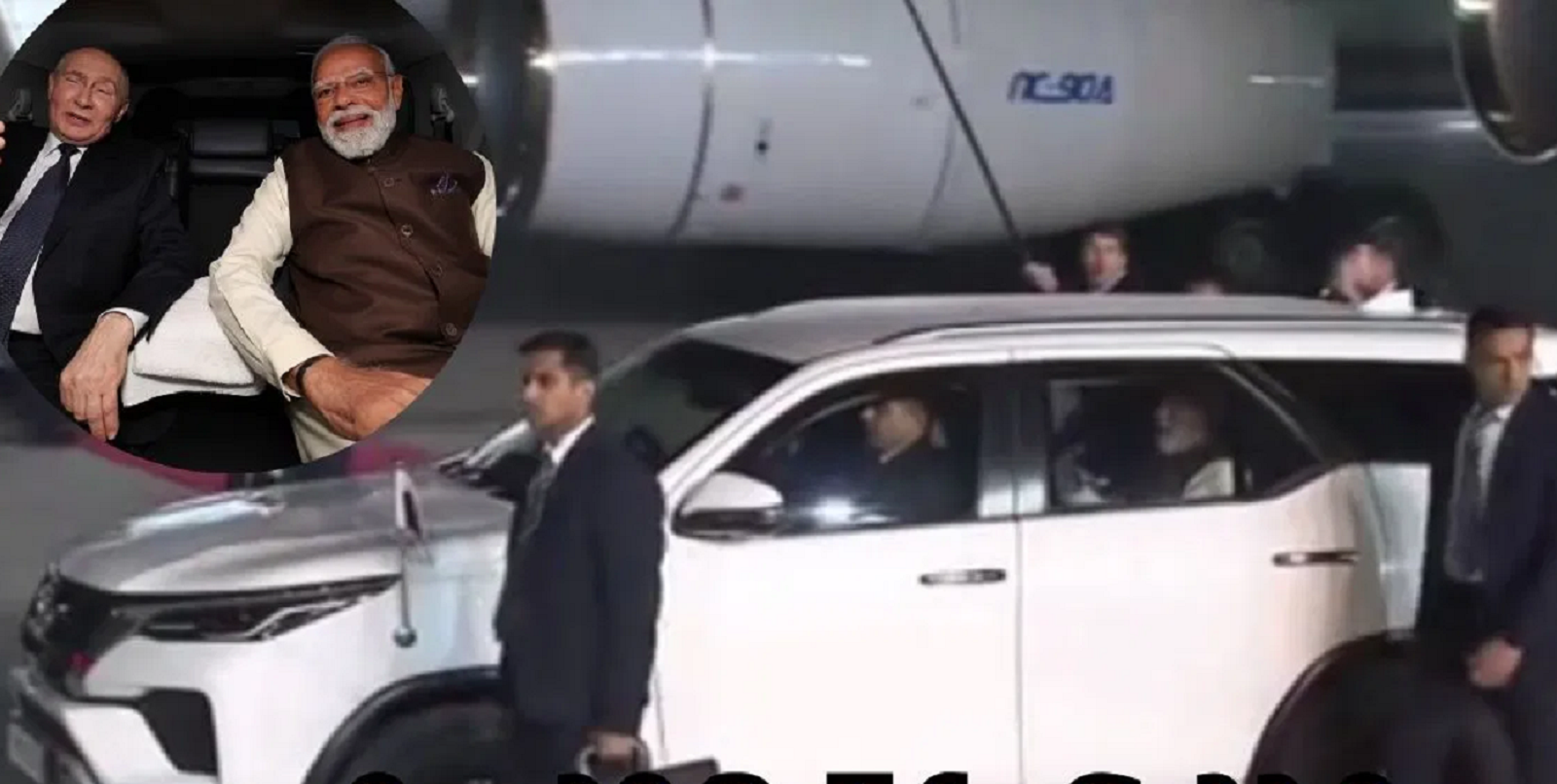
Prime Minister Narendra Modi surprised everyone by breaking protocol and personally receiving Russian President Vladimir Putin at the airport. The bigger surprise came when both leaders left the airport in a white Toyota Fortuner, instead of their usual armoured BMWs or Mercedes vehicles.
This simple ride has become a major diplomatic talking point. Here’s why.
-
A subtle message to the West
Since the Ukraine war, Russia has been under heavy Western sanctions. Germany, home of BMW and Mercedes, is a major supporter of Ukraine. Riding in a European luxury vehicle would have sent a mixed diplomatic signal.
By choosing a Fortuner, the leaders avoided European brands altogether. It was a quiet geopolitical message:
We don’t need Western-made vehicles to demonstrate status, comfort, or power. -
A Made-in-India angle
Fortuner may be a Japanese brand, but it is manufactured in India at Toyota’s plant in Bidadi, Karnataka.
For Modi, this aligns perfectly with the India-made narrative.
For Putin, sitting in an Indian-assembled car signals trust in Indian security arrangements and infrastructure. -
Trust in India’s security
Putin is one of the most heavily guarded leaders in the world, usually surrounded by layered security and armoured convoys.
Before he got into the Fortuner, Russian security agencies thoroughly inspected and cleared the vehicle.
Their approval itself is a message: Russia trusts India’s system enough to let Putin ride in a non-armoured civilian SUV with Modi. -
Political symbolism
The Fortuner is extremely popular among Indian politicians and is often seen as a symbol of power and authority on Indian roads.
By choosing this car, the leaders presented an image of simplicity, strength and comfort with Indian ground realities rather than Western luxury. -
Car diplomacy in action
Modi is known for using symbolism in foreign relations.
A straightforward, locally manufactured SUV, rather than a premium imported German vehicle, reflects a shared attempt by India and Russia to step away from Western influence—whether in trade, defence, or even optics.