LIFESTYLE
13 Astronomical Events Related to the Moon in 2026: Supermoon, Solar Eclipse and Blood Moon!
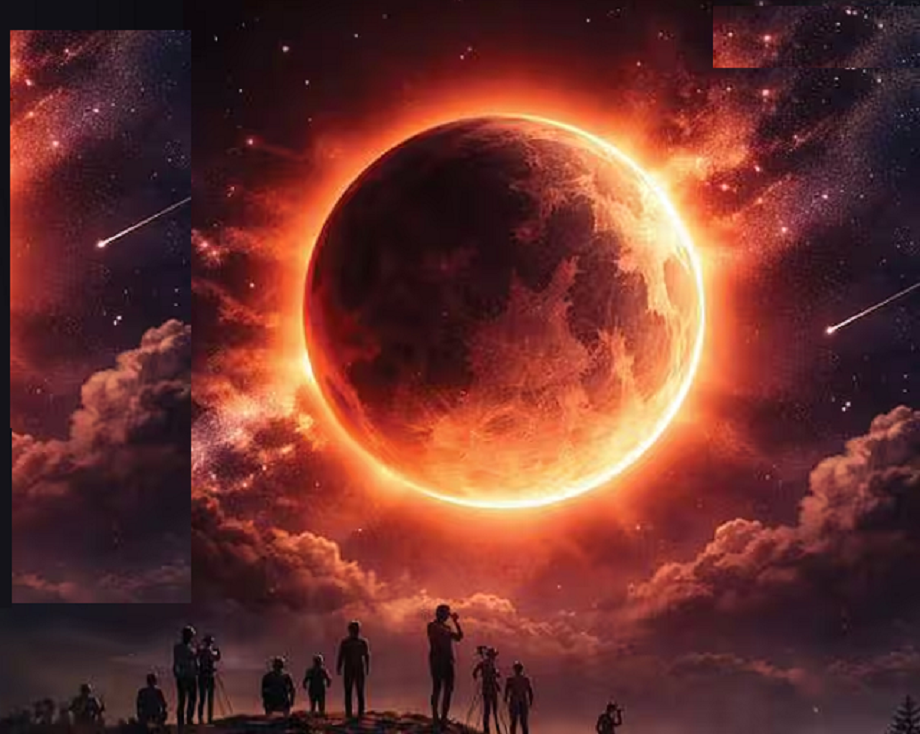
Lunar events in 2026: The year 2026 will be special for astronomy lovers, as they will witness 13 lunar events. These include celestial events such as the crescent moon and the supermoon.
13 spectacular lunar events in 2026: The year 2026 is going to be a great one for astronomy lovers, as the upcoming lunar year will witness many amazing sights of the crescent moon and planets, along with several supermoons, a total solar eclipse and a blood moon.
Most of these celestial events will be visible with the naked eye, but with the help of telescopes and binoculars you will be able to see them more closely.
Dates related to Moon sighting in the year 2026-
The first supermoon of the year 2026
The first supermoon of the New Year 2026 will occur on Saturday, January 3, 2026. The month of January is set to begin with a spectacular sight: a Wolf Moon supermoon will appear in the sky.
This moon will be much larger in size and brighter, making it the first of three supermoons to appear in the year 2026.
Annular solar eclipse
A solar eclipse will occur on Tuesday, February 17, 2026. In a spectacular annular solar eclipse, the Moon will cover approximately 96 percent of the Sun's center, creating a bright ring.
The full annular phase will be visible only from Antarctic research stations, while the partial eclipse will be visible from Antarctica and some areas of southern Africa and Argentina.
Crescent Moon and Mercury
On Wednesday, February 18, 2026, just after sunset, a very thin crescent Moon will be visible low in the western sky, near the planet Mercury.
On this day, the Moon will be illuminated only 2 percent, and it can be clearly seen with the help of a telescope, in which Venus will be shining below and Saturn will be shining above.
Total lunar eclipse
Late night to early morning on March 2-3, 2026. There are usually three total lunar eclipses, the last of which will occur in early March 2026 and the last in 2029. There were two lunar eclipses in 2025, one of which surprised astronomers in North America.
During this time, the full moon will enter the Earth's shadow in western North America, Australia, New Zealand, East Asia and parts of the Pacific and will transform into a red blood moon lasting 58 minutes.
Crescent Moon and Venus
On March 20, 2026, bright Venus will appear above the planet with a waxing crescent Moon at 5 percent illumination, providing a chance to see a new moon near the bright planet about 45 minutes after sunset. This can be enjoyed with binoculars.
The crescent Moon, Venus and the Pleiades
On April 19, 2026, look west for a spectacular view of the setting stars of Orion an hour after sunset, as the 9 percent illuminated waxing crescent Moon approaches the Pleiades, with bright Venus below.
Total solar eclipse
On August 12, 2026, the Moon will completely obscure the Sun for about 2 minutes and 18 seconds as seen from eastern Greenland, northern Spain, and western Iceland. This spectacular celestial spectacle will be difficult to observe with the naked eye. A small partial solar eclipse will occur across North America, and a profound partial solar eclipse will be visible across Europe.
Partial lunar eclipse
The second lunar eclipse will be visible in Europe, Africa, North America and South America in the year 2026, but it will not be as grand as the first lunar eclipse in March.
The Moon will enter Earth's shadow in space, but only 4 percent of it will be covered by Earth's shadow, giving the Moon's surface a characteristic reddish hue. The edge of Earth's shadow will slowly move back and forth across the Moon, creating a spectacular appearance even if it isn't a total eclipse.
The moon in a cluster of beehives
The Beehive constellation, a spectacular group of stars that can be clearly seen with binoculars, will be directly below the waning crescent Moon just before dawn on September 8, 2026, creating a spectacular view in the eastern sky before sunrise.
Conjunction of Moon and Saturn
On September 26, 2026, Saturn will be visible in the night sky, but it will be clearly visible only when the Moon passes close to the east just before the full moon.
Crescent Moon and Jupiter
With the Moon and Jupiter separated by only 10 arc seconds, this will create a rare and unique celestial spectacle. It's best to view it from the east about 90 minutes before sunrise.
When the Moon is about 20 percent illuminated and Earth's light is visible on its night side, closest to the giant planet.
Crescent Moon with Mars and Jupiter
Mars will not be visible in the night sky for the first six months of 2026 , but by October it will be visible in the southeast before sunrise.
On November 2, 2026, the waning crescent Moon, at 43 percent illumination, will approach Mars, with Jupiter visible just below it.
The closest supermoon since 2019
This year, three supermoons will be visible. The first will appear on January 3, the second on November 24, and the third on December 23, 2026. The supermoon on December 23 will be special because it will be the closest the full moon has ever appeared, the closest since 2019.
It will be about 60 miles (100 km) farther than the supermoon seen on February 19, 2019, at a distance of just 221,668 miles, making it the largest and brightest full moon in nearly eight years. But two supermoons will come even closer to Earth on February 10, 2028, and March 30, 2029.
Disclaimer: The information provided here is based solely on beliefs and information. It's important to note that NewsCrab does not endorse any beliefs or information. Consult a relevant expert before acting on any information or information.
PC:ABPNews