AUTO
5-Star Safety Won’t Be Enough Anymore! Bharat NCAP 2.0 Could Completely Change How Cars Are Tested
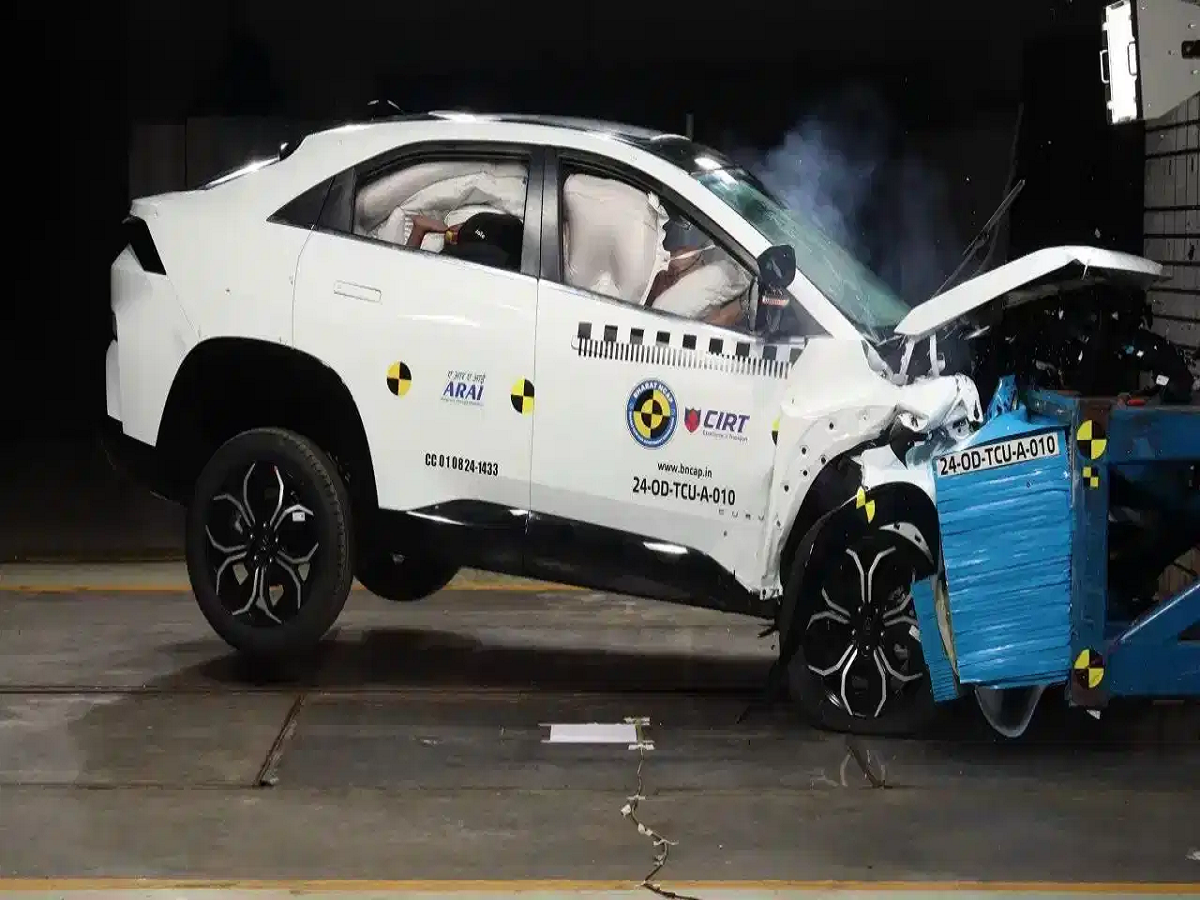
When buying a new car, people often compare its design, mileage, features and price. But safety has increasingly become one of the most important factors. A car’s crash-test rating, especially a 5-star rating, is often considered a strong indicator of protection.
However, India’s approach to vehicle safety could soon become much broader. The government is preparing to introduce Bharat NCAP 2.0, which is expected to go beyond traditional crash testing and evaluate a car’s safety before, during and after an accident.
Bharat NCAP 2.0 could bring a new definition of car safety
At present, crash tests mainly focus on how a vehicle performs during a collision and how well it protects occupants. The proposed Bharat NCAP 2.0 framework could take a more comprehensive approach.
Instead of looking only at crash protection, the system could assess three key stages:
- Before an accident: How effectively the vehicle can help prevent a crash.
- During an accident: How well it protects occupants and pedestrians.
- After an accident: How easily occupants can be rescued and receive emergency assistance.
This means a strong vehicle body alone may no longer be enough to achieve the highest safety rating.
Accident-prevention technology will become more important
One of the biggest changes could be greater emphasis on technologies designed to prevent crashes.
Modern vehicles can use systems such as collision warnings, automatic emergency braking and other driver-assistance technologies to identify potential hazards. Under a broader safety-testing framework, such technologies could become an important part of a vehicle’s overall safety assessment.
For car buyers, this could mean paying closer attention not just to airbags and structural strength, but also to the electronic safety systems fitted to a vehicle.
Pedestrian safety could get greater attention
Vehicle safety isn't only about protecting people sitting inside a car. Pedestrians and other road users can also suffer serious injuries in collisions.
The proposed framework is expected to give greater importance to pedestrian protection. The design of the vehicle and its ability to reduce injuries to pedestrians could therefore become increasingly relevant when determining its safety performance.
What happens after a crash will also matter
Another important aspect is what happens immediately after an accident.
A vehicle may protect its occupants during a collision, but getting trapped inside the vehicle can create additional risks. Future safety assessments could therefore consider how easily occupants can be removed from a damaged vehicle and how quickly emergency assistance can reach them.
This represents a significant shift from simply asking, “How well did the car survive the crash?” to asking, “How effectively can the vehicle protect and assist people throughout the entire accident?”
Drivers could also face stricter accountability
The government's road-safety efforts could extend beyond vehicles themselves. A graded points-based system for driving licences and vehicle registration has also been discussed.
Under such a system, repeated traffic violations or dangerous driving could result in points being deducted from a driver's record. Crossing a specified threshold could potentially lead to suspension or other penalties.
At the same time, responsible driving could potentially be rewarded through benefits such as insurance-related incentives.
Car manufacturers may face greater pressure
If Bharat NCAP 2.0 is introduced, manufacturers will have to pay greater attention to active safety, pedestrian protection and post-crash rescue.
This could encourage automakers to introduce more advanced safety technology across their model ranges rather than concentrating primarily on structural crash protection.
It could also create opportunities for Indian automotive technology companies and startups developing safety-related systems.
Testing costs could encourage more safety evaluations
Another potential advantage of India's own safety-testing framework is the comparatively lower cost of conducting tests domestically. More affordable testing could make it easier for manufacturers to evaluate vehicles and potentially encourage greater participation in the safety-rating programme.
What does this mean for car buyers?
If Bharat NCAP 2.0 is implemented as planned, a 5-star rating may eventually need to be viewed differently.
A buyer may have to look beyond the traditional checklist of airbags, crash-test performance and body structure. Features that can prevent accidents, protect pedestrians and assist occupants after a crash could become equally important.