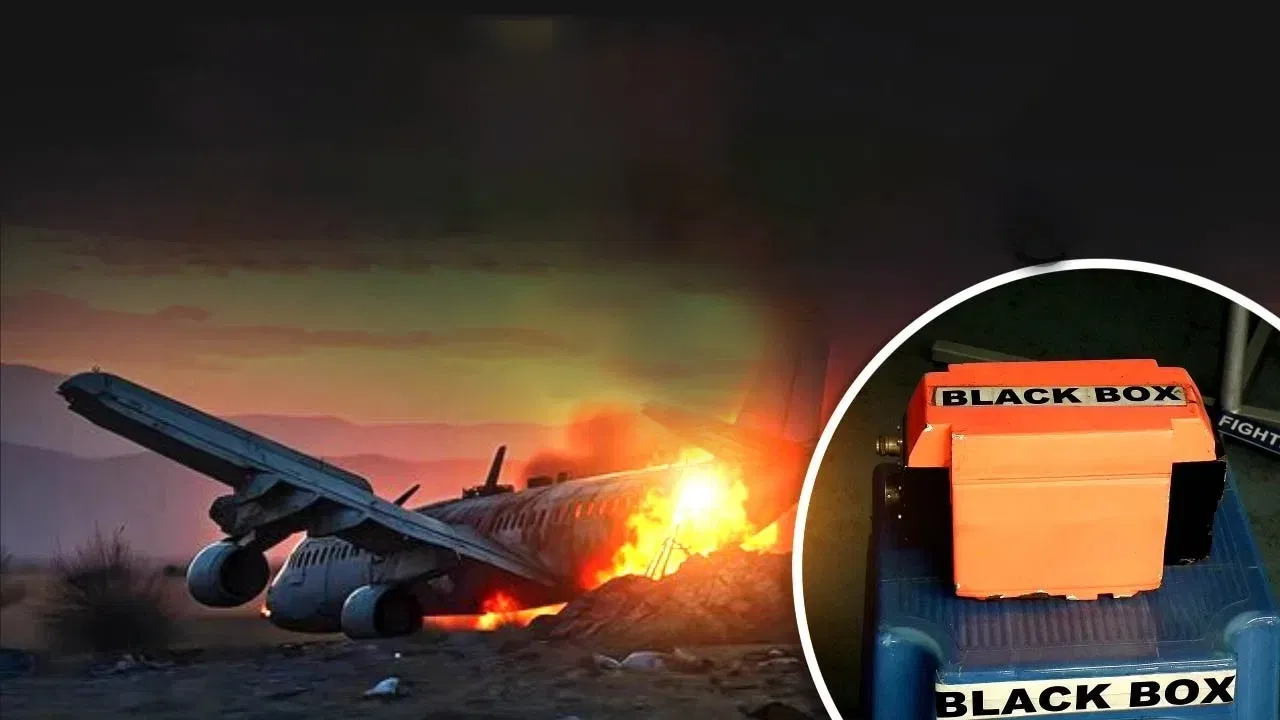
The horrifying Air India plane crash in Ahmedabad on Thursday has triggered widespread shock and concern. The aircraft, carrying 242 people, crashed shortly after taking off for London, near the airport's perimeter. Rescue operations are currently underway, with special focus on locating a crucial piece of equipment: the black box.
What Is the Black Box and Why Is It So Important?
Following any aviation disaster, the black box becomes a vital tool in determining what went wrong. It stores detailed technical data and audio recordings from the cockpit, offering investigators key insights into the final moments before the crash. Despite its name, the black box is actually bright orange to make it easier to spot amid wreckage.
There are typically two parts to the black box system:
-
Flight Data Recorder (FDR) – Captures real-time data such as altitude, speed, engine status, and other technical parameters.
-
Cockpit Voice Recorder (CVR) – Records the conversations, alarms, and sounds inside the cockpit.
Together, these two recorders provide a comprehensive picture of the aircraft's final journey.
Built to Survive Extreme Conditions
The black box is engineered for survival. Made from tough titanium and insulated with heat-resistant materials, it is designed to endure the most extreme conditions:
-
Can withstand crash impacts and pressures up to 3,400 times the force of gravity.
-
Resistant to temperatures of 10,000°C for one hour and 260°C for two more hours.
-
Capable of sending out a locator signal for up to 30 days, even in underwater environments.
Current Search Operations
As part of the ongoing rescue and investigation efforts near the Ghoda Camp area, fire and emergency response teams are actively scouring the crash site for the black box. Once found, it will be sent to aviation authorities for decoding and analysis, which will help determine the exact cause of the crash.
Why It Matters
The black box is not just a piece of hardware—it is the silent witness to aviation disasters. In this tragedy, it may provide answers to the critical questions: What caused the crash? Was it a technical failure, human error, or something else?