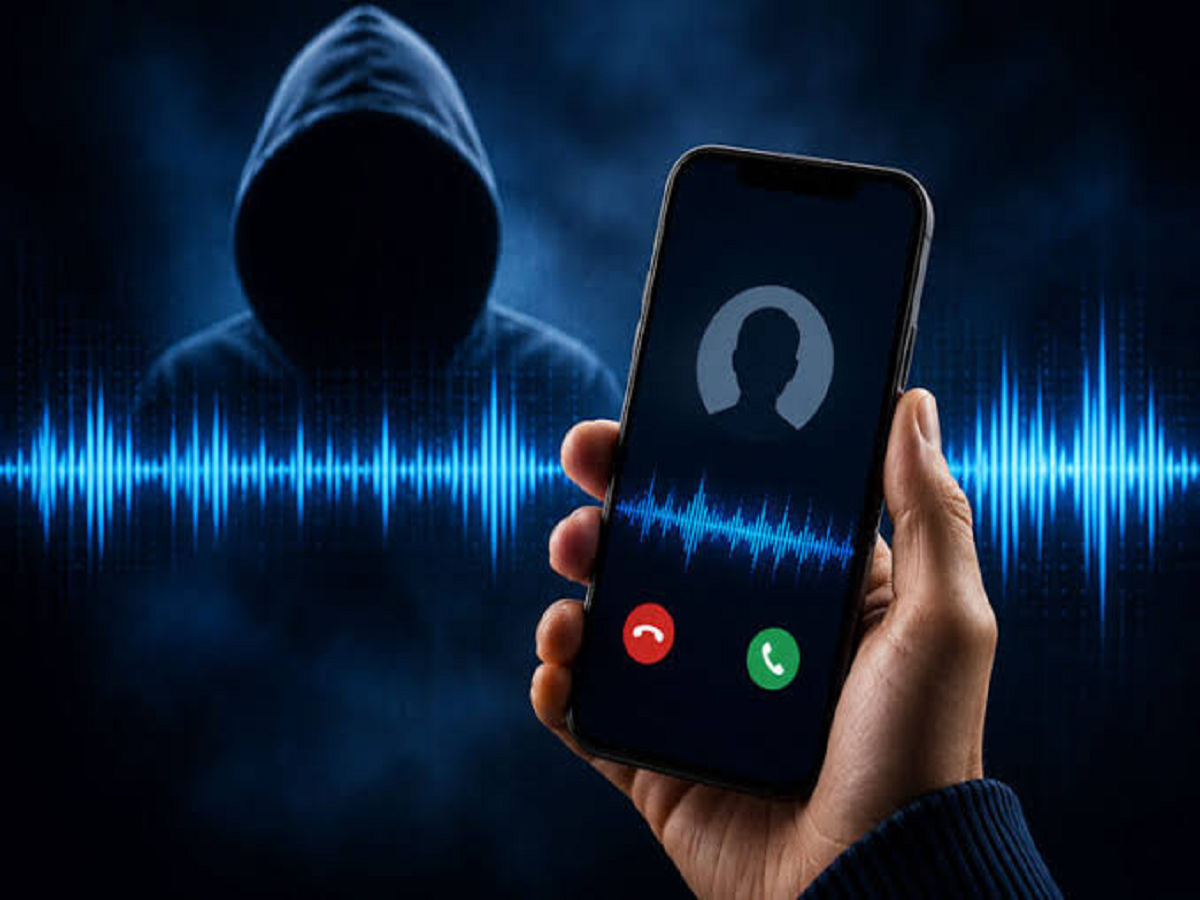
Imagine receiving a phone call from your brother, daughter or close friend asking for urgent financial help. The voice sounds familiar, the situation feels believable, and the caller insists that there is no time to explain everything.
Would you trust what you hear?
With advances in artificial intelligence, scammers can create convincing imitations of human voices using audio samples. These cloned voices can be used in fraudulent calls and voice messages designed to trick people into transferring money or revealing confidential information.
The technology itself has legitimate applications, including accessibility tools and voice production. The danger arises when criminals use it to impersonate someone without permission.
How Does an AI Voice Scam Work?
AI voice cloning systems can learn the characteristics of a person's voice from audio recordings. Depending on the technology, even a relatively short sample may be enough to create a convincing imitation.
Scammers may obtain these samples from publicly available videos, social media posts, interviews or other recordings.
They then use the cloned voice to create an emergency scenario. A caller might pretend to be a relative involved in an accident, a colleague requesting an urgent payment or a company executive asking an employee to transfer funds.
The objective is to create panic and pressure the victim into acting before verifying the story.
Five Warning Signs You Should Never Ignore
1. The Caller Demands Immediate Money
Scammers often create a sense of urgency by claiming that someone is injured, stranded or facing a serious problem.
They may insist that you transfer money immediately and promise to explain everything later.
Pause before making any payment, even if the voice sounds familiar.
2. You Are Asked to Keep the Conversation Secret
A caller may tell you not to inform other family members or colleagues because the situation is supposedly confidential.
This tactic prevents you from independently checking the story.
Treat unusual secrecy demands as a reason to verify the request through another channel.
3. The Caller Refuses to Speak Normally
A suspicious caller might avoid answering simple personal questions, insist on continuing through messages or repeatedly redirect the conversation towards a payment.
Voice cloning can reproduce familiar speech characteristics, but it does not automatically give a scammer genuine knowledge of your relationship or circumstances.
4. The Payment Details Keep Changing
Be cautious if someone requests payment to a new bank account, unfamiliar UPI ID or third-party account, particularly when the request is unexpected.
Never rely solely on the caller's identity or voice to approve a transaction.
5. The Caller Discourages Independent Verification
A genuine person may understand if you need a minute to confirm their identity. A scammer may become aggressive, threaten consequences or insist that verification will make the situation worse.
Do not let pressure override basic security checks.
What Should You Do If You Receive a Suspicious Call?
The safest response is to stop the conversation long enough to verify the request.
First, call the person back using a number you already know. Do not rely on a number supplied by the suspicious caller.
Second, ask a question that only the real person is likely to answer. A personal detail can provide an additional clue, although it should not be your only verification method because personal information may be publicly available or compromised.
Third, confirm the situation through another trusted person. If the caller claims that a family member is in trouble, contact that family member or another relative independently.
Fourth, never share OTPs, PINs, passwords or banking credentials. A familiar voice does not justify revealing sensitive information.
Finally, delay unusual payments until you have verified the recipient and the reason for the transfer.
Can You Prevent Your Voice From Being Cloned?
It is difficult to prevent voice cloning completely if recordings of your voice are publicly available. However, you can reduce the opportunities for misuse.
-
Avoid posting unnecessary personal information alongside public audio and video recordings.
-
Review the privacy settings of your social media accounts.
-
Be cautious about sharing personal recordings with unknown websites or applications.
-
Agree on a family verification phrase for genuine emergencies, and keep it private.
-
Tell relatives, especially older family members, about AI-powered impersonation scams.
A family verification phrase should be an additional safeguard, not a replacement for calling the person back through a trusted number.
What If You Have Already Transferred Money?
If you suspect that you have been tricked into making a payment in India, act immediately.
-
Contact your bank or payment service provider and report the fraudulent transaction.
-
Call India's cybercrime helpline at 1930 as soon as possible.
-
Report the incident through the official National Cyber Crime Reporting Portal at cybercrime.gov.in.
-
Preserve call records, messages, transaction IDs, screenshots and other evidence.
-
Do not pay anyone who promises to recover your money for an advance fee.
A quick report may help authorities and financial institutions respond faster, although recovery is not guaranteed.
The Biggest Lesson: Never Trust a Voice Alone
AI-generated voices can sound remarkably realistic, but hearing a familiar voice is no longer sufficient proof of identity.
The most effective defence is to slow down, verify unexpected requests independently and refuse to let fear dictate financial decisions.
Whether a call appears to come from a family member, a manager or a bank representative, remember one simple rule: verify the person before trusting the request.