BUSINESS
Does Motor Insurance Cover Damage Caused by E20 Fuel? Here's What the Rules and Experts Say
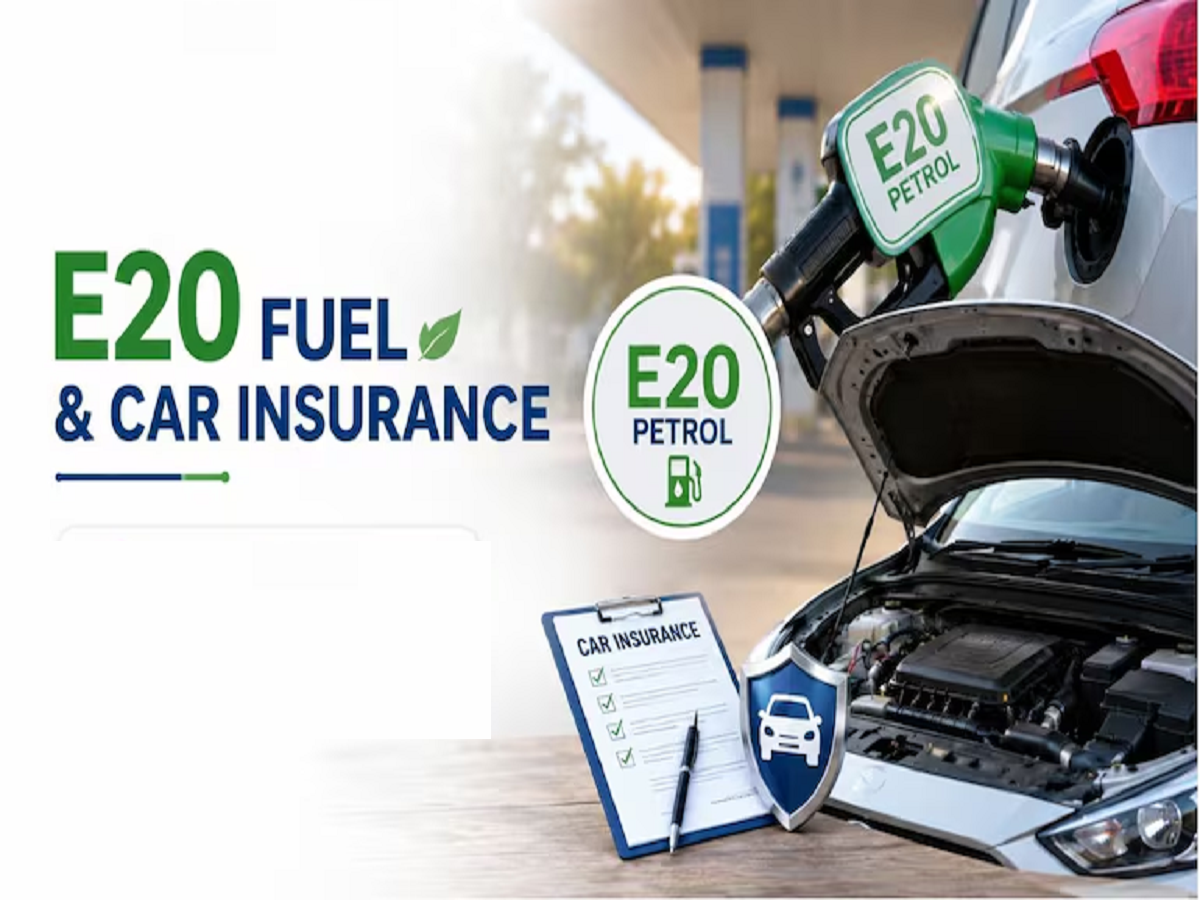
E20 Fuel & Motor Insurance: With E20 petrol (20% ethanol-blended fuel) now becoming the standard fuel in India, many owners of older petrol vehicles are asking an important question: Will a comprehensive motor insurance policy cover engine or fuel system damage if it is linked to the use of E20 fuel?
Insurance companies, industry experts, and government authorities have clarified that using E20 petrol alone does not cancel or invalidate your motor insurance policy. However, whether a claim is approved depends on what caused the damage, not simply on the type of fuel used.
Here's a detailed explanation of how E20 fuel affects motor insurance coverage.
Does Using E20 Petrol Automatically Void Your Insurance Policy?
The simple answer is No.
Government authorities and major insurers have clarified that merely filling your vehicle with E20 petrol does not invalidate your motor insurance policy.
Comprehensive motor insurance continues to provide protection against insured events such as:
-
Road accidents
-
Vehicle theft
-
Fire
-
Natural disasters
-
Other covered risks mentioned in the policy
Simply using E20 fuel is not treated as negligence or a policy violation.
What Do Insurance Experts Say?
According to motor insurance experts, claims are evaluated based on the actual cause of the loss, rather than the fact that E20 fuel was used.
If a vehicle suffers accidental damage or is stolen, the presence of E20 fuel does not automatically become a reason for claim rejection.
Instead, insurers assess whether the damage resulted from a covered event or from a mechanical issue that falls outside the scope of standard insurance coverage.
Will Insurance Pay if E20 Fuel Damages the Engine?
This is where the distinction becomes important.
If an insurance survey determines that the engine or fuel system was damaged solely because the vehicle used fuel that was not recommended by the manufacturer, the damage may be classified as:
-
Mechanical breakdown
-
Consequential damage
-
Wear and tear or usage-related failure
Standard comprehensive motor insurance policies generally do not cover mechanical or consequential damage unless specifically included through additional coverage.
As a result, an engine damaged solely due to incompatible fuel usage may not qualify for a claim under a standard comprehensive policy.
Why Has This Become a Topic of Debate?
The discussion intensified after an article published by an insurance company earlier in 2026 suggested that damage in older, non-E20-compatible vehicles could potentially be viewed as negligence.
Following public discussion, the insurer clarified that:
-
Using E20 fuel does not invalidate the insurance policy.
-
Claims continue to be assessed according to the cause of damage.
-
Every claim is evaluated individually based on policy terms and the surveyor's findings.
This clarification helped address concerns among vehicle owners regarding automatic claim rejection.
Which Vehicles Are Designed for E20 Fuel?
According to industry information, BS6 Phase 2 petrol vehicles manufactured from April 2023 onward have generally been designed to support E20 fuel.
Owners of older vehicles should refer to:
-
The vehicle owner's manual
-
Manufacturer's fuel compatibility guidelines
-
Official dealership recommendations
to confirm whether their vehicle is approved for E20 petrol.
Government's Position on E20 Fuel
The Government of India has stated that it has not received official evidence of widespread engine failures or mileage issues solely due to E20 fuel from vehicle manufacturers or consumer organizations.
Government representatives have also advised the public not to rely on misleading claims circulating on social media.
Officials have pointed out that ethanol-blended petrol has already been used extensively across millions of two-wheelers and passenger vehicles in India over the past few years.
When Could an Insurance Claim Be Rejected?
A standard motor insurance claim may become difficult if the insurer concludes that:
-
The engine damage resulted solely from the use of fuel not recommended by the manufacturer.
-
The loss is categorized as a mechanical failure rather than an insured accident.
-
The damage falls under exclusions listed in the insurance policy.
Since every claim is assessed individually, the final decision depends on the survey report and the specific policy wording.
Can Additional Insurance Provide Better Protection?
Vehicle owners concerned about engine-related risks may consider optional add-on covers, depending on availability from their insurer.
These may include:
-
Engine Protect Add-on
-
Engine Protection Cover
-
Extended Warranty (offered by the manufacturer or dealer)
Such products may provide protection for certain engine-related failures that are excluded under a standard comprehensive insurance policy. Coverage, exclusions, and eligibility vary by insurer and product, so policy documents should be reviewed carefully.
What Should Vehicle Owners Do?
To reduce the risk of future disputes, experts recommend:
-
Confirm whether your vehicle is compatible with E20 fuel.
-
Follow the fuel recommendations provided by the manufacturer.
-
Read your insurance policy exclusions carefully.
-
Consider engine protection add-on coverage if appropriate.
-
Retain service records and maintenance history.
The Bottom Line
Using E20 petrol does not automatically cancel your motor insurance policy, nor does it prevent you from receiving compensation for insured events such as accidents or theft. However, if an investigation concludes that engine or fuel system damage occurred solely because an incompatible vehicle used fuel not recommended by the manufacturer, the loss may be treated as a mechanical breakdown, which is typically excluded under standard comprehensive motor insurance policies.
Before relying on insurance coverage, vehicle owners should verify their car's E20 compatibility, understand the exclusions in their policy, and consider additional engine protection coverage if they own an older petrol vehicle.