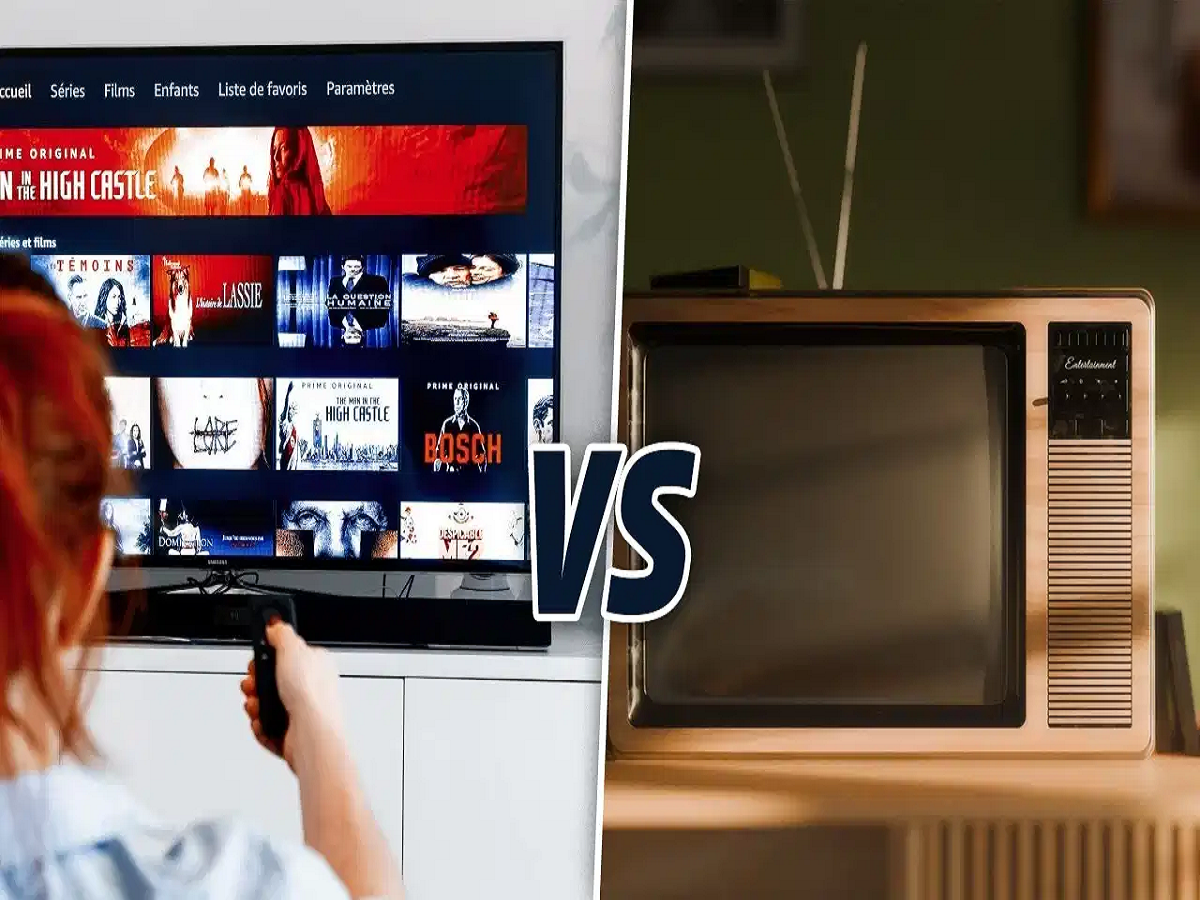
Televisions have changed dramatically over the years. The bulky CRT televisions that once occupied a large part of the living room have largely been replaced by slim LED, LCD and other flat-panel displays.
But the difference isn't just about design and picture quality. The way television signals are transmitted has also changed, and modern TVs can have very different power requirements from older sets.
Here's a simple explanation of how analog and digital television differ.
What Was Analog TV?
Older television systems generally relied on analog signals to transmit picture and sound.
Instead of being represented as digital data, the information was carried through continuously varying electrical or radio signals.
One major drawback was that picture quality depended heavily on signal strength. If the signal became weak or interference occurred, the image could gradually become blurry, develop lines or flicker. Sound could also become noisy.
This is why an old TV could sometimes show a poor-quality picture even though the channel itself was working.
How Does Digital TV Work?
Modern television broadcasting and connected TV systems primarily use digital technology.
The picture and sound are converted into digital information, which can be represented as data. The receiving equipment then processes this information and reconstructs the video and audio.
This allows broadcasters and service providers to transmit high-definition and even ultra-high-definition content along with digital audio and additional information.
Digital signals can also be compressed and transmitted more efficiently than traditional analog signals.
What Happens When a Digital Signal Is Weak?
Digital TV doesn't gradually become blurry in the same way analog TV did.
When the signal is strong enough, you generally get a clear picture and sound. But once the signal becomes too weak for the receiver to properly reconstruct the data, problems can appear suddenly.
You might notice:
- Picture freezing
- Blocky or pixelated images
- Missing audio
- Video stuttering
- Temporary loss of signal
This is sometimes described as the digital "cliff" effect.
Which TV Uses More Electricity?
This depends heavily on the television's size and technology.
Older CRT televisions used bulky picture tubes and could consume substantial amounts of electricity. A typical smaller CRT set could use roughly 60–120 watts, with larger models potentially consuming more.
Modern flat-panel TVs are generally more efficient, although power consumption varies considerably.
A smaller LED TV might use around 20–70 watts, while larger displays can consume 100 watts or more.
Screen size, brightness settings, display technology and the TV's energy-efficiency design all influence actual consumption.
Why Your New TV May Still Increase Your Electricity Bill
A newer television isn't automatically a low-power device.
If you replace a 32-inch TV with a 65-inch or 75-inch model, the larger screen can consume significantly more electricity even if the newer technology is more efficient.
Brightness also matters. Running the TV at maximum brightness continuously can increase power consumption.
Features such as HDR, high refresh rates and powerful built-in speakers can also affect energy use depending on the model and how they are configured.
Is Analog TV Completely Gone?
Analog television has largely been replaced by digital broadcasting in many parts of the world. However, older CRT televisions and some legacy systems can still be found.
The biggest change over the decades has therefore been more than simply moving from a bulky screen to a slim one. Television has moved from continuously varying analog signals to digital data, bringing clearer images, better audio and support for much higher-quality content.