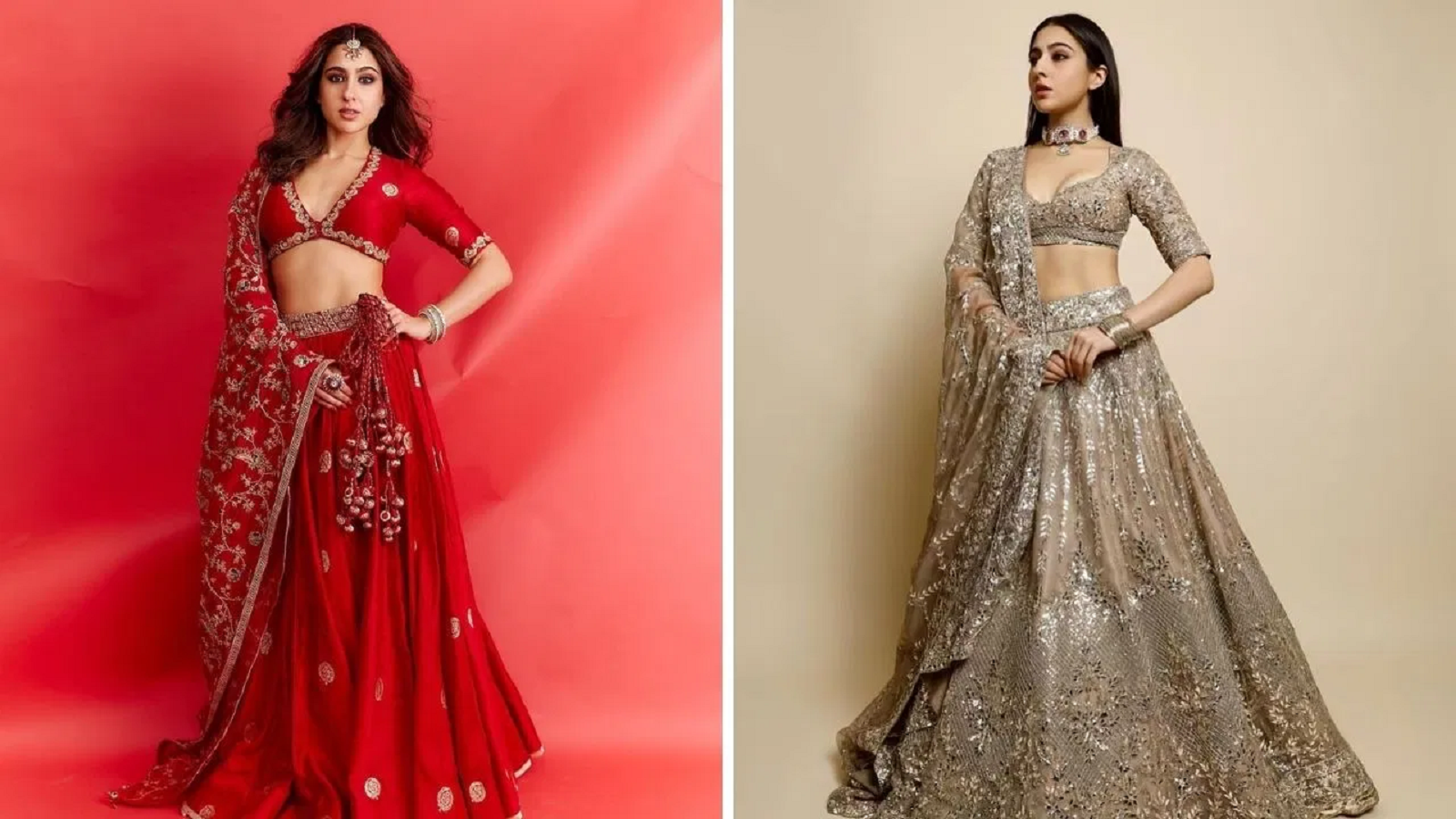
Both lehenga and ghagra are popular outfits for wedding functions. With the wedding season in full swing, the demand for lehengas, ghagras, and heavy suits has increased in the market. However, many people get confused between the two. Although they may look similar at first glance, there are clear distinctions. If you are planning to shop for a lehenga or a ghagra for an upcoming ceremony, it’s important to know the differences.
Both outfits create beautiful traditional looks, but they differ in silhouette, pattern, flare, and even the blouse style. Here are five major differences:
1. Historical background
The Ghagra has been considered a royal garment in regions like Rajasthan, Gujarat, and North India. It is part of traditional attire in these states. The Lehenga, on the other hand, draws its roots from Mughal fashion. Over time, its design evolved into a heavier, more elaborate outfit, eventually becoming a staple of bridal wear.
2. Difference in flare and stitching style
A Ghagra typically has a fuller, heavier flare. The hem is created from fabric of equal length and width, attached to a simple belt and stitched minimally, usually with space left for a drawstring. This gives it a more relaxed, loose fit.
A Lehenga is stitched with proper waist measurements, fitted at the waist and falling in a more structured form until the lower part, giving it a mostly A-line silhouette.
3. Difference in design and workmanship
Ghagras usually feature gota patti work, subtle prints, light lace, and minimal embellishments. The dupatta is often designed similarly, making the outfit comfortable to carry.
Lehengas, in contrast, are more structured and heavily embellished. They may include calico work, cancan layers for volume, heavy borders, zari, embroidery, or sequins. They tend to be heavier and more elaborate.
4. Difference in length and fabric usage
Lehengas are typically floor-length. Ghagras, however, can vary in length — sometimes ankle-length, and sometimes mid-length, falling just below the knees.
A Ghagra requires several meters of fabric to achieve its wide flare. A standard lehenga usually needs only about 3 to 3.5 meters of fabric. A kalidar lehenga may require more, but even then, the flare is often around 2 to 2.5 meters.
5. Difference in blouse style
Lehenga blouses come in numerous designs — heavily worked sleeves, decorative backs, princess-cut silhouettes, stylish necklines, and more detailed craftsmanship.
Ghagras are traditionally paired with long kurtis or shirts. The classic choli worn with a ghagra often has boho elements such as mirror work, cowrie shells, or handcrafted detailing.