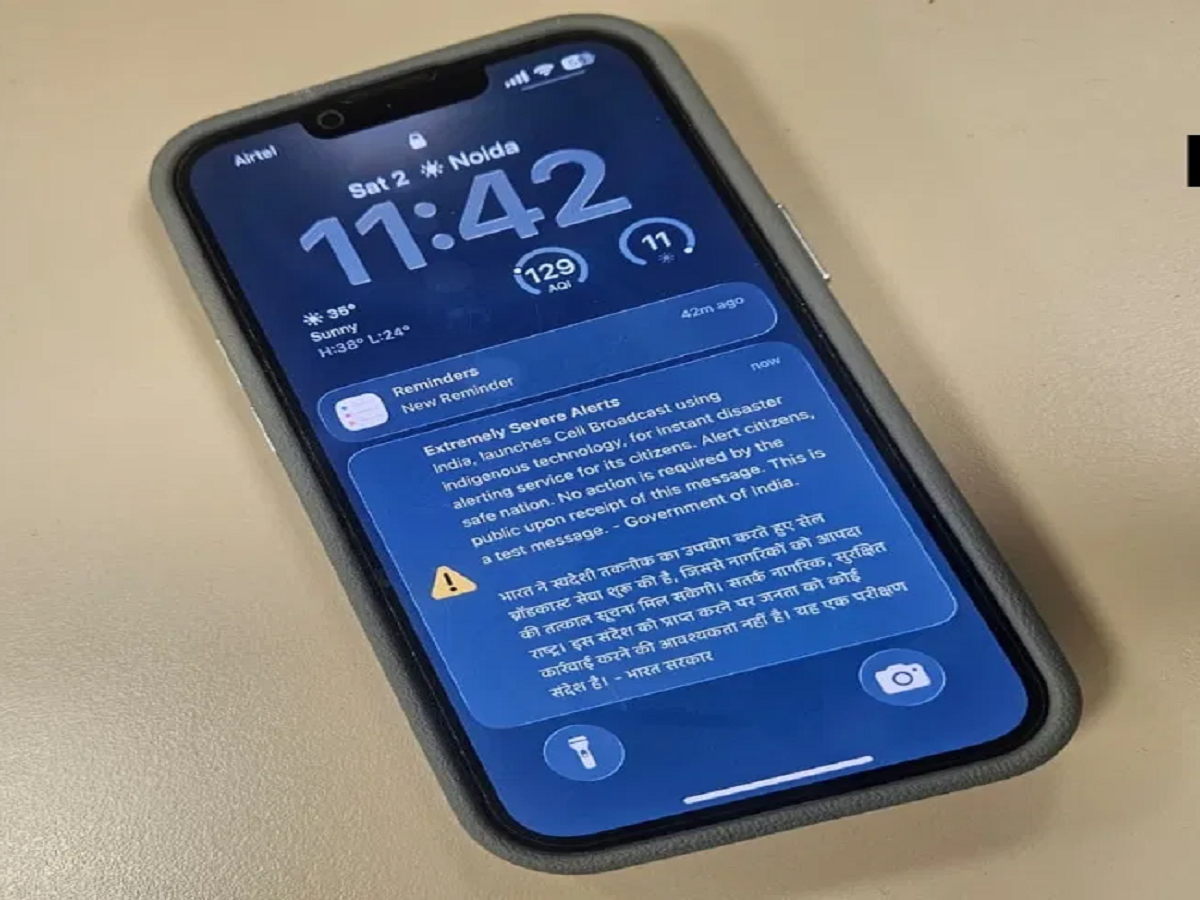
If your smartphone suddenly erupted with a loud, jarring alarm and a flashing "Emergency Alert" message this morning, you aren't alone—and your phone isn't broken. Across the country, citizens experienced a synchronized test of India’s indigenous Cell Broadcast Service, a high-tech safety initiative that has left many wondering about its purpose.
The National Disaster Management Authority (NDMA), in collaboration with the Department of Telecommunications (DoT), is conducting these pan-India tests to ensure the nation is prepared for any crisis.
What Does the Alert Actually Say?
The message appearing on screens is a clear, government-authorized test notification. It reads:
"India has launched a cell broadcast service using indigenous technology, allowing citizens to receive immediate disaster alerts. Alert citizens, a safe nation. The public does not need to take any action upon receiving this message. This is a test message. – Government of India."
The primary takeaway is simple: This is only a drill. You do not need to call emergency services or take any defensive action.
The Technology: How Cell Broadcasting Works
Unlike a standard SMS, which is sent to individual phone numbers, Cell Broadcasting is a location-based technology.
-
Number Independent: The government can send an alert to every single mobile device connected to a specific cell tower simultaneously, regardless of whether they have the number on file.
-
Instant Reach: It bypasses network congestion, delivering vital information to millions of people within seconds.
-
Attention-Grabbing: The distinct, loud alarm tone is designed to override silent modes to ensure the user’s immediate attention during a real life-and-death situation.
Why is This System Essential?
In a country as geographically diverse as India, timely information is a "mechanical necessity" for survival. This system is designed to provide early warnings for:
-
Natural Disasters: Tsunami warnings, earthquake alerts, impending floods, cyclones, and lightning strikes.
-
Man-made Hazards: Industrial gas leaks, chemical accidents, or major fires.
-
National Security: Critical updates during situations of war, terrorist threats, or other national emergencies.
What Should You Do When the Alert Rings?
For the current testing phase, you simply need to acknowledge the message by clicking "OK" or "Dismiss" to stop the alarm.
As smartphones have become more ubiquitous than television or radio, this wireless emergency system is now the government’s most effective tool for disaster management. By conducting these tests, the NDMA is ensuring that when a real emergency strikes, the technology will be a reliable shield for every citizen.