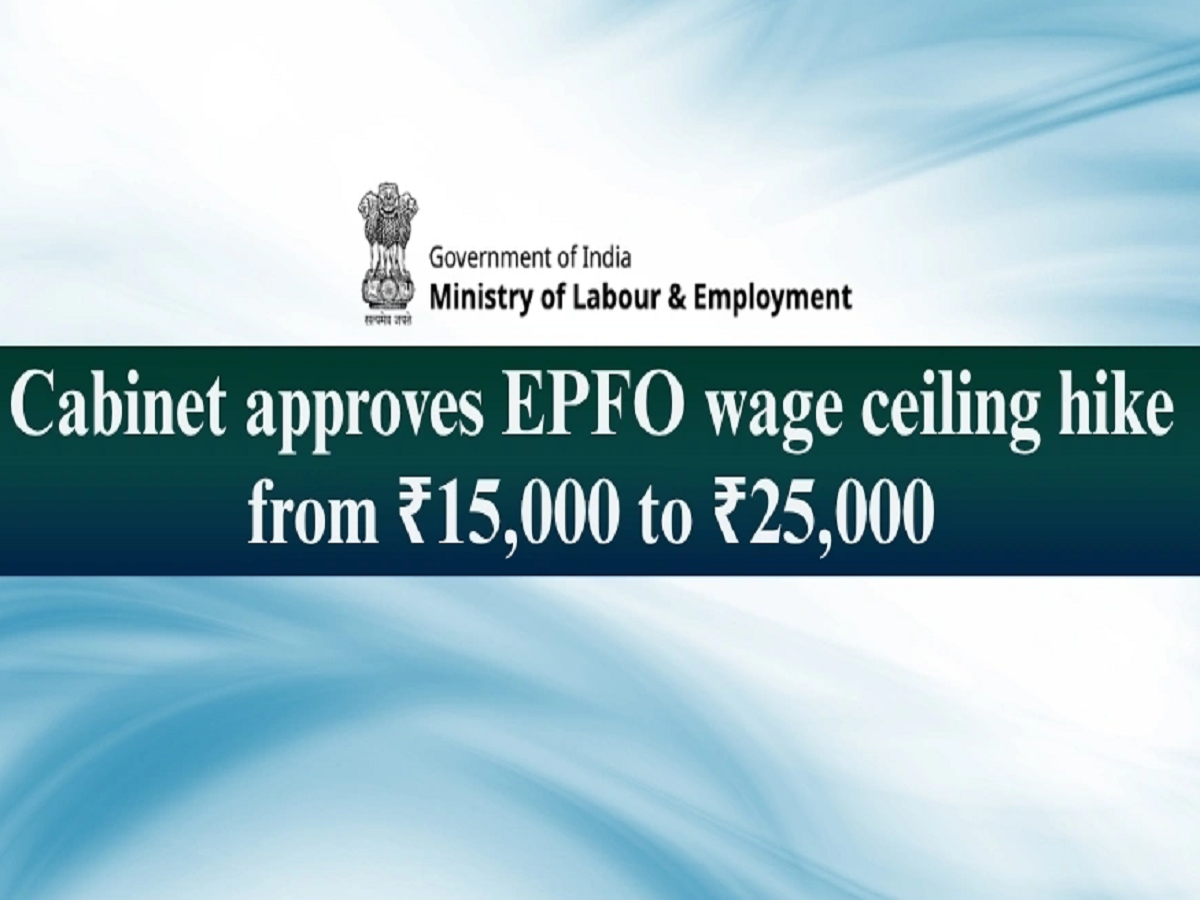
In a major change to India’s social security framework, the government has increased the wage ceiling for mandatory coverage under the Employees’ Provident Fund (EPF) from ₹15,000 to ₹25,000 per month.
The revised ceiling came into effect from September 17, 2026. According to the government, the change is expected to bring around 51 lakh additional employees under the EPF framework and expand retirement and social-security coverage among workers.
What has changed?
Until now, the wage ceiling for mandatory EPF coverage was ₹15,000 per month. The government has now raised this threshold to ₹25,000.
This means employees who fall within the revised wage limit can come under the EPF framework, subject to the applicable rules and conditions.
The revision comes after nearly 12 years and is intended to bring the coverage threshold closer to prevailing wage levels.
How does EPF benefit employees?
The Employees’ Provident Fund is designed to help workers build long-term retirement savings through contributions made during employment.
The accumulated EPF balance can provide financial support after retirement and may also be available for permitted withdrawals during certain circumstances, subject to EPFO rules.
For employees who are newly brought under EPF coverage, the change can therefore mean greater participation in a formal retirement-saving system.
Will your salary reduce because of EPF?
Employees should understand that EPF contributions are part of the salary structure and employment benefits rather than a new tax.
Where EPF applies, both employee and employer contributions are governed by the applicable EPFO rules. The employee’s contribution is generally reflected as a deduction from salary, while the employer makes its prescribed contribution separately.
Therefore, an employee whose salary structure changes because of EPF coverage may see an impact on monthly take-home pay, but the deducted amount contributes toward their provident fund savings.
Who could benefit from the new ceiling?
The revision is particularly relevant for employees whose monthly wages are above the earlier ₹15,000 threshold but fall within the newly revised ₹25,000 ceiling.
The government estimates that approximately 51 lakh additional employees could come under the EPF framework as a result of the change.
What should employees do now?
Employees should check their salary structure and EPF details with their employer or HR department to understand whether the revised ceiling affects their coverage.
Those who become covered should also ensure that their EPFO records, Universal Account Number (UAN) and contribution details are correctly maintained.
The new wage ceiling marks a significant expansion of formal social-security coverage and could make provident-fund savings a part of the employment journey for millions of additional workers.