The way we connect our smartphones to mobile networks is changing rapidly. While physical SIM cards have been the standard for decades, eSIM technology is becoming increasingly common in modern smartphones. From Apple's latest iPhones to premium Samsung Galaxy and Google Pixel devices, many flagship phones now support eSIM, and in some markets, smartphones are even being sold without a physical SIM slot.
But is it the right time to switch? The answer depends on your smartphone, your mobile network, and how you use your device. Here's a closer look at the differences, advantages, and drawbacks of both technologies.
What Is an eSIM?
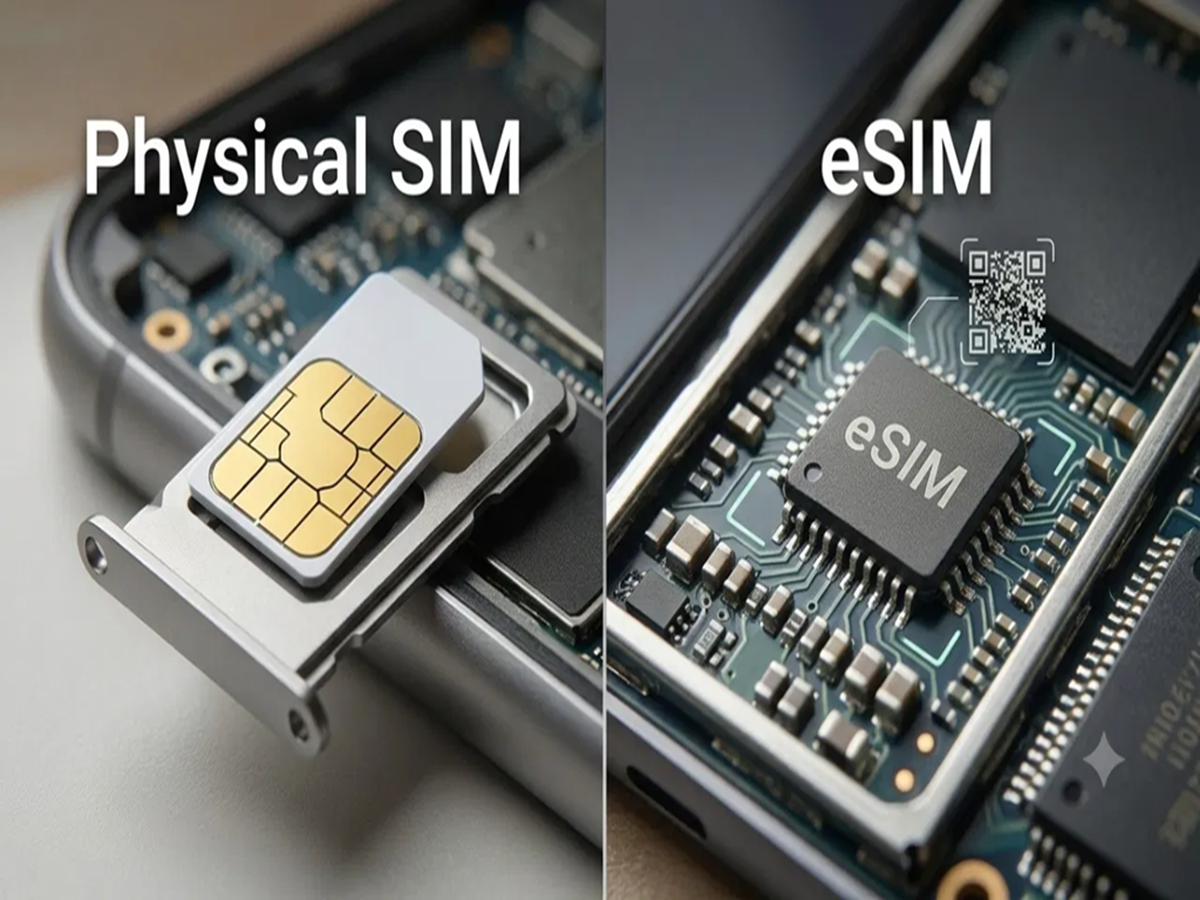
An eSIM (Embedded SIM) is a digital SIM built directly into your smartphone. Unlike a traditional SIM card, it doesn't need to be physically inserted or replaced. Instead, your mobile operator activates your connection by downloading a digital SIM profile to your device.
A physical SIM, on the other hand, is the removable plastic card that stores your subscriber information and connects your phone to your carrier's network.
Advantages of an eSIM
One of the biggest benefits of an eSIM is convenience. Since there's no physical card to handle, you don't have to worry about losing, damaging, or swapping SIM cards every time you change networks.
Most eSIM-compatible smartphones can store multiple eSIM profiles—often seven or more—although only one or two can usually be active at the same time, depending on the device. This makes it easy to switch between personal and work numbers or use local mobile plans while travelling internationally.
Because eSIMs eliminate the need for a SIM tray, smartphone manufacturers can free up internal space for larger batteries or other components. Removing the SIM tray can also improve a phone's resistance to dust and water by reducing one potential entry point.
From a security standpoint, an eSIM offers another advantage. If a phone is stolen, it's much harder for someone to remove the SIM card immediately to disconnect the device from the network or disable tracking features.
Drawbacks of an eSIM
Despite its advantages, eSIM technology isn't perfect.
Not every smartphone supports eSIM, particularly older or budget devices. Support also varies between telecom operators, although most major carriers now offer eSIM services.
Switching to a new phone can sometimes take longer than simply moving a physical SIM card. Depending on your mobile operator, you may need to request a new QR code or complete a verification process before activating your eSIM on another device.
If your phone stops working unexpectedly, transferring your eSIM to a replacement device may require assistance from your carrier, whereas a physical SIM can simply be removed and inserted into another compatible phone.
Why Physical SIMs Are Still Popular
Physical SIM cards remain the most widely used option worldwide for good reason.
They are simple, reliable, and easy to transfer between phones within seconds. If your smartphone is damaged, you can immediately remove the SIM card and continue using your number in another compatible device.
Physical SIMs are also universally supported across almost all smartphones and mobile networks. However, they can be lost, damaged, or accidentally broken, and they require a SIM ejector tool whenever you need to switch devices.
eSIM vs Physical SIM: Quick Comparison
| Feature | eSIM | Physical SIM |
|---|---|---|
| Installation | Digital activation | Manual insertion |
| Easy phone switching | Moderate | Very easy |
| Multiple profiles | Yes | Usually one SIM per card |
| Risk of damage | Very low | Can be lost or damaged |
| International travel | Very convenient | Requires buying and swapping SIMs |
| Security | Better against SIM removal | Can be removed easily |
| Carrier support | Growing but not universal | Widely supported |
Should You Switch to an eSIM?
If you own a recent smartphone that supports eSIM and your telecom provider offers the service, switching can be a smart choice—especially if you travel frequently, want multiple mobile plans on one device, or prefer the convenience of digital activation.
However, if you regularly switch between phones, rely on older devices, or prefer the simplicity of moving a SIM card yourself, a physical SIM may still be the better option.
For many users, the ideal setup today is a combination of both: using an eSIM as the primary connection while keeping the physical SIM slot available for a secondary number or travel SIM. This approach offers the flexibility of modern technology without giving up the convenience of a traditional SIM card.
As smartphone manufacturers continue to embrace eSIM technology, its adoption is expected to grow. While physical SIM cards aren't disappearing overnight, the future of mobile connectivity is increasingly moving toward digital SIMs.