The way Indians choose their next car is changing rapidly. Rising fuel costs and growing interest in alternative-fuel vehicles are pushing more buyers towards electric, CNG and hybrid cars.
For the first time, alternative-fuel vehicles have collectively overtaken petrol cars in India's passenger-vehicle market. According to the Federation of Automobile Dealers Associations (FADA), CNG, hybrid and electric vehicles accounted for 41.95% of passenger-vehicle sales in August 2026, compared with 40.85% for petrol vehicles.
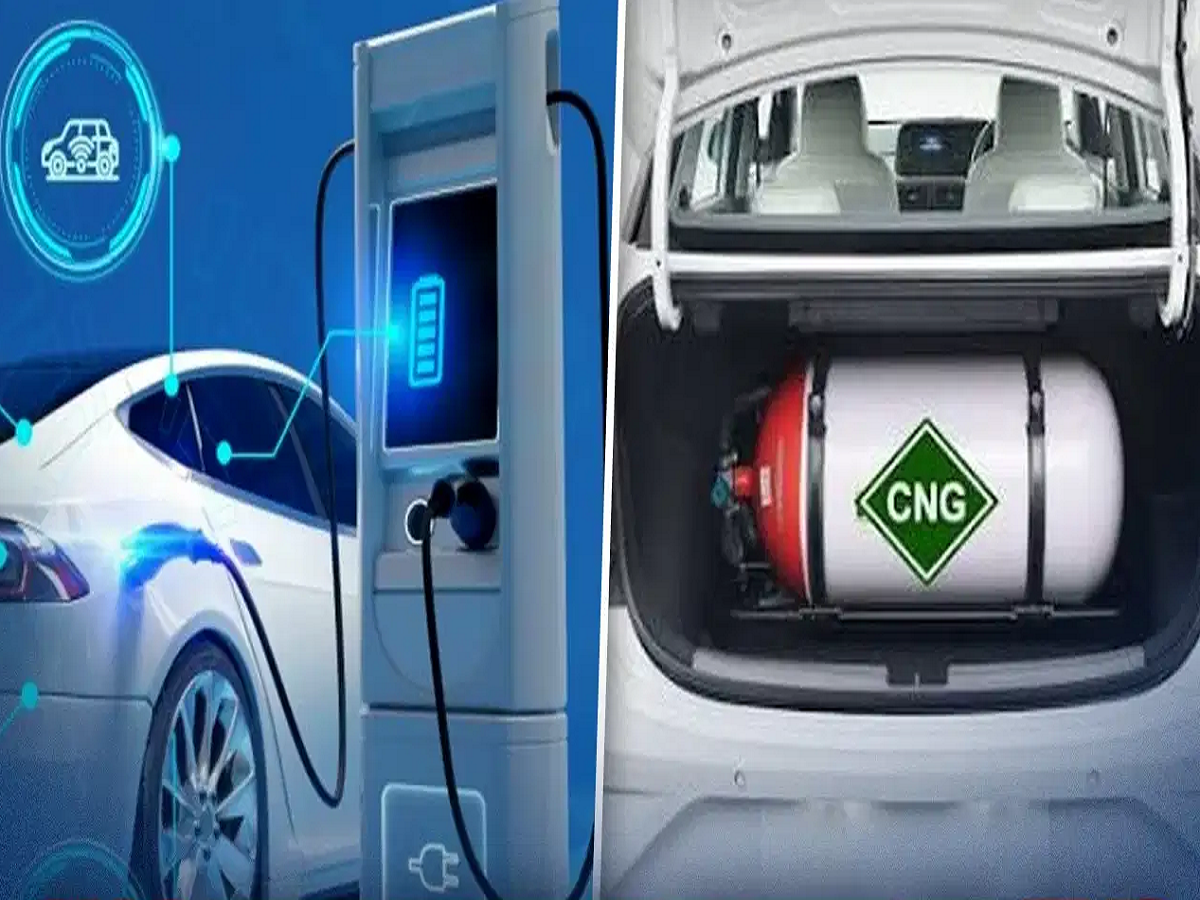
Among these options, EVs and CNG cars are particularly attractive to buyers looking to reduce their monthly running expenses.
But which one actually saves more money—an EV or a CNG car?
The answer depends on how much you drive, where you drive and whether you can charge an EV conveniently.
EV vs CNG: Which has the lower running cost?
According to figures shared by MG Motor India, an EV charged at home can have an approximate running cost of ₹1 to ₹2.5 per kilometre.
If you rely on public charging, the cost can rise to around ₹3.5 to ₹7 per kilometre.
For CNG cars, the typical running cost can be approximately ₹2.5 to ₹4.5 per kilometre.
| Vehicle type | Approx. running cost |
|---|---|
| EV with home charging | ₹1–₹2.5/km |
| EV with public charging | ₹3.5–₹7/km |
| CNG car | ₹2.5–₹4.5/km |
These are approximate figures. Actual costs will depend on electricity tariffs, CNG prices, the vehicle's efficiency, traffic conditions, driving style and other factors.
This means an EV can be considerably cheaper to run when you have access to affordable home charging. But if you depend heavily on public chargers, the advantage over CNG can become much smaller.
What about EVs with Battery-as-a-Service?
The introduction of Battery-as-a-Service (BaaS) has also changed the way some EVs can be purchased.
Under this model, buyers can pay a lower upfront price for the vehicle while paying separately for battery usage or rental. This can make the initial purchase price more attractive.
However, BaaS isn't free. Depending on the vehicle and financing arrangement, there may be a monthly battery rental, minimum usage requirement and other conditions.
Some plans effectively charge around ₹3–₹4 per kilometre, although the exact structure varies between manufacturers and finance partners.
Therefore, don't compare only the upfront price of a BaaS EV with a conventional CNG car. You should calculate the total monthly cost, including battery rental and other applicable charges.
Do you have to pay if you don't drive?
This is an important point to check before choosing a BaaS plan.
Some BaaS arrangements include a minimum monthly rental or minimum kilometre commitment. This means you could still have a payment obligation even if you drive less than expected.
For example, certain plans have cited minimum monthly usage requirements such as 2,000 km, 1,800 km or 1,500 km, depending on the manufacturer, vehicle and finance partner.
The exact terms can differ, so buyers should carefully read the agreement before signing up.
Which one is cheaper to maintain?
EVs have fewer mechanical components than conventional internal-combustion cars. They don't require engine oil changes and don't have components such as spark plugs, a conventional clutch or an exhaust system.
That can reduce the number of routine maintenance jobs.
CNG cars still use an internal-combustion engine, so they require regular servicing and inspection of both the engine and CNG system.
However, maintenance costs can vary considerably between individual models, so buyers should also check the manufacturer's service schedule and warranty terms.
Who should consider buying an EV?
An EV could make sense if:
-
You can charge the car at home or work.
-
Most of your driving happens within the city.
-
You drive regularly and cover a significant number of kilometres.
-
You want lower routine maintenance requirements.
-
You plan to keep the car for several years.
For people with convenient home charging, the low cost per kilometre can be one of the biggest advantages of an EV.
Who should consider a CNG car?
CNG may be more practical if:
-
You don't have convenient access to EV charging.
-
There are plenty of CNG stations along your regular routes.
-
You frequently travel long distances.
-
You prefer quick refuelling.
-
You don't want to depend on charging infrastructure.
For frequent highway travellers, the ability to refuel quickly can make CNG more convenient than an EV, particularly where fast-charging infrastructure isn't readily available.
EV or CNG: Which should you buy?
Don't make the decision based on mileage or running cost alone.
Before buying, calculate how many kilometres you drive every month, where you drive, how easily you can charge or refuel, and how long you intend to keep the vehicle.
If you have reliable home charging and drive mostly in the city, an EV can offer a significant running-cost advantage.
But if charging is inconvenient and CNG stations are easily accessible around you, a CNG car could be the more practical choice.
Ultimately, the cheapest car to run is the one that fits your daily driving pattern—not necessarily the one with the lowest advertised cost per kilometre.