BUSINESS
Government's New Biofuel Push: ₹23,731 Crore Scheme Could Create New Opportunities for Farmers and Rural Businesses
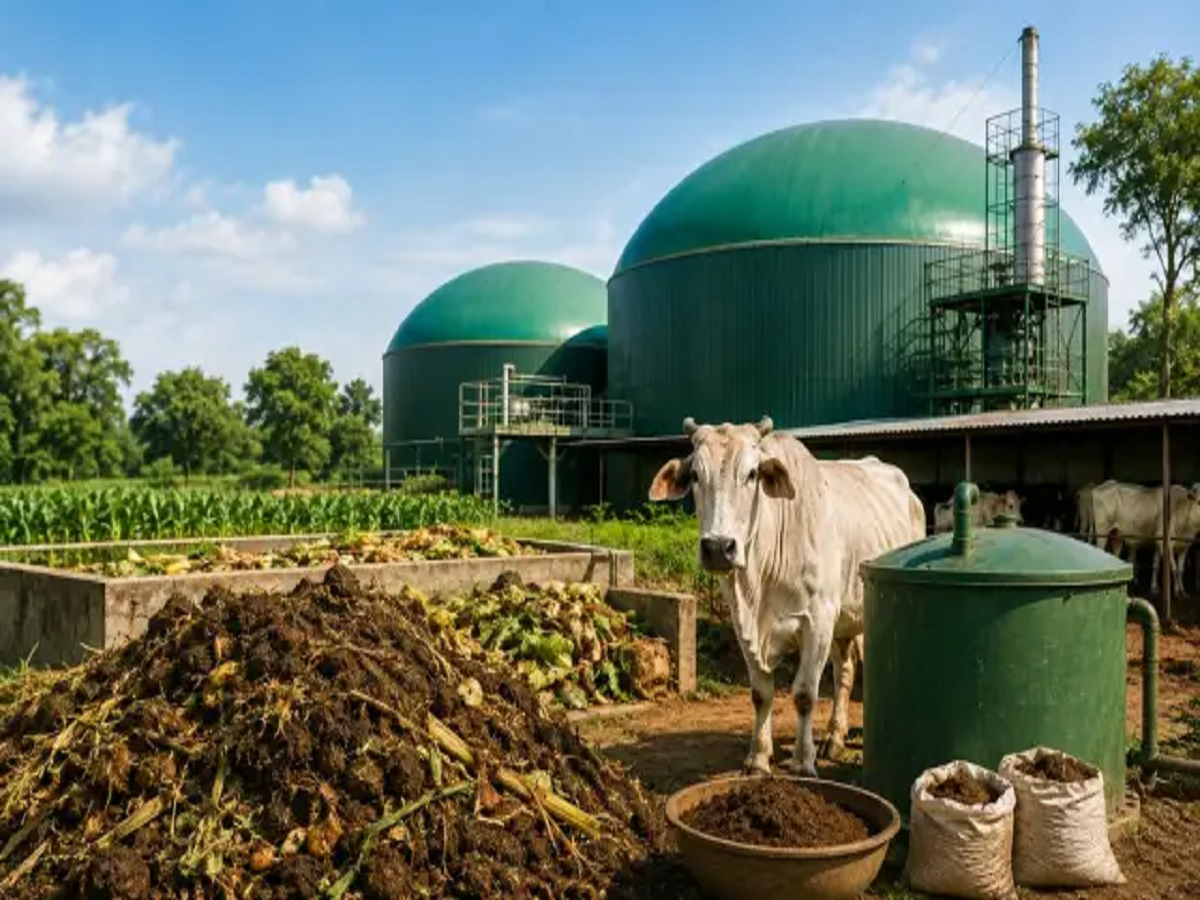
The government has approved a major new scheme aimed at turning agricultural and organic waste into clean energy. The Cabinet has approved GOBARdhan, the National Circular Bioenergy Scheme, with a total financial outlay of ₹23,731 crore for the period from 2026-27 to 2035-36.
The initiative is designed to expand Compressed Biogas (CBG) production in India while creating new opportunities for farmers, rural entrepreneurs and private companies.
What Is the GOBARdhan Scheme?
GOBARdhan focuses on converting organic waste such as agricultural residues, cattle dung and other biodegradable material into useful energy products, particularly Compressed Biogas.
The government wants CBG to become a significant part of India's future energy mix. The new national framework is expected to support the development of CBG plants and create a more organised market for the fuel.
Why Is the Government Spending ₹23,731 Crore?
One of the main objectives is to provide greater financial and market support to CBG producers.
The scheme includes measures such as:
-
Assured offtake of compressed biogas
-
More stable pricing mechanisms
-
Capital assistance
-
Better pipeline connectivity
-
Improved access to finance
-
Support for development of CBG projects
The government expects these measures to encourage more investment in the sector and significantly increase India's domestic CBG production.
How Can Farmers Benefit?
Agricultural and animal waste that might otherwise have limited economic value can become a potential source of income.
Farmers and rural communities can potentially supply suitable organic material to CBG plants. This creates an additional avenue for monetising agricultural and livestock waste while also helping address waste-management challenges.
The scheme is therefore being positioned not only as an energy initiative but also as part of a broader rural economic opportunity.
What Is Compressed Biogas?
Compressed Biogas is produced by processing organic waste through anaerobic digestion. The resulting biogas can be purified and compressed for use as a fuel.
CBG can be used in applications similar to compressed natural gas, making it potentially useful for transport and other energy requirements.
The production process also generates organic material that can be used in agriculture after appropriate processing.
How Could This Help India's Energy Security?
India imports a significant amount of fossil fuel, making energy security an important policy priority.
Increasing domestic production of renewable fuels such as CBG can help diversify the country's energy sources and reduce dependence on conventional fossil fuels.
The government says the new scheme is expected to support energy security while also promoting waste-to-wealth and a circular economy.
Will This Create New Business Opportunities?
The scheme could create opportunities across several parts of the CBG ecosystem.
These may include:
-
CBG plant development
-
Waste collection and transportation
-
Equipment manufacturing
-
Plant operations and maintenance
-
Organic-waste processing
-
Pipeline and distribution infrastructure
-
Financing and other support services
This could particularly benefit rural entrepreneurs and businesses operating close to agricultural and livestock-producing areas.
What Does This Mean for Ordinary Consumers?
The scheme is not a direct cash-benefit programme for households. Its immediate focus is on developing India's bioenergy infrastructure.
However, if CBG production expands significantly, consumers could eventually see wider availability of domestically produced renewable fuel, while rural areas could benefit from new economic activity and better waste management.
The Bottom Line
The ₹23,731-crore GOBARdhan scheme represents a major government push to turn organic waste into an economic and energy resource.
With the programme scheduled to operate from FY 2026-27 to FY 2035-36, the government is aiming to create a stronger CBG industry while supporting farmers, rural businesses, private investment and India's broader energy-security goals.