BUSINESS
India’s AI Race Enters a New Phase: Why Data Centres, Chips and Compute Power Matter More Than Ever
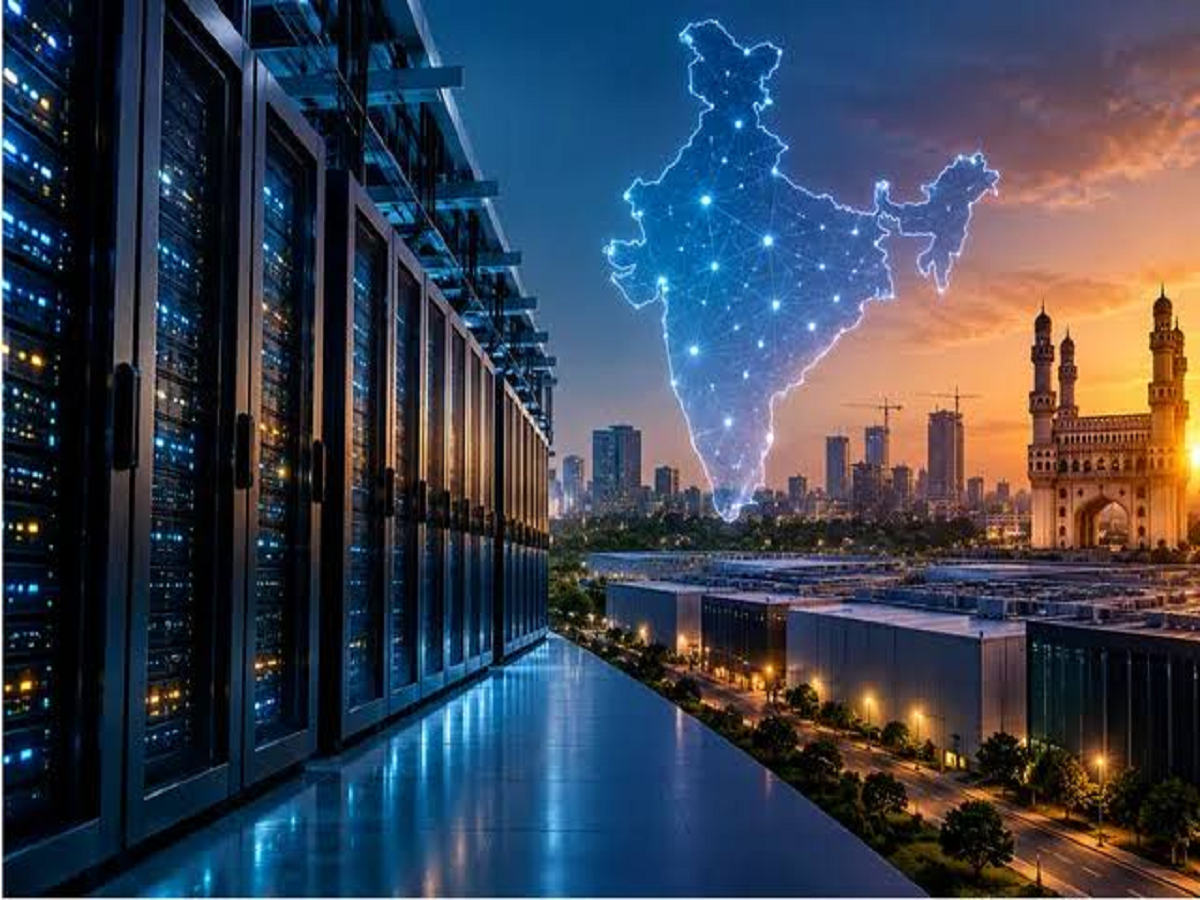
India's artificial intelligence ambitions are entering a new phase. The focus is increasingly moving beyond AI chatbots and software applications towards the infrastructure required to actually build and run powerful AI systems.
Recent developments have highlighted a growing push around AI data centres, specialised chips, semiconductor facilities and computing capacity. At the same time, Indian companies are increasing their AI investments as businesses look for ways to automate operations and improve productivity.
For ordinary users, this may sound like a behind-the-scenes technology story. But the expansion of AI infrastructure could eventually affect everything from smartphones and banking to online services, jobs and the cost of using AI tools.
Why Does AI Need So Much Computing Power?
Modern AI models require enormous amounts of computing power.
When an AI model is trained, thousands of specialised processors can work together to process huge amounts of data. Even after training is complete, running AI services for millions of users requires powerful data centres equipped with specialised hardware.
This is why the global AI race is no longer just about who develops the smartest model.
It is increasingly also about who has access to chips, data centres, electricity, cooling systems and high-speed networks.
India Is Expanding Its AI Data-Centre Capacity
India's data-centre industry is entering an AI-focused phase.
A recent industry report noted that India's colocation data-centre capacity has grown substantially over the past five years and could expand further as AI workloads and data-localisation requirements increase.
One major recent proposal involves a planned 1GW AI data-centre campus in Telangana, with investment of up to ₹70,000 crore by a consortium involving TCS subsidiary HyperVault and its partners.
A project of this scale illustrates just how much infrastructure future AI systems could require.
What Exactly Is an AI Data Centre?
A normal data centre stores and processes digital information.
An AI-focused data centre goes further by using large numbers of high-performance processors designed for machine-learning workloads.
These facilities require:
- High-performance GPUs or specialised AI processors
- Large amounts of electricity
- Advanced cooling systems
- High-speed networking
- Huge amounts of data storage
- Strong cybersecurity
- Reliable backup power
As AI models become more capable, the computing requirements can increase significantly.
India Is Also Building Semiconductor Capability
AI infrastructure is not limited to data centres.
India is also attempting to strengthen its semiconductor ecosystem.
Recent developments include new investments in semiconductor research and advanced laboratories. HCLTech, for example, has opened an Advanced Semiconductor Lab in Bengaluru, involving an investment of ₹185 crore and including high-grade cleanroom facilities.
The semiconductor industry is strategically important because advanced chips are at the heart of modern AI systems.
Today, much of the world's most advanced AI computing hardware is produced through highly specialised global supply chains. Developing more domestic capability could help India reduce some of its dependence on external sources over time.
AI Is Moving Into Everyday Services
The infrastructure boom is happening because AI is increasingly being incorporated into ordinary digital services.
Banks can use AI for fraud detection and customer service. Businesses can use it for document processing and software development. Healthcare companies are experimenting with AI-assisted diagnosis and monitoring.
At the Global Fintech Fest 2026, Communications Minister Jyotiraditya Scindia highlighted connectivity, compute and trust as the three pillars of an AI-driven digital economy. He also pointed to AI's potential role in predictive finance and fraud prevention.
This means AI is gradually moving from something people simply interact with through chatbots to technology operating behind everyday services.
AI Agents Could Be the Next Big Shift
Another important development is the rise of AI agents.
Traditional AI systems generally respond to a user's request.
AI agents are designed to go a step further by planning tasks and potentially taking actions using connected tools.
India's payments ecosystem is already exploring what this could mean. NPCI is reportedly working on protocols for identifying and authorising AI agents operating on UPI. In the future, this could potentially allow AI systems to carry out routine purchases on behalf of users, subject to authentication and safeguards.
For example, instead of simply asking an AI assistant where to buy something, a future system could potentially compare options and complete an authorised purchase for you.
But that also creates a major question: how do you make sure an AI agent does not make the wrong payment?
Security Is Becoming More Important
The rapid development of AI is also creating new cybersecurity concerns.
The government has warned that AI can make cyberattacks more scalable by helping attackers automate reconnaissance, vulnerability exploitation, credential attacks and highly convincing social-engineering campaigns.
CERT-In has conducted cybersecurity exercises focused specifically on AI-driven threats, involving 1,470 participants from 345 government and private organisations.
This highlights an important reality: the same technology that makes digital services smarter can also make cyberattacks more sophisticated.
What Does This Mean for Smartphone Users?
AI infrastructure will increasingly affect smartphones too.
Modern phones already use AI for photography, voice recognition, translation, battery optimisation and other features.
As AI chips become more capable, more processing can potentially happen directly on the device instead of sending every task to a remote server.
This can provide benefits such as faster responses and improved privacy for certain tasks.
At the same time, cloud-based AI will remain important for tasks requiring much more computing power than a smartphone can provide.
Could AI Infrastructure Create More Jobs?
The answer is likely to be mixed.
AI can automate certain repetitive tasks, which may reduce demand for some types of work.
At the same time, building and operating AI infrastructure creates demand for engineers, semiconductor specialists, data-centre technicians, cybersecurity professionals, AI researchers and other skilled workers.
Indian IT companies are already adapting their business models as AI changes the traditional outsourcing industry. Reuters reported that companies including TCS, Infosys, Wipro and HCLTech are increasingly moving towards outcome-based pricing as clients demand greater productivity from AI-enabled services.
This means the biggest change may not simply be AI replacing jobs, but the nature of many jobs changing.
The Biggest Challenge: Electricity and Cooling
There is one less glamorous but extremely important part of the AI boom: energy.
Large AI data centres consume enormous amounts of electricity and generate substantial heat.
That means India will need reliable power infrastructure, efficient cooling technologies and suitable locations for future AI facilities.
Water availability can also become an important consideration because some data centres use significant quantities of water for cooling.
As AI computing expands, infrastructure planning will therefore become just as important as developing better AI models.
Why This Matters for India
India has a large technology workforce, a huge digital economy and one of the world's biggest consumer bases for digital services.
But developing competitive AI capabilities requires more than software engineers.
It requires compute, chips, data centres, energy, networking infrastructure and skilled researchers.
That is why India's AI story is increasingly becoming an infrastructure story as well.
What Could Happen Next?
Over the next few years, India's AI ecosystem could see more investment in:
- AI data centres
- Semiconductor manufacturing and research
- AI-specific cloud computing
- Cybersecurity
- AI agents
- Local AI models
- On-device AI
- 5G and eventually 6G infrastructure
- AI-focused startups
The challenge will be ensuring that this infrastructure translates into useful technology for Indian businesses and consumers rather than simply creating expensive computing capacity.
Bottom Line
India's AI race is moving beyond chatbots.
The next stage will depend heavily on who can build the computing infrastructure, chips, data centres and secure digital systems needed to run AI at scale.
For consumers, this could eventually mean smarter phones, faster digital services, more automated banking and new AI-powered applications.
But it will also bring new questions about cybersecurity, privacy, employment, electricity consumption and who controls increasingly powerful AI systems.
In other words, the future of AI may be decided not only inside AI models — but also inside data centres, semiconductor labs and the infrastructure supporting them.