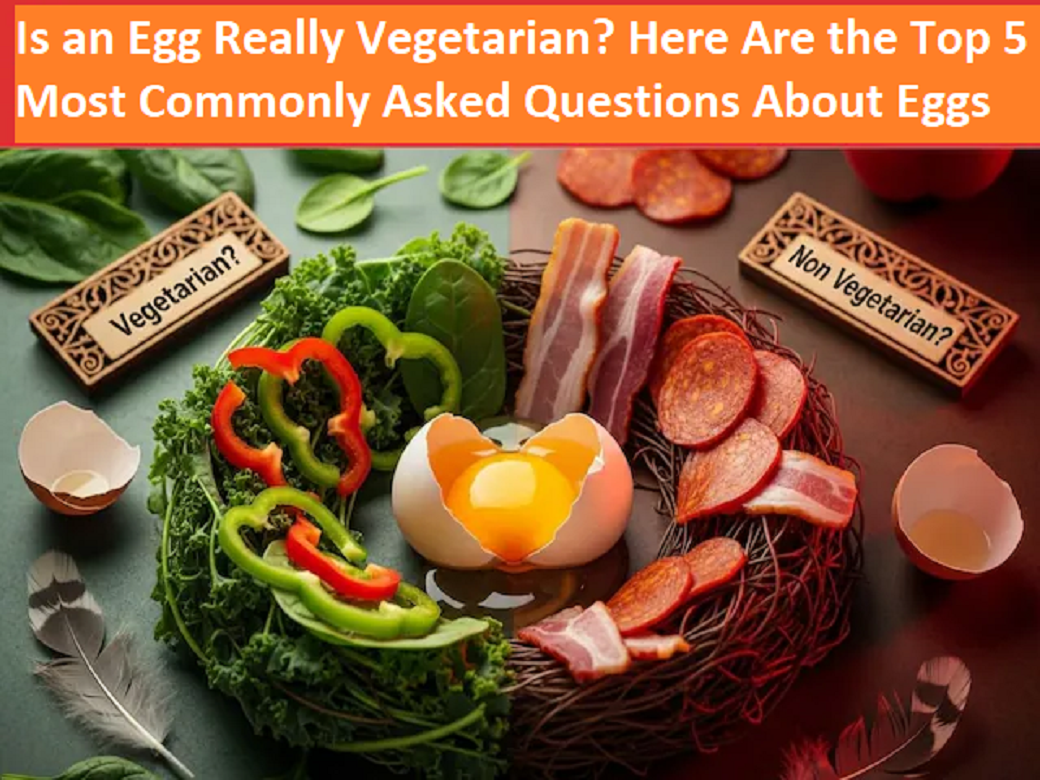
There has always been an ongoing debate about whether an egg is vegetarian or non-vegetarian. Scientifically, most eggs sold in the market are non-fertilized, meaning they contain no embryo or developing life. Hence, they can technically be considered vegetarian. However, since eggs are derived from chickens, many people classify them as non-vegetarian.
Let’s explore the five most frequently asked questions related to eggs:
1. Are eggs vegetarian or non-vegetarian?
From a scientific perspective, most commercial eggs are non-fertilized, meaning they are laid by hens but do not contain any embryo. Therefore, these eggs do not develop into a living organism, which allows some people to consider them vegetarian. However, since they originate from an animal source, many people still categorize them as non-vegetarian, often for religious or ethical reasons.
2. What nutrients are found in eggs?
Eggs are often called a superfood because they contain almost every essential nutrient the body needs. They are rich in:
-
High-quality protein
-
Vitamin D and Vitamin B12
-
Iron and Zinc
-
Omega-3 fatty acids
The egg white is loaded with protein, while the yolk contains healthy fats, vitamins, and minerals. One egg provides about 6 grams of protein and around 70 calories, making it a perfect addition to a balanced diet.
3. Is it healthy to eat eggs daily?
If your cholesterol levels are normal and you do not have any heart-related issues, eating one or two eggs a day is considered safe. However, people with high cholesterol, fatty liver, or other metabolic conditions should limit their intake of egg yolks and consult a doctor before including eggs in their daily diet.
4. Do eggs cause weight gain or help with weight loss?
Contrary to popular belief, eggs can actually help with weight management. They are high in protein and low in carbohydrates, which helps keep you full for longer and reduces unnecessary snacking. Having boiled or poached eggs for breakfast can boost energy levels and support weight loss goals.
5. What are the alternatives for people who don’t eat eggs?
For those who avoid eggs, there are several plant-based protein alternatives such as:
-
Tofu and Paneer (Cottage Cheese)
-
Soy chunks or Lentils
-
Quinoa and Chickpeas
Nowadays, egg substitutes are also available in the market for baking and cooking purposes, offering a similar texture and nutritional balance.
Bottom Line:
Eggs are a powerhouse of nutrients and can be part of a healthy diet, depending on your beliefs and dietary preferences. Whether you consider them vegetarian or non-vegetarian largely depends on personal or cultural choices.
Disclaimer: The information in this article is based on general research and expert opinions. Please consult a healthcare professional before making any dietary changes.