BUSINESS
New Government Scheme 2026: ₹23,731 Crore GOBARdhan Scheme Approved, Farmers and Rural Entrepreneurs Can Benefit
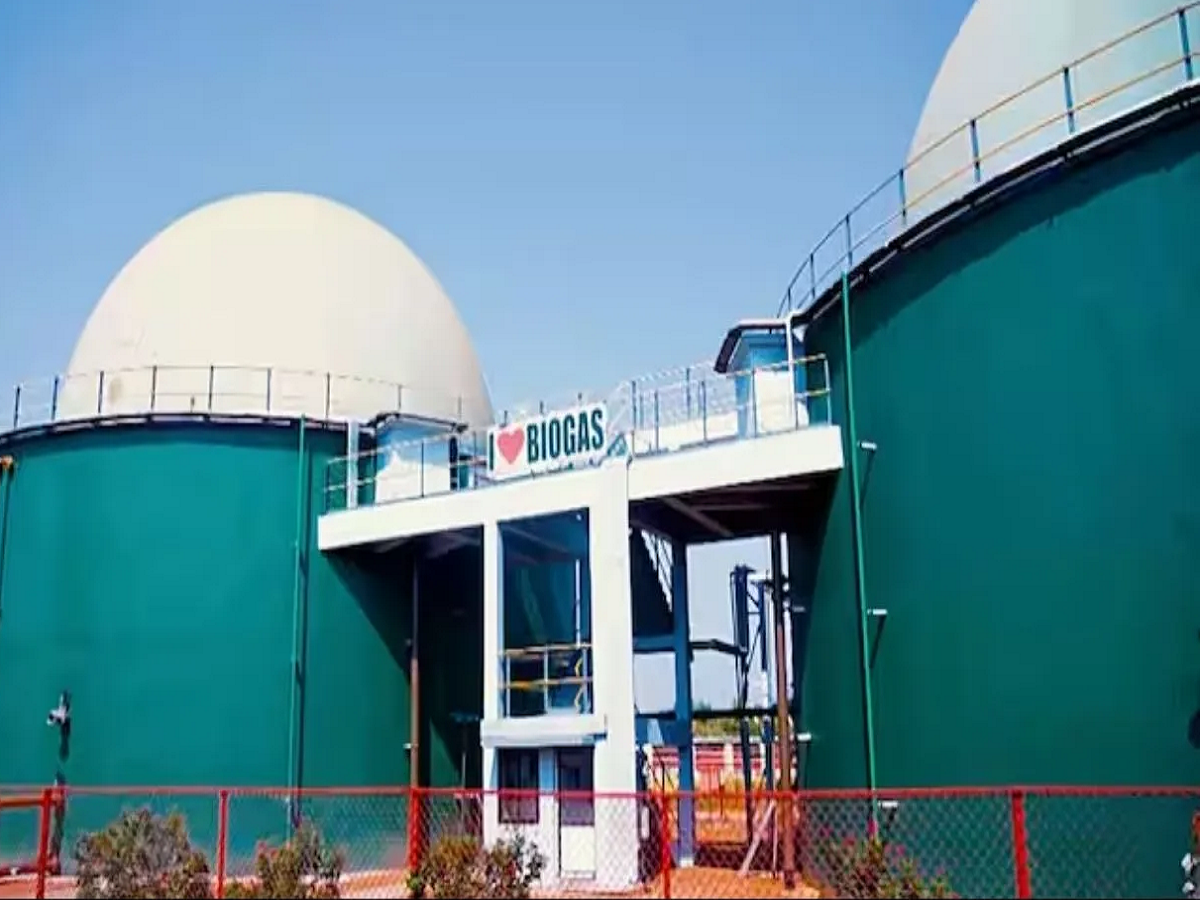
The government has approved a major new scheme aimed at turning agricultural waste, cattle dung and other organic waste into clean energy and additional economic opportunities. The Union Cabinet approved the GOBARdhan, or National Circular Bioenergy Scheme, on August 6, 2026, with a total outlay of ₹23,731 crore.
The scheme will be implemented from financial year 2026-27 to 2035-36 and is designed to significantly expand India's compressed biogas (CBG) sector. The government aims to increase domestic CBG production nearly tenfold while creating new opportunities for farmers, cooperatives, MSMEs and rural entrepreneurs.
What is the GOBARdhan scheme?
GOBARdhan aims to convert organic resources such as cattle dung, agricultural residue, press mud, municipal organic waste and other biomass into compressed biogas and organic manure.
The scheme brings various elements of the CBG ecosystem under one framework administered by the Ministry of Petroleum and Natural Gas. The government says this will make it easier to develop projects, attract investment and create a stronger market for compressed biogas.
How can farmers and rural areas benefit?
One of the major objectives of the scheme is to create additional economic opportunities in rural areas.
CBG plants require a regular supply of agricultural residue, cattle dung and other organic material. This can create opportunities for farmers, biomass aggregators, transporters, cooperatives and rural businesses.
CBG plants can also produce organic manure, creating another potential source of value from agricultural and animal waste.
The government expects the scheme to strengthen rural livelihoods while improving scientific waste management.
Projects can get capital assistance
Eligible new CBG projects can receive capital assistance of up to ₹2 crore per tonne per day (TPD) of installed CBG capacity.
The assistance can cover not only core plant equipment but also certain important assets related to feedstock aggregation, organic manure processing and value addition. Existing projects that expand their capacity can also be eligible under the scheme's provisions.
This could make it easier for private developers, cooperatives, MSMEs and rural entrepreneurs to set up or expand CBG projects.
Credit support will also be available
Financing is often one of the biggest challenges for new energy projects. The GOBARdhan scheme therefore includes a dedicated credit-guarantee mechanism for eligible MSME-based CBG projects.
According to the government, the mechanism can provide credit-guarantee coverage of up to 85% on eligible loans. This is intended to improve access to institutional finance and reduce some of the lending risk for eligible projects.
Government will create a market for CBG
Another important feature is the assured-offtake framework.
City Gas Distribution entities will procure CBG to support the notified CBG obligation. The target is 3% in FY 2026-27, 4% in FY 2027-28 and 5% from FY 2028-29 onwards in the CNG transport and PNG domestic segments.
The government has also introduced a stable administered CBG price of ₹2,110 per MMBTU, equivalent to ₹105 per kg of CBG, under the pricing framework.
Who can benefit from the scheme?
The scheme could create opportunities for several groups, including:
-
Farmers supplying agricultural residue or cattle dung
-
Rural entrepreneurs
-
Cooperatives
-
MSMEs involved in CBG projects
-
Biomass collection and transportation businesses
-
Companies developing CBG plants
-
Businesses involved in organic manure production
However, the benefits and financial assistance are linked to eligibility and the specific components of the scheme. Simply having agricultural waste does not mean an individual farmer will automatically receive a cash benefit.
India already has more than 200 commissioned CBG plants
The government says more than 200 CBG plants have already been commissioned through the various initiatives that helped build India's CBG ecosystem.
As of August 6, 2026, the GOBARdhan Unified Registration Portal showed 1,908 registered CBG/Bio-CNG plants across the country. Of these, 217 had been commissioned and 339 were under construction.
The new national framework is intended to accelerate this expansion.
What does this mean for ordinary households?
The scheme is primarily focused on developing the CBG industry rather than providing a direct cash subsidy to every household.
However, increased domestic production of renewable gas could eventually strengthen India's energy security and reduce dependence on imported fossil fuels. The scheme may also create new rural businesses around waste collection, transportation, CBG production and organic manure.
For farmers and rural entrepreneurs interested in setting up a CBG-related business, the new scheme could therefore create opportunities over the coming years.
A new 'waste to wealth' opportunity
The GOBARdhan scheme is designed around a simple idea: agricultural and organic waste can become a source of energy and income instead of being treated only as waste.
With a ₹23,731 crore outlay, capital assistance, credit support, assured demand and a stable pricing framework, the government is attempting to build a much larger CBG industry in India.
For farmers, cooperatives and rural entrepreneurs, the scheme could open new business opportunities linked to biomass, clean energy and organic manure while also helping villages manage agricultural and animal waste more efficiently.