BUSINESS
New Solar Scheme Approved: 5,000 MW Floating Solar Projects Could Change India's Clean Energy Future
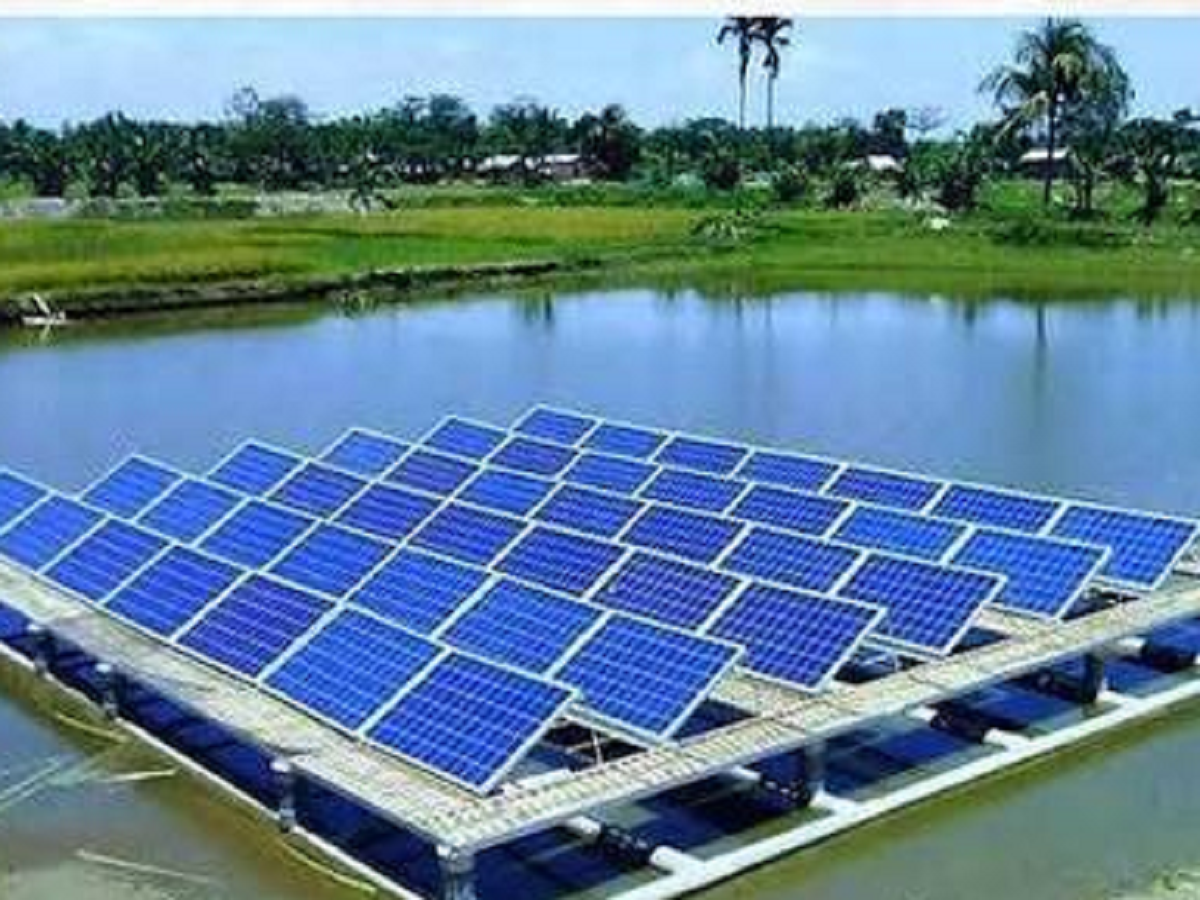
India is expanding its clean-energy push beyond traditional rooftop and ground-mounted solar projects. The government has approved the Pradhan Mantri Surya Sarovar Yojana (PM-SSY), a new initiative aimed at developing 5,000 MW of floating solar capacity with energy-storage systems. The scheme was approved on July 31, 2026.
Floating solar projects use water bodies such as reservoirs and dams to install solar panels instead of using large areas of land. The new programme could therefore help India increase renewable-energy generation while making better use of existing water infrastructure.
What Is the Pradhan Mantri Surya Sarovar Yojana?
The PM-SSY is designed to support the development of large-scale floating solar power projects.
Unlike conventional solar farms, floating solar plants are installed on suitable water surfaces. This approach can reduce the amount of land required for renewable-energy projects and potentially make use of reservoirs associated with existing infrastructure.
The government's new target is to support 5,000 MW of floating solar capacity, backed by energy-storage systems.
Why Is Floating Solar Important?
India has been rapidly increasing its solar-power capacity, but finding suitable land for large projects can be challenging in some areas.
Floating solar provides another option. By using water surfaces, developers can generate electricity without occupying large stretches of agricultural or other land.
There can also be additional benefits in suitable locations, such as reducing direct sunlight and wind exposure on parts of the water surface, although the actual impact varies depending on the project and local conditions.
Energy Storage Will Play a Key Role
One of the important aspects of the new programme is its focus on energy storage.
Solar power generation depends on sunlight, which means production naturally varies throughout the day. Storage systems can help retain electricity generated when solar output is high and make it available when required.
Combining floating solar with storage could therefore make renewable electricity more useful for meeting demand beyond the hours of strong sunlight.
What Could This Mean for Electricity Consumers?
The scheme is not a direct subsidy for household electricity bills, so consumers should not expect an immediate reduction in their monthly bills because of PM-SSY.
Instead, the programme is aimed at expanding India's overall electricity-generation capacity and strengthening the renewable-energy share of the power system.
Over the longer term, increasing domestic renewable generation could help diversify India's energy mix and reduce dependence on conventional sources.
Could It Help Save Land?
Land availability is one of the challenges associated with large-scale solar development.
Floating solar projects can potentially address part of this issue by using suitable reservoirs and other water bodies. This could be particularly useful in regions where large areas of land are difficult or expensive to acquire.
However, not every water body is suitable for floating solar. Environmental considerations, water usage, reservoir conditions, transmission connectivity and engineering requirements all need to be assessed before a project is developed.
India's Solar Sector Is Already Growing Rapidly
The new scheme comes as rooftop solar adoption is also expanding rapidly.
The PM Surya Ghar: Muft Bijli Yojana crossed more than 50 lakh beneficiary households in August 2026, with around 14.8 GW of rooftop solar capacity commissioned under the programme. Nearly 19 lakh households were reported to be receiving zero electricity bills.
This shows that India's solar expansion is taking place at both the household and large-project levels.
What Happens Next?
The implementation of PM-SSY will require project development, suitable water-body identification, financing, grid connectivity and deployment of storage technology.
If the planned 5,000 MW capacity is successfully developed, floating solar could become a much more significant part of India's renewable-energy landscape.
For consumers, the biggest takeaway is that the government is not relying on just one type of solar power. Rooftops, large solar parks and now floating solar projects are all becoming part of India's broader clean-energy strategy.
The new floating-solar push could ultimately help India generate more renewable electricity while making better use of available land and water infrastructure.