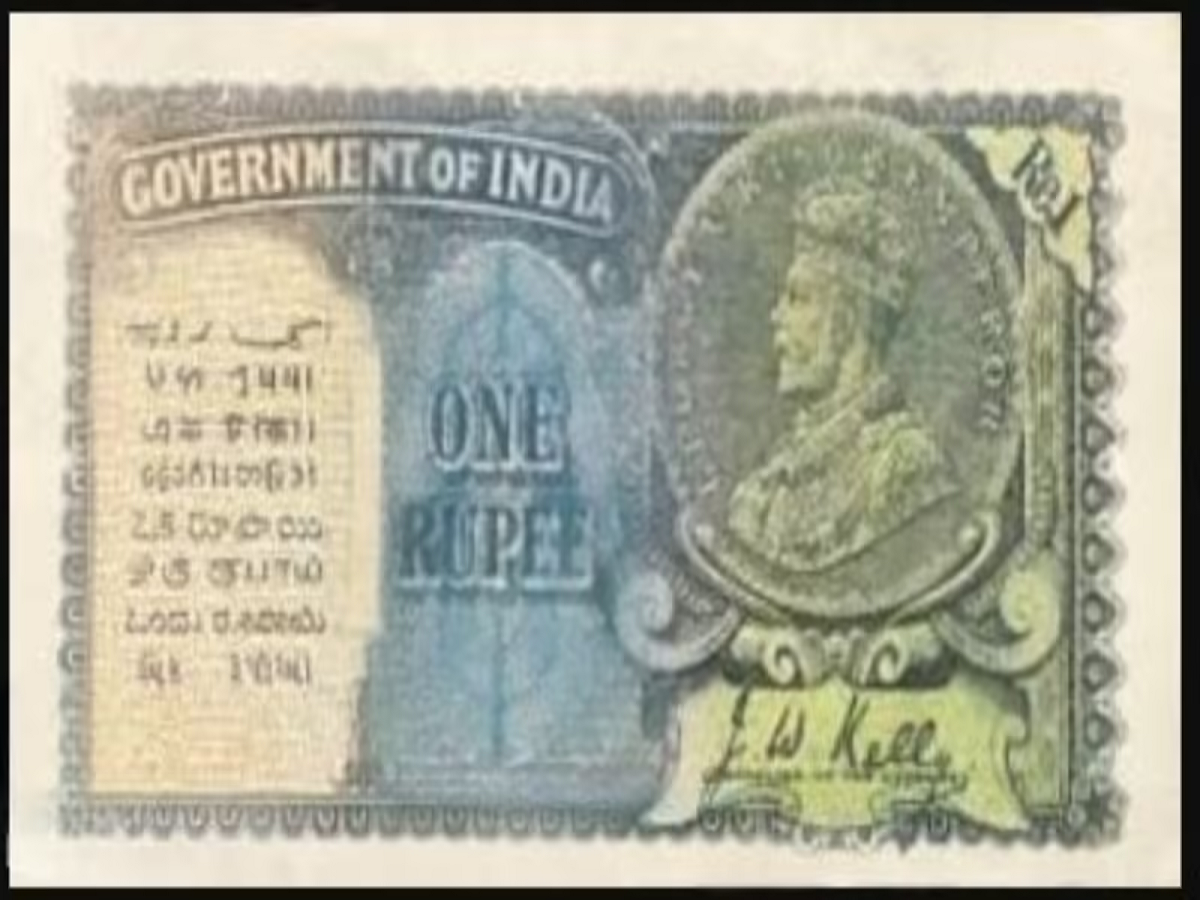
The most talked-about note in the market these days is a 1 rupee note from the British era. This note was issued around 1935 and bears the signature of the then Governor, J.W. This nearly 90-year-old note is considered extremely rare. Its demand among currency collectors is so high that in some cases, its value has been estimated at up to 7 lakh rupees.
Why is this British era note special?
This note is not only old but also historic. It serves as a reminder of the era when India was under British rule and the country's economic system functioned differently. The Governor's signature on the note, the quality of its printing, and its limited circulation make it even more valuable. Such notes typically fetch high prices only if they are in good condition, free of cuts or defects. Collectors often seek out notes in mint condition (like-new condition).
Why is a 1 rupee note sold for lakhs?
The biggest reason for the high price of this 1 rupee note is its rarity. For a long time, its printing ceased, making it out of reach of the general public. As time passed, its availability decreased and its value increased. In particular, pre-independence notes are considered very valuable by collectors. Additionally, notes with special serial numbers (such as 786) or printing errors can command even higher prices.
The interesting history of the 1 rupee note
The 1 rupee note has had a tumultuous history. The 1 rupee note was first introduced into the Indian currency system in 1917. At that time, it featured the image of King George V of Great Britain. However, its printing was discontinued in 1926, but it was reissued in 1940 due to the needs during World War II.
It continued to circulate after independence, but was once again discontinued in 1994. After a gap of nearly two decades, the printing of the 1 rupee note resumed in 2015. This is why British-era notes issued in the intervening years or before are now rare.
How are old notes sold?
In today's digital age, auctions of old notes and coins are also held online. Platforms like "Coin Bazaar" and "Quikr" attract high bids for these rare notes. Sellers can contact buyers by uploading clear images and descriptions of their notes.
However, an important point is important to note: The Reserve Bank of India does not officially permit the buying and selling of old notes and coins, nor does it mediate in this matter. The RBI frequently issues warnings in this regard. Therefore, any such transaction is entirely at the buyer's and seller's own risk and responsibility. It's crucial to exercise utmost caution to avoid online fraud.
Anyone with a collection of old coins or notes should check their safe. What some might consider a mere piece of paper may be a treasure worth millions in the eyes of collectors or the international market.