If you are considering switching from LPG to piped cooking gas, a new government initiative could make PNG connections more widely available. The Centre has introduced an incentive for city gas distributors to expand household Piped Natural Gas (PNG) connections across India.
The move is aimed at encouraging gas distributors to activate more connections and expand the availability of cleaner cooking fuel in homes.
What Has the Government Announced?
Under the new incentive mechanism, city gas distribution companies will receive 200 standard cubic metres (SCM) of lower-priced domestic natural gas for every new billed household PNG connection they establish.
The government is also looking to encourage distributors to make already-installed but inactive PNG connections operational.
This means the initiative is focused not only on adding new customers but also on increasing actual household usage of the existing PNG network.
Why Is PNG Getting More Attention?
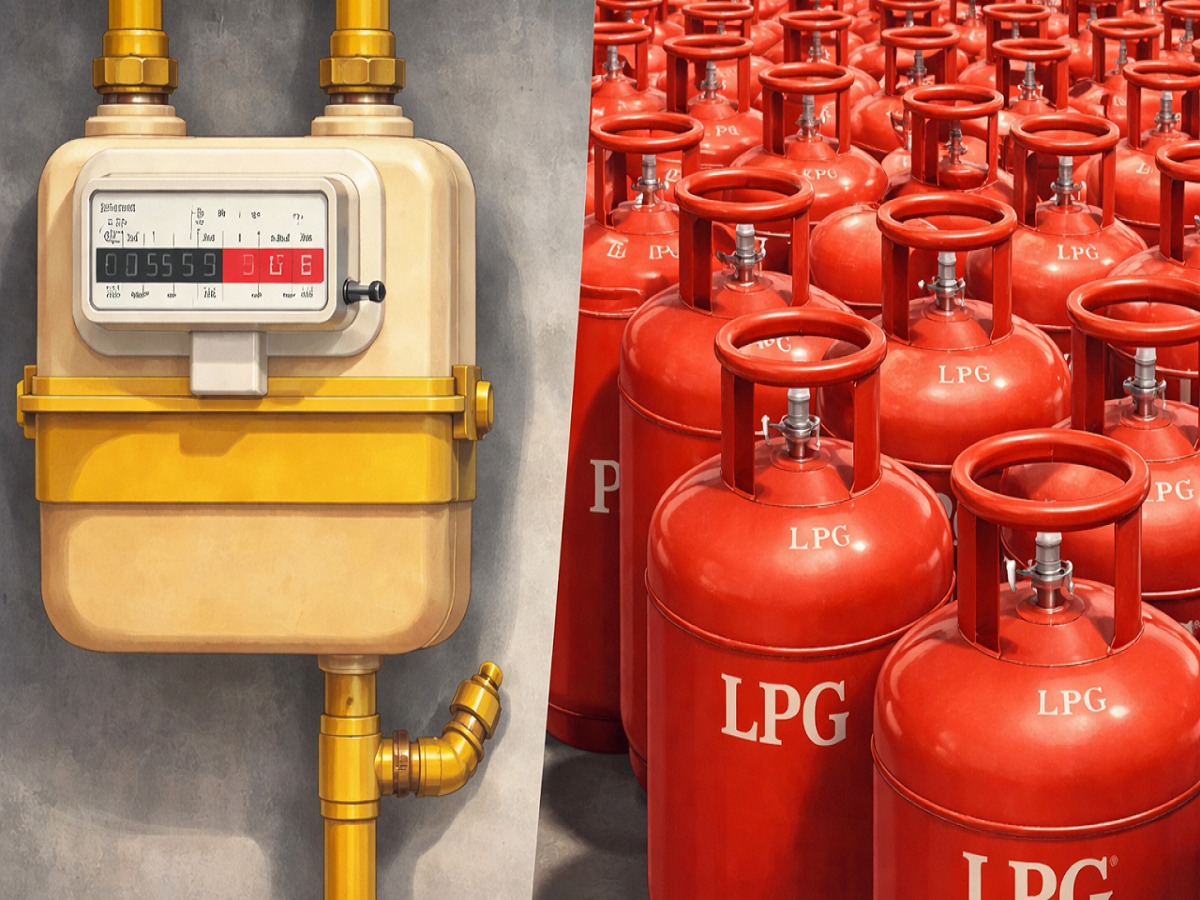
Piped natural gas is delivered directly to homes through an underground pipeline network. Unlike LPG cylinders, households using PNG do not need to regularly order or replace cylinders.
For families with access to a PNG network, the system can offer the convenience of continuous gas supply for cooking.
The government's latest move is intended to encourage gas distribution companies to expand this network to more households.
How Will the New Incentive Work?
The incentive is designed to make it financially more attractive for city gas distributors to increase their residential customer base.
For every new billed domestic PNG connection, eligible distributors can receive an additional allocation of lower-priced domestic natural gas.
The idea is to create a cycle in which more household connections lead to greater gas consumption, encouraging distributors to invest further in network expansion.
What Does This Mean for Households?
The announcement does not mean that every household will automatically receive a free PNG connection or cheaper gas.
Availability will depend on whether a PNG network exists in the area and whether the local city gas distributor is offering connections.
However, if more distributors expand their networks, households in currently underserved areas could eventually get access to piped cooking gas.
People who already have an installed but inactive PNG connection may also benefit if the distributor takes steps to activate the network and encourage usage.
PNG vs LPG: What Should Consumers Know?
For households, the biggest practical difference is how the fuel is supplied.
With LPG, gas is stored in a cylinder that needs to be replaced when it becomes empty. PNG, on the other hand, is supplied through a pipeline connected directly to the home.
PNG can therefore be convenient for households with reliable pipeline access. However, consumers should compare the applicable connection charges, monthly consumption costs, security deposits and local tariffs before switching.
Government's Larger Energy Goal
The latest incentive is part of a broader effort to expand access to natural gas and encourage cleaner fuel use in households.
Greater PNG availability could reduce dependence on LPG cylinders in areas where pipeline infrastructure is practical. It could also encourage investment in India's city gas distribution network.
For consumers, the key point is simple: if PNG infrastructure reaches your area, the new policy could eventually make it easier for distributors to add and activate household connections.
Before applying, however, households should check with their local authorised gas distributor for connection availability, charges and applicable terms.