LIFESTYLE
RO Water Health Effects: Is RO water weakening your body? Doctor reveals the right solution
RO water mineral loss: What is the correct TDS level for drinking water according to the World Health Organization and the Bureau of Indian Standards? Learn whether RO machines remove essential minerals from water and what measures experts recommend.
The ideal TDS level of drinking water determines whether it is potable or needs to be purified. The World Health Organization (WHO) considers a TDS of less than 300 mg/L to be safe. According to the Indian Standards (BIS), water with a TDS of less than 500 mg/L is safe for drinking. In many states, including Noida and Kanpur, the TDS of water exceeds 1500 mg/L. This means that drinking water with such heavy elements is not without risk. For clean water, most people install RO (reverse osmosis) machines in their homes. Purifiers have become as essential in homes as refrigerators or gas stoves. There is a growing debate among people that RO machines remove not only unnecessary minerals from water but also essential minerals. This can have negative health effects. Find out what health experts think about this topic.
Does RO reduce minerals in water?
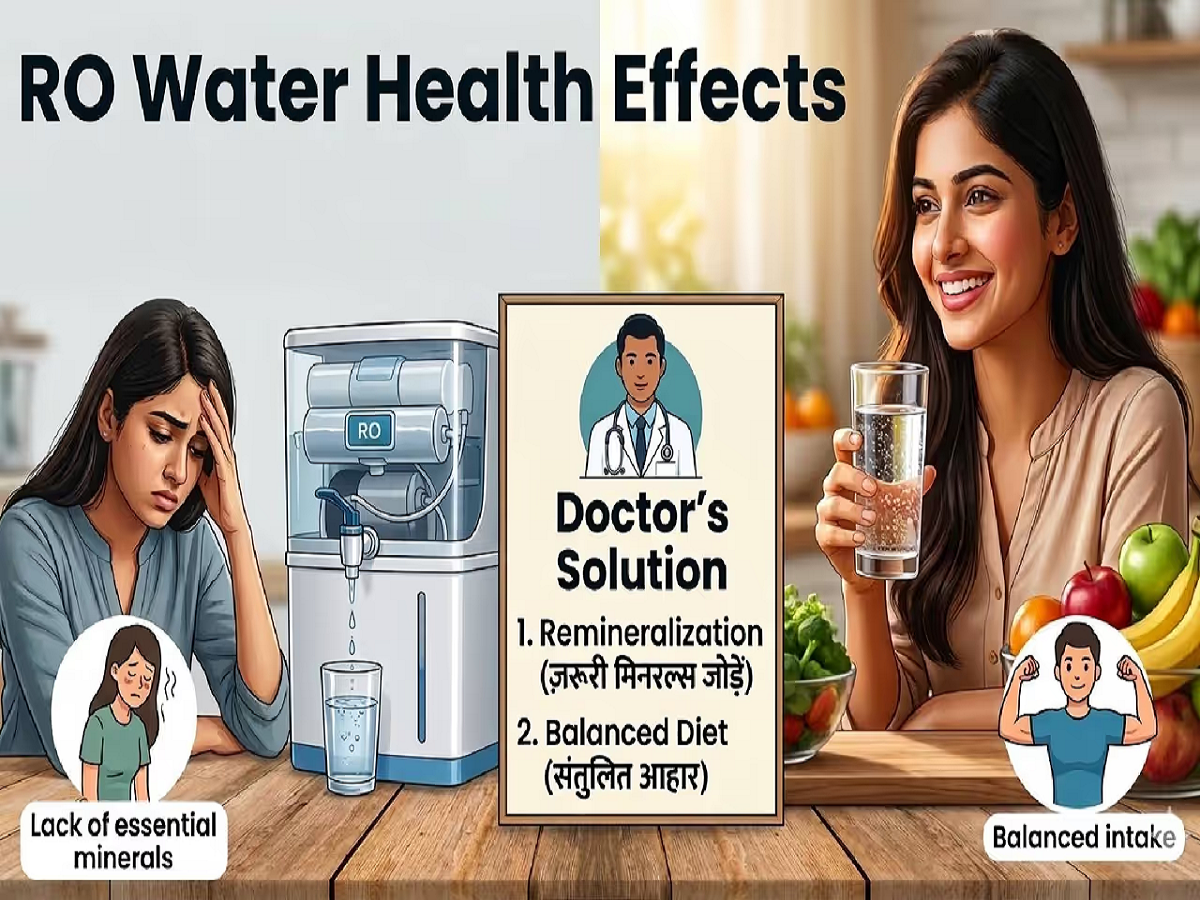
RO machines remove unnecessary minerals from heavy, or impure, water. Because of this, some naturally occurring minerals, such as calcium and magnesium, may be lost during the filtration process. Speaking to a website, clinical nutritionist Palak Nagpal says that while drinking RO water may result in a loss of nutrition, it can be compensated. You need to include essential minerals in your diet. The body should rely on food, not water, to meet the needs of minerals like calcium, magnesium, and potassium.
This is how the deficiency of minerals will be fulfilled
If you drink RO water daily, you should include foods rich in calcium, magnesium, and potassium in your diet . This will help prevent mineral deficiencies in your body, and drinking RO water will also help prevent mineral deficiencies.
Sources of Calcium: Milk and dairy products like yogurt and cheese are good sources of calcium. Eating ragi (finger millet), almonds, and leafy vegetables can also provide adequate calcium. Eating these will not only strengthen bones but also promote smooth muscle growth.
Sources of Magnesium: Magnesium-rich foods include pumpkin seeds, cashews, almonds, and nuts. Brown rice, whole grains, and pulses like lentils and chickpeas are also good sources of magnesium.
Good sources of potassium: To maintain adequate potassium, consume coconut water, sweet potatoes, various pulses, beans, and leafy vegetables. Potassium helps maintain fluid balance in the body and improves heart function.
Dr. Nagpal says that by taking a balanced diet, the body will get adequate minerals and due to this, RO water will not become a matter of concern for you.
Frequently Asked Questions
1.Which disease is caused by drinking RO water?
RO water doesn't contain enough minerals. Experts say that if adequate minerals are found in food, they won't harm the body.
2. Is RO safe for the kidneys?
According to kidney experts, drinking water purified through RO system is not harmful for the kidneys.
3.At what TDS should RO water be consumed?
According to the Bureau of Indian Standards (BIS), the upper limit for TDS levels in water is 500 ppm. You can install a water TDS testing machine.
Image Credit: GEMINI AI