BUSINESS
SBI Mutual Fund Launches New SIF Strategy: Minimum Investment, Key Dates and Investment Plan Explained
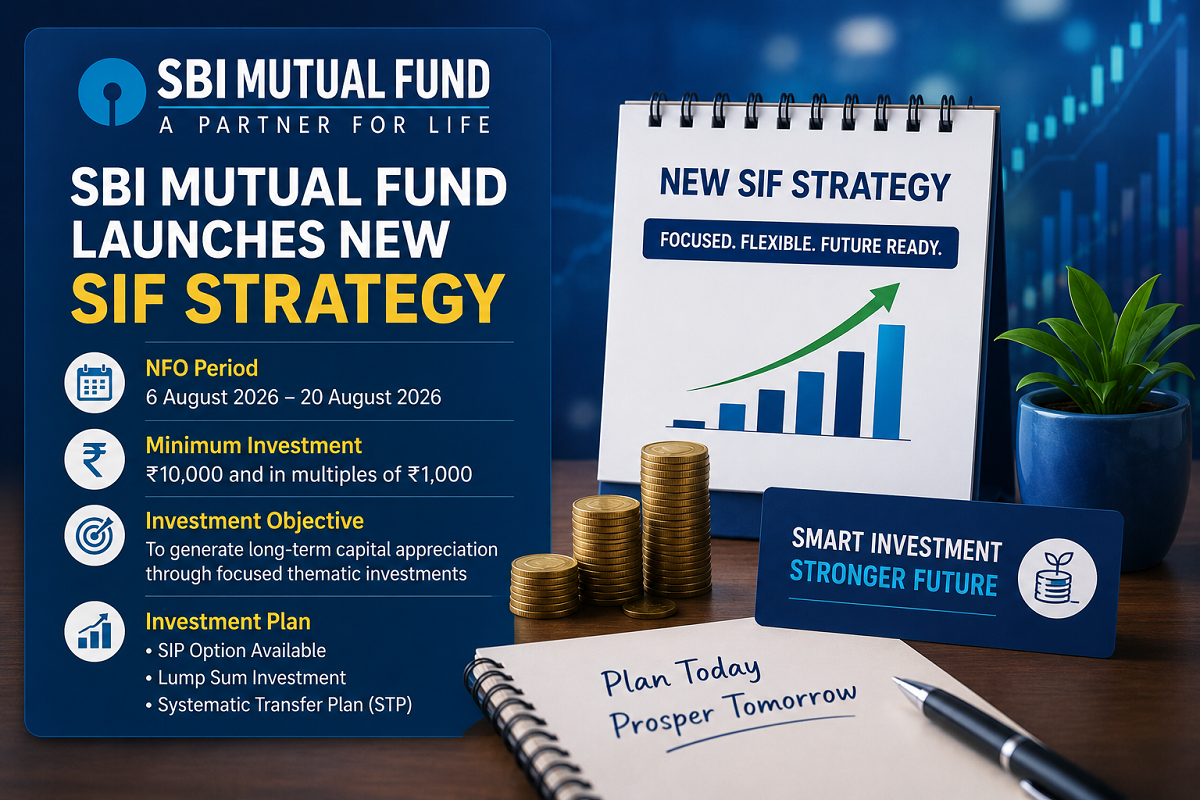
SBI Mutual Fund has unveiled a new investment strategy under its Specialized Investment Fund (SIF) framework, aimed at investors seeking higher growth opportunities with a managed-risk approach. Named Magnum Equity Ex-Top 100 Long Short Fund, the strategy will primarily focus on companies outside India's top 100 listed firms by market capitalization while using selective short positions through derivatives to manage market volatility.
The new offering combines equity investing with hedging techniques, making it suitable for investors who are comfortable with market-linked investments and meet the eligibility requirements laid down under SEBI's SIF regulations.
SBI Mutual Fund Introduces Its Second SIF Strategy
India's largest asset management company has expanded its Specialized Investment Fund lineup with the launch of the Magnum Equity Ex-Top 100 Long Short Fund.
The strategy is designed to identify investment opportunities beyond India's largest listed companies, targeting businesses that may have stronger long-term growth potential. To reduce portfolio risk during volatile market conditions, the fund will also use a limited long-short investment strategy through derivative instruments.
According to the fund house, the objective is to generate long-term capital appreciation while maintaining a disciplined risk-management approach.
NFO Opening and Closing Dates
Investors planning to participate in the New Fund Offer (NFO) should note the following schedule:
-
NFO Opens: August 7, 2026
-
NFO Closes: August 20, 2026
-
Fund Category: Open-ended Specialized Investment Fund (SIF) Strategy
-
Benchmark Index: BSE 500 Total Return Index (TRI)
Being an open-ended strategy, the fund will remain available for transactions after the NFO period, subject to applicable regulations.
Where Will the Fund Invest?
SBI Mutual Fund has outlined a diversified investment allocation strategy for the new scheme.
Primary Equity Exposure
The fund will invest 65% to 100% of its assets in equities and equity-related instruments of companies ranked outside the top 100 by market capitalization.
This approach allows the fund manager to explore opportunities among mid-cap and emerging businesses that may offer higher growth potential than large-cap companies.
Exposure to Top 100 Companies
Although the strategy focuses on companies beyond the top 100, it may allocate up to 35% of its assets to large-cap companies whenever considered appropriate for portfolio management.
Debt and Other Asset Classes
The scheme also has the flexibility to diversify investments across several asset classes, including:
-
Up to 35% in debt and money market instruments.
-
Up to 20% in Infrastructure Investment Trusts (InvITs).
-
Up to 35% in Gold ETFs, Silver ETFs, and units of other mutual fund schemes.
This diversification is intended to improve portfolio stability while providing multiple sources of returns.
International Investments
Subject to regulatory limits, the fund may invest up to 35% of its net assets in overseas equities, international exchange-traded funds (ETFs), and foreign debt securities.
Global exposure can help diversify risk and provide access to investment opportunities outside the Indian market.
Minimum Investment Requirement
SEBI's Specialized Investment Fund regulations prescribe a higher entry threshold compared to traditional mutual funds.
-
New investors must invest a minimum of ₹10 lakh to participate in the strategy.
-
Existing Magnum SIF investors who already hold at least ₹10 lakh across Magnum SIF schemes at the PAN level can make additional investments starting from ₹1 lakh per application.
The higher investment requirement reflects the specialized nature of the product and its intended investor segment.
Fund Manager, Exit Load and Tax Rules
The new strategy will be managed by Gaurav Mehta, who also oversees SBI Mutual Fund's first SIF offering, the Magnum Hybrid Long Short Fund.
The exit load structure is as follows:
-
1% exit load if units are redeemed or switched within three months from the date of allotment.
-
No exit load after the completion of the three-month holding period.
Under the current tax rules, Long-Term Capital Gains (LTCG) on units held for more than 12 months will be taxed at 12.5%, along with applicable surcharge and cess.
However, long-term capital gains of up to ₹1.25 lakh in a financial year remain exempt from tax under the prevailing regulations.
Fund House's Investment Outlook
According to Debashish Mishra, Managing Director and CEO of SBI Funds Management, the new strategy has been developed to provide investors with a research-driven investment approach while offering greater diversification across India's expanding equity market.
The fund house believes that combining opportunities beyond the top 100 companies with controlled risk management can help investors participate in broader market growth.
During the April–June 2026 quarter, SBI Mutual Fund reported an Average Assets Under Management (AAUM) of more than ₹12.57 lakh crore, reinforcing its position as one of India's largest mutual fund managers.
Should Investors Consider This SIF?
The Magnum Equity Ex-Top 100 Long Short Fund is designed for investors seeking exposure to companies beyond the large-cap universe while benefiting from a professionally managed long-short strategy. However, since the product invests in market-linked securities and uses derivative-based hedging, investors should carefully evaluate their financial goals, investment horizon, and risk tolerance before investing.
Disclaimer: This article is intended for informational purposes only and should not be considered investment advice. Mutual fund investments are subject to market risks. Investors should read all scheme-related documents carefully and consult a qualified financial advisor before making any investment decisions.