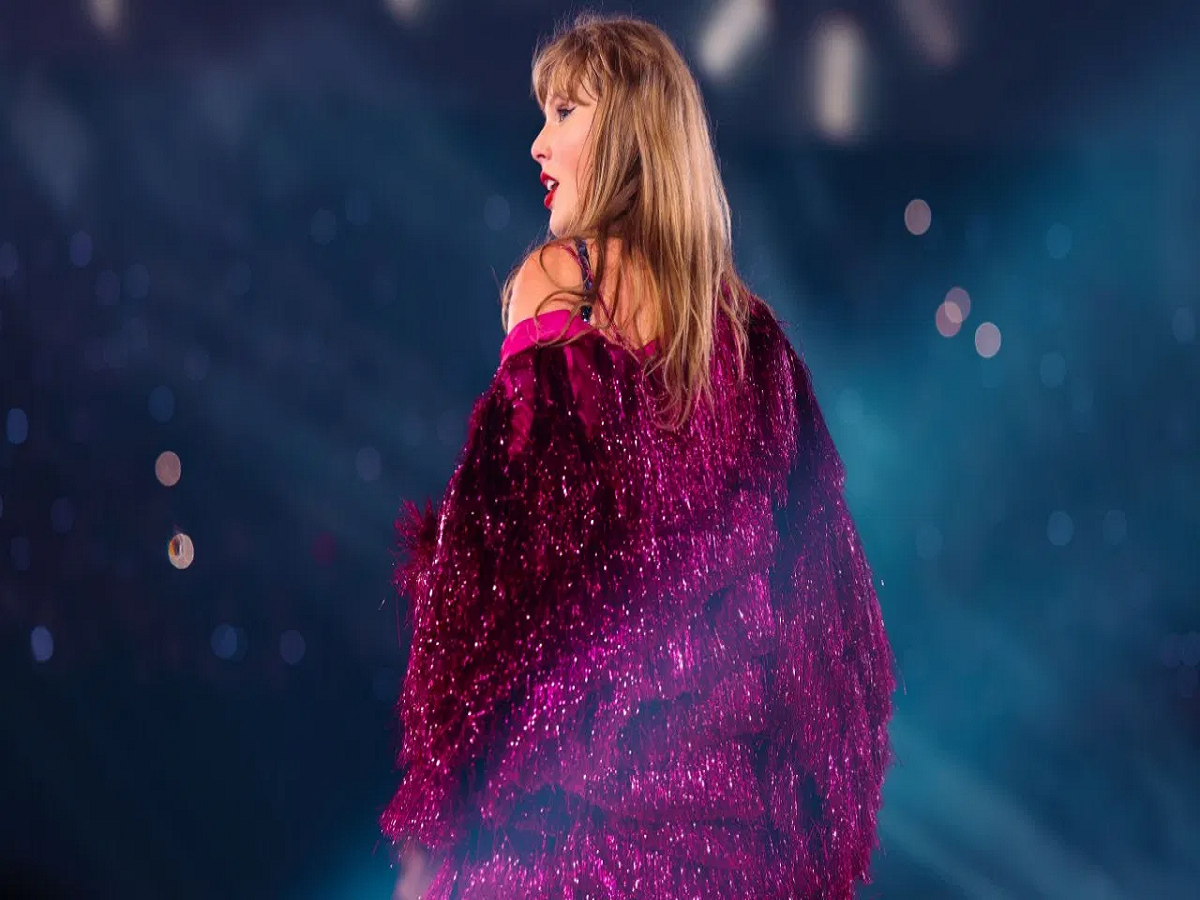
In a bold move to safeguard her identity, Taylor Swift has taken a significant legal step by filing to trademark her voice and image. This strategy, initiated on Friday, April 24, 2026, is a direct response to the escalating threat of AI-generated deepfakes, which have increasingly plagued the superstar over the last few years.
By treating her voice and likeness as intellectual property—much like a brand logo—Swift is attempting to build a "legal perimeter" that traditional copyright laws currently struggle to provide.
The Three-Pronged Legal Strategy
Swift’s company, TAS Rights Management, submitted three specific applications to the U.S. Patent and Trademark Office (USPTO) to secure ownership over her physical and vocal traits:
-
Vocal Trademark (Audio Clip 1): A recording of her saying, "Hey, it's Taylor Swift, and you can listen to my new album, 'The Life of a Showgirl,' on demand on Amazon Music Unlimited."
-
Vocal Trademark (Audio Clip 2): A clip of her saying, "Hey, it's Taylor."
-
Visual Trademark (Performing Image): A detailed visual depiction of herself performing on stage, specifically holding a pink guitar and wearing a multi-colored iridescent bodysuit with silver boots.
Why Trademarks? The "New Legal Arrow"
Historically, singers have relied on Copyright Law (to protect their recorded music) or the "Right of Publicity" (state-level laws to prevent commercial exploitation). However, AI presents a unique challenge because it can create entirely new content that mimics a voice without actually "copying" an existing recording.
-
Federal Enforcement: Unlike the "Right of Publicity," which varies by state, trademarks can be enforced in federal court, offering a broader and more consistent shield.
-
"Confusingly Similar" Standard: Under trademark law, Swift could potentially sue creators of AI deepfakes not just for an exact copy, but for any imitation that is "confusingly similar" to her registered brand.
-
Precedent: Swift is following a strategy recently popularized by actor Matthew McConaughey, who trademarked his iconic line "Alright, alright, alright!" in early 2026.
Context: The Deepfake Crisis
Swift has been a frequent victim of sophisticated AI misuse, which served as the primary motivation for this step:
-
Explicit Images: In early 2024, sexually explicit AI-generated images of Swift flooded social media, causing international outrage and leading to the "Taylor Swift Act" being introduced in various U.S. states.
-
Political Misuse: In late 2024 and 2025, AI-generated videos falsely depicted her endorsing political candidates.
-
False Advertising: Countless unauthorized ads have used "AI Taylor" to promote products ranging from cookware to crypto.
Summary of Swift's AI Defense
| Tool | Traditional Use | Swift's 2026 Use Case |
| Copyright | Protects specific songs/videos | Cannot stop "new" AI-generated mimics |
| Trademark | Protects logos/slogans | Protects her voice/image as a brand asset |
| Right of Publicity | Prevents unauthorized use for ads | Often limited to state jurisdiction |
Expert Take: Intellectual property attorney Josh Gerben, who first reported the filings, noted that this is a "landmark moment." If approved, it could fundamentally change how celebrities protect themselves in the age of generative AI. However, since trademark law wasn't originally designed for human voices, the move will likely face its first major test in court later this year.