LIFESTYLE
The mystery of Agra Fort: What the British claimed was the door to Somnath Temple turned out to be the door to Mahmud Ghaznavi's tomb
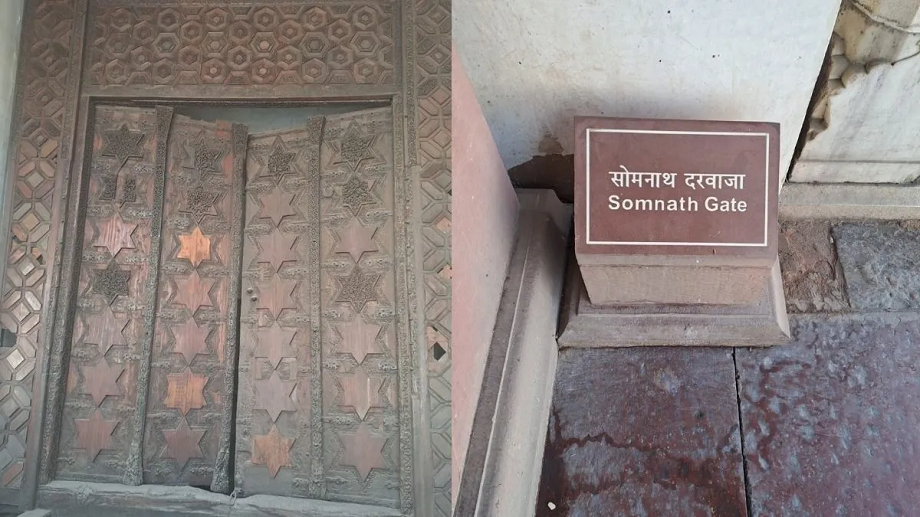
A massive door at Agra Fort came from the tomb of Mahmud Ghaznavi, brought by the Bengal Native Army after the First Anglo-Afghan War in 1842. The British ...read more
Agra Fort: The Somnath Temple is a symbol of Indian culture and the self-respect of Indians. The 'Somnath Swabhiman Parv' was celebrated from January 8th to 11th to mark the completion of one thousand years of the destruction of the Somnath Temple. The history of the Agra Fort is also linked to Mahmud Ghaznavi, who attacked the Somnath Temple in 1025 AD. The door to Mahmud Ghaznavi's tomb is kept in the Agra Fort.
The Bengal Native Army was uprooted from Afghanistan in 1842 as a symbol of victory.
The victorious Bengal Native Army in the First Anglo-Afghan War of 1842 had excavated this door from Ghaznavi's tomb in Ghazni, Afghanistan. To gain Indian sympathy, the British falsely claimed it was the door of the Somnath Temple, looted by Mahmud of Ghaznavi.
For more than six decades, it deceived the trust of the Indian public. Later, Sir John Marshall, Director General of the Archaeological Survey of India (ASI ) , exposed the truth about the door.
The British claimed that the door in the Agra Fort was the door of the Somnath Temple.
A massive door is located in a chamber near the Diwan-i-Khas in the Agra Fort. According to a plaque outside, this door was originally installed at the tomb of Mahmud Ghaznavi in Ghazni. Following their victory in the First Anglo-Afghan War in 1842, the 1st Jat Battalion of the Bengal Native Army exhumed this door and brought it back.
Governor General Lord Ellenborough falsely declared that this was the same sandalwood door that Mahmud of Ghaznavi had looted from the Somnath Temple in 1025 AD. Ellenborough promoted it as revenge for an 800-year-old insult.
It was welcomed in the villages along the way
Claiming it to be the door to the Somnath Temple, it was welcomed in villages along the route. During its stop in Agra, the door was placed in the Agra Fort. Other items were removed, but the door remained. This false narrative persisted for nearly six decades. Sir John Marshall, Director General of the ASI from 1902 to 1928, denied it was the door to the Somnath Temple and declared it to be the door to Ghaznavi's tomb.
Doors made of cedar wood
This door is made from local cedar wood found in Ghazni. Its ornamentation is distinct from ancient Gujarati woodwork. The upper part of the door bears the titles of Mahmud of Ghaznavi in Arabic. It was considered to install it there during the renovation of the Somnath Temple in independent India, but this idea was abandoned when the truth came to light.
The door is 16.5 feet high
The Ghazni Darwaza is 16.5 feet high and 13.5 feet wide. Weighing nearly half a ton, the door is nail-free. It is constructed from geometric star-shaped, hexagonal, and octagonal panels joined together in a frame. A plaque in Hindi and English outside the room where the door is housed describes it as the Ghazni Darwaza. However, a smaller plaque nearby also reads Somnath Darwaza.
PC:Jagran