LIFESTYLE
This man, who didn't even have clothes on his body, survived for 71 days by eating frogs and grasshoppers and drinking urine
Weird news: Whether it's your first, second, third, or fourth job, the memories of joining always linger. The first day of a new job is filled with excitement. But reading Ricky's story will transport you to a new world of mystery and adventure, where survival would be impossible for anyone.
Weird story: Even today, jobs are the first choice of young people. Whether it's a job notification (advertisement) or anything related to it, they are very popular among the youth. The song "Jab Naukri Milegi To Kya Hoga..." from a movie also became very famous. Similarly, immersed in the thoughts of the first day of his new job, Ricky was on his way to join his new company, driving a good car and playing good music. Suddenly, such an incident happens to him that a strong young man who was missing for two and a half months becomes a mere flesh and blood and becomes news to the world.
What happened to Ricky?
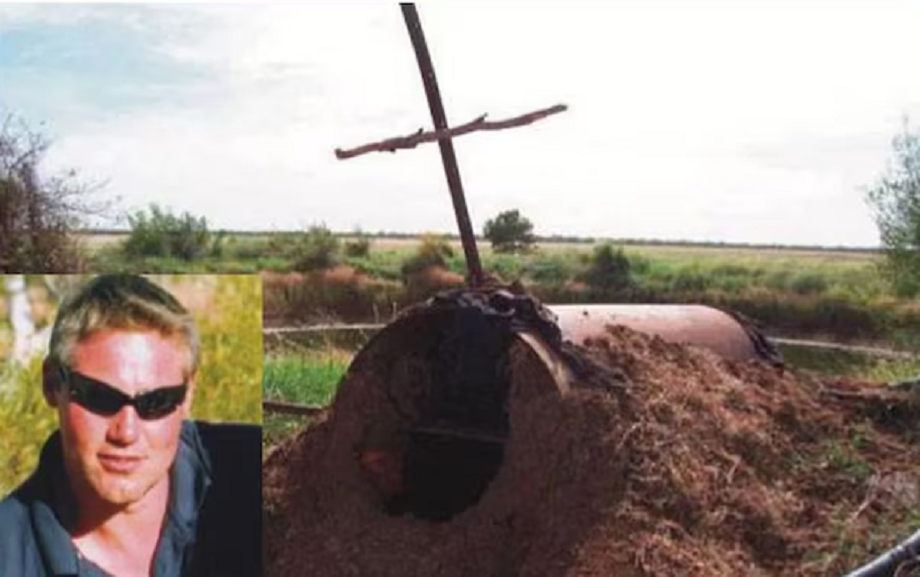
Before I tell you what happened to Ricky, let's first understand his condition. When he regained consciousness, he was in a desert grave. He didn't have a single piece of clothing on his body. He was in a frenzy. He couldn't even piece together the events that had happened to him. He was ravenously hungry. There was sand all around, and there wasn't a single tree whose leaves he could chew to comfort himself. In such hellish conditions, he survived for 71 days by eating frogs and snakes. When some people noticed him, he was relieved.
That 'unlucky' day!
Ricky Magee was on his way to a new beginning on the other side of Australia when he decided to give a hitchhiker a lift. His idea of helping someone quickly turned into a nightmare as he was drugged and left to die in one of the world's most dangerous conditions. It's a mystery that remains unsolved, one of Australia's most bizarre and controversial unsolved cases.
Unsolved story
According to The Mirror, the incident came to light when a group of cattle farm workers traveling through a remote area in 2006 spotted a severely malnourished man wandering alone in the desolate desert. He had become a walking skeleton. This was Ricky Magee, who had disappeared without a trace about 10 weeks earlier while traveling from Brisbane, Queensland, to Port Hedland, Western Australia, for a new job.
Ricky was a renowned wanderer of his time. He saw Port Hedland as an opportunity for a new beginning. Before embarking on his new mission, he would travel 3,000 kilometers through the treacherous Outback, considered one of Australia's most desolate regions. Undeterred, Ricky embarked on this historic journey in his trusty Mitsubishi Challenger, a journey he would complete in approximately two to three days. Ricky was never fully convinced of what had befallen him.
Unsolved puzzle
Initially, he claimed his car had broken down. Later, he told reporters that he had given a ride to an Aboriginal passenger who had spiked his soft drink with a sedative, leaving him confused and disoriented, and causing him to lose consciousness.
Ricky again changed his account of the incident in his 2010 memoir, co-written with writer and director Greg McLean. McLean was best known for his 2005 horror film Wolf Creek, which featured serial killer Mick Taylor in the same Outback.
In his memoirs, he wrote - "It was a difficult and desolate area for a barefoot man. Still, I started walking. I thought that the more I walked, the less distance the people who went out to find me would have to cover. To survive, I ate snakes, ants, lizards, frogs and grasshoppers. If I found small water pools, I drank water from them. I ate small creatures raw. When I felt thirsty, I quenched my thirst by drinking my urine or collecting morning dew."
At one point, he suspected he had been given a drugged drink or injected with a sedative. When he regained consciousness, he was in a tent, where he was given water. During his return journey from the brink of death, he walked for 10 days in searing temperatures exceeding 40 degrees Celsius, often fainting from heat exhaustion.
PC:Zee News