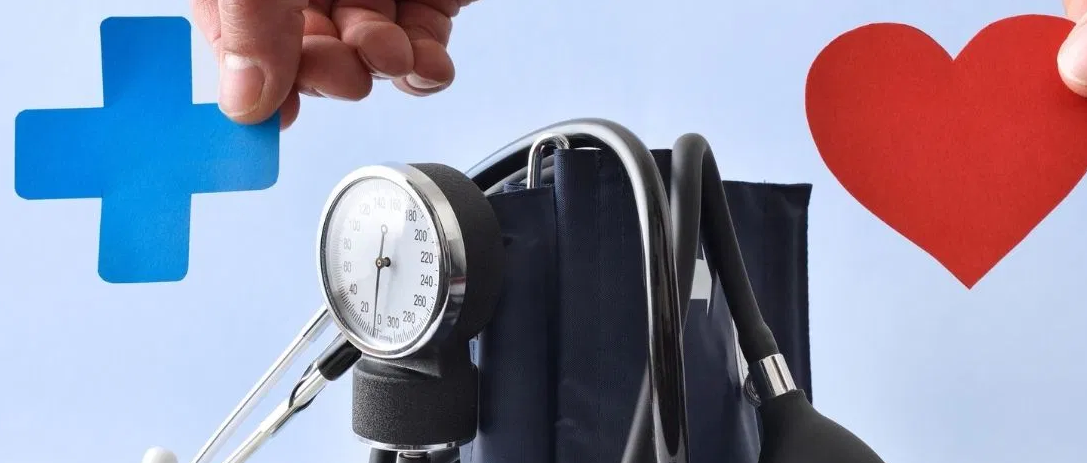
High blood pressure (BP) and heart disease are rising at an alarming pace—not just among the elderly but also among today’s youth. While many people still wonder what high BP has to do with the heart, doctors say the link between the two is direct and dangerous.
If blood pressure remains uncontrolled, it silently damages arteries, increases the workload on the heart, and eventually leads to serious heart conditions. Let’s understand this connection in detail.
How does high BP damage the heart?
Dr. Ajit Jain, Associate Professor, Department of Cardiology, Rajiv Gandhi Hospital (Delhi), explains:
-
When BP stays high, the arteries become stiff and rigid.
-
The heart has to pump harder to push blood through these arteries.
-
Over time, this extra strain weakens the heart muscles, leading to multiple cardiovascular complications.
This is why high BP is often called a “silent killer”—it damages internally for years before any visible symptoms appear.
Why symptoms don’t appear early
In the early stages, high BP rarely shows warning signs. Many people live with it unknowingly, while inside the body:
-
Heart walls thicken
-
Arteries narrow
-
Kidneys get affected
By the time symptoms like dizziness, chest pain, or breathlessness appear, the condition may already be serious—sometimes leading to a heart attack or stroke.
Direct link between High BP and Heart Diseases
-
Coronary Artery Disease (CAD)
-
High BP leads to plaque buildup in arteries, restricting blood flow to the heart.
-
Can cause chest pain (angina) or even a heart attack.
-
-
Heart Failure
-
Constant high BP thickens and weakens heart muscles.
-
Over time, the heart cannot pump blood effectively, leading to failure.
-
-
Arrhythmia (Irregular Heartbeat)
-
Elevated BP can disturb the heart’s rhythm.
-
This raises risks of stroke, cardiac arrest, or sudden heart failure.
-
-
Stroke
-
High BP doesn’t just affect the heart—it also impacts the brain.
-
It increases chances of blood clots, brain hemorrhage, and oxygen supply cut-off to the brain.
-
Is medicine the only solution?
Relying only on BP tablets is not enough. Lifestyle management is the key to protecting the heart:
-
Reduce salt intake.
-
Exercise at least 30 minutes daily.
-
Quit smoking and alcohol.
-
Eat a balanced diet rich in fruits, vegetables, and fibre.
-
Practice yoga, meditation, or stress management techniques.
-
After age 30, go for a yearly health check-up to detect BP early.
Bottom line
High BP and heart disease are two sides of the same coin. Keeping blood pressure under control through healthy habits, regular checkups, and timely treatment is the best way to protect your heart.