NATIONAL
Why does your car consume more petrol in the city, but less on the highway? Find out the real reason
City vs. Highway Fuel Economy: Have you ever noticed that your car uses less fuel when you're driving on the highway, but as soon as you get stuck in city traffic, your gas starts running out faster? This happens to almost every driver. It's not just driving, […]
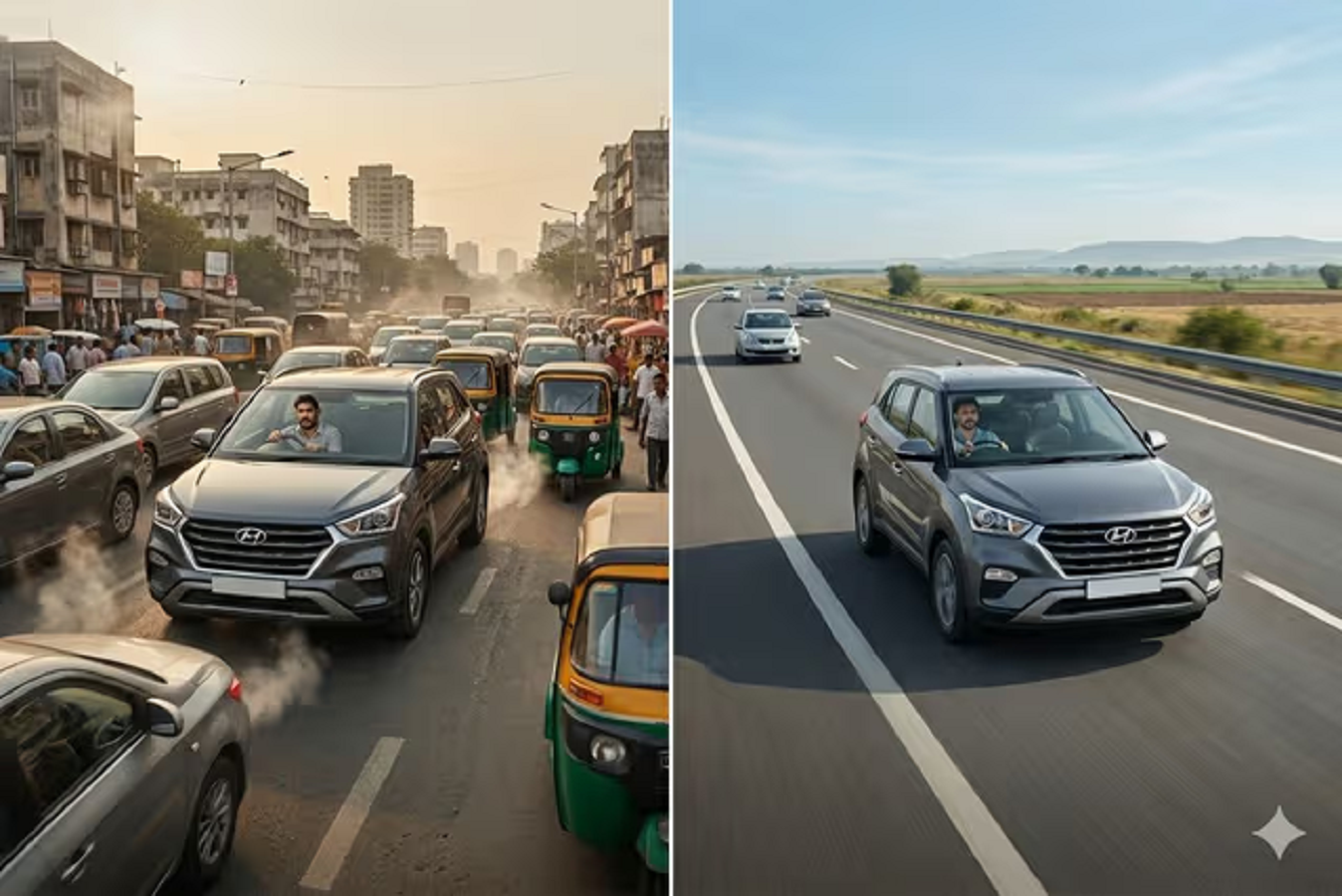
City vs. Highway Fuel Economy: Have you ever noticed that when you drive on the highway, your fuel consumption is low, but as soon as you get stuck in city traffic, your petrol starts running out quickly? This happens to almost every driver. The reason behind this isn't just driving, but the different operating conditions of the engine, which vary significantly between city and highway traffic. Let us explain this in detail.
Even a stationary vehicle burns petrol.
When your car is stuck in traffic or stopped at a red light, the engine continues to burn fuel. This means the car isn't moving, yet petrol and diesel are still being used. According to the Energy Saving Trust, in this situation, fuel is consumed but the distance traveled is zero. This gradually degrades your overall fuel economy.
Start-ups consume the most energy.
When a heavy vehicle starts moving from a complete standstill, it suddenly requires a significant amount of mechanical energy. This is why it can also be called a "start-up burst." According to transport experts, frequent stops and then quick starts (stop-and-start driving) in cities significantly increase fuel consumption. In contrast, a vehicle that starts once and continues at a constant speed is more fuel efficient.
Frequent braking wastes fuel
When you accelerate, the engine burns fuel to create momentum. However, according to the RAC, frequent and sudden braking in city traffic completely wastes this precious energy. Essentially, the momentum and power you've built up through fuel consumption are lost as soon as you brake, only to be dissipated as heat in the brake pads.
Fuel consumption increases with increasing RPM
When you drive in a city with heavy traffic, your car often remains in first or second gear. This results in the engine running at higher RPMs, even when the speed is lower. This results in more fuel consumption per kilometer, and your vehicle's petrol or diesel starts to run out faster.
Constant speed saves fuel
Cruising on the highway is actually quite efficient, because once the car gets going, it takes much less energy to maintain that speed. Automotive engineers also point out that maintaining a consistent speed significantly reduces fuel consumption compared to repeatedly accelerating in the city.
Running in high gear saves fuel
Once you're out on the open road, your car easily shifts into its highest gear. When the car is in 5th or 6th gear, the engine operates at lower RPMs, significantly reducing petrol consumption.
PC:Prabhat Khabar