TECH
Why Is WhatsApp Temporarily Blocking Some Accounts for 24 Hours? Meta Explains the Review Process
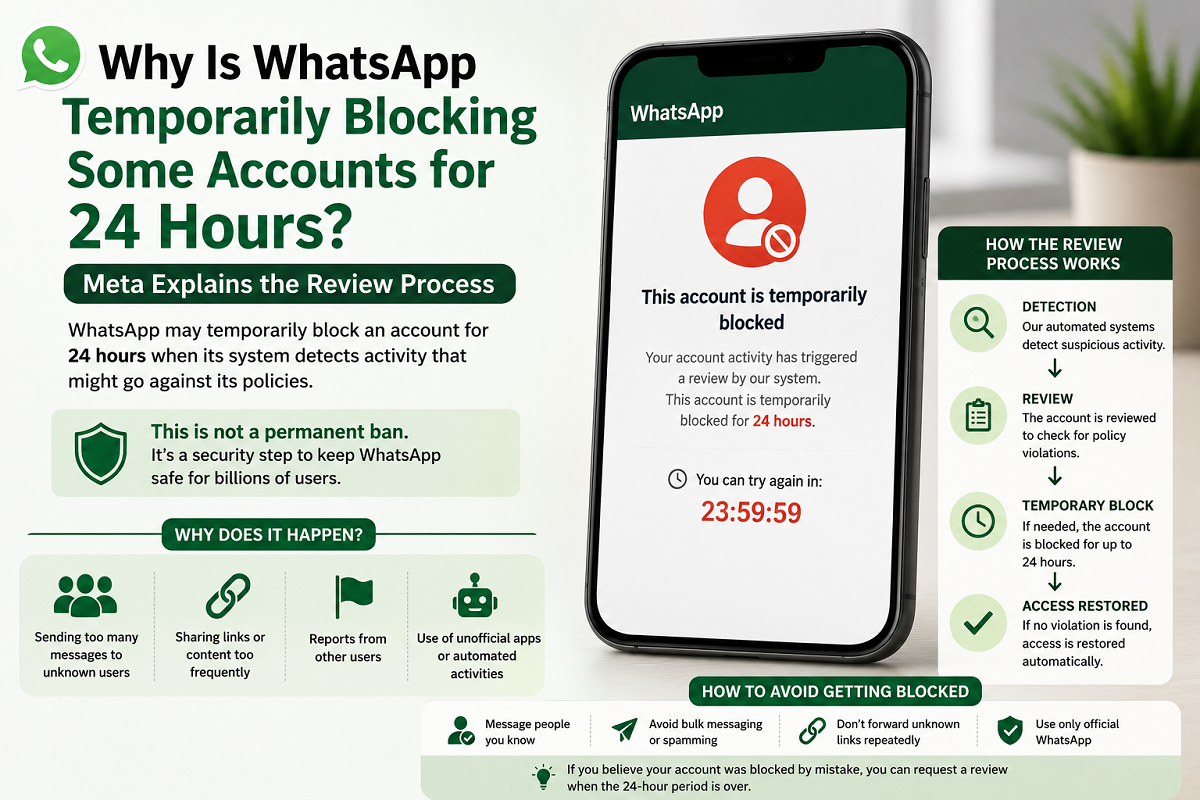
Thousands of WhatsApp users have recently reported that their accounts were temporarily restricted for 24 hours, raising concerns about unexpected access issues. In response, Meta has clarified that these temporary suspensions are part of a security review process designed to protect the platform and its users from spam, fraud, and other suspicious activities.
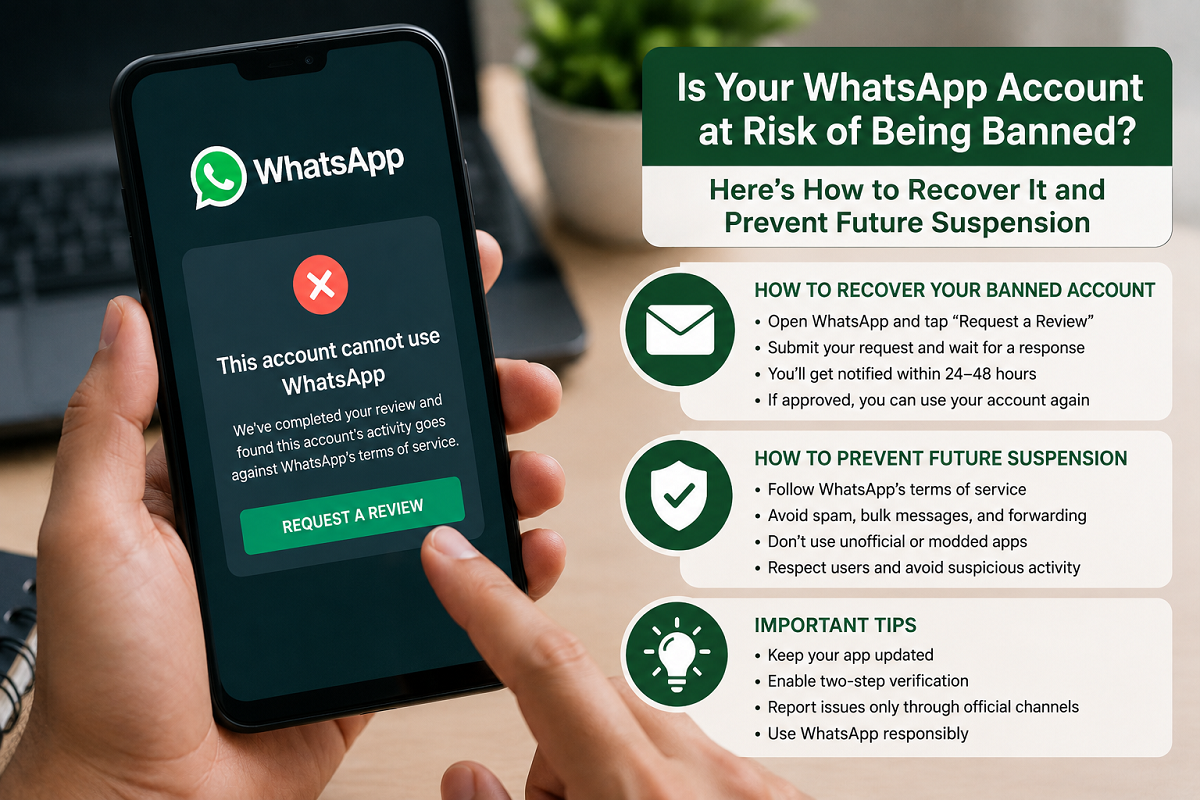
According to the company, the temporary restriction does not necessarily mean an account has been permanently banned. Instead, it is often a precautionary measure that allows WhatsApp to verify account activity before restoring full access.
Why Are Some WhatsApp Accounts Being Put Under Review?
Meta has explained that WhatsApp's automated systems continuously monitor activity to identify behavior that could violate the platform's policies or indicate potential misuse.
If an account triggers certain security checks, it may be placed "under review" for up to 24 hours. During this period, WhatsApp examines the account to determine whether the activity is genuine or requires further action.
The review process is intended to enhance user safety and maintain the integrity of the messaging platform.
Which Users Could Be Affected?
The temporary review process may apply to accounts that display unusual or suspicious activity. While Meta has not disclosed every criterion used by its systems, users may be flagged if they:
-
Send an unusually high number of messages within a short period.
-
Engage in behavior that resembles spam or automated messaging.
-
Receive repeated reports from other users.
-
Use unofficial or modified versions of WhatsApp.
-
Show activity that appears inconsistent with normal account usage.
Being placed under review does not automatically indicate that a user has violated WhatsApp's rules. In many cases, the account is restored once the verification process is complete.
What Happens During the 24-Hour Review?
When an account is under review, users may be temporarily unable to send or receive messages or access certain features of the app.
WhatsApp's security systems evaluate the account during this period. If no policy violations are found, access is generally restored after the review concludes.
Users are advised to wait for the process to finish rather than repeatedly attempting to log in or create additional accounts.
How to Reduce the Risk of Account Restrictions
Meta recommends following WhatsApp's official guidelines to minimize the chances of an account being flagged for review.
Some best practices include:
-
Use only the official WhatsApp application downloaded from trusted app stores.
-
Avoid sending unsolicited bulk or promotional messages.
-
Do not use third-party apps or automation tools.
-
Follow WhatsApp's Terms of Service and Community Guidelines.
-
Keep the app updated to the latest version.
-
Avoid behavior that could be interpreted as spam.
These measures help ensure a safer experience while reducing the likelihood of temporary restrictions.
What Should You Do If Your Account Is Under Review?
If your account displays an "Under Review" notification, the recommended approach is to remain patient while WhatsApp completes the verification process.
During this time:
-
Do not repeatedly attempt to bypass the restriction.
-
Avoid creating duplicate accounts using the same number.
-
Wait for the review period to end.
-
Check the app for any updates or official notifications from WhatsApp.
If further action is required, WhatsApp will provide instructions through the app.
Final Takeaway
Meta has clarified that the 24-hour WhatsApp account review is a security measure aimed at protecting users and preventing misuse of the platform. Most accounts placed under review are being verified for unusual activity rather than permanently banned. By using the official WhatsApp app, avoiding spam-like behavior, and following the platform's policies, users can significantly reduce the chances of facing temporary account restrictions in the future.