TECH
Your phone may soon replace your physical SIM card completely! eSIM technology is changing the future of mobile connectivity
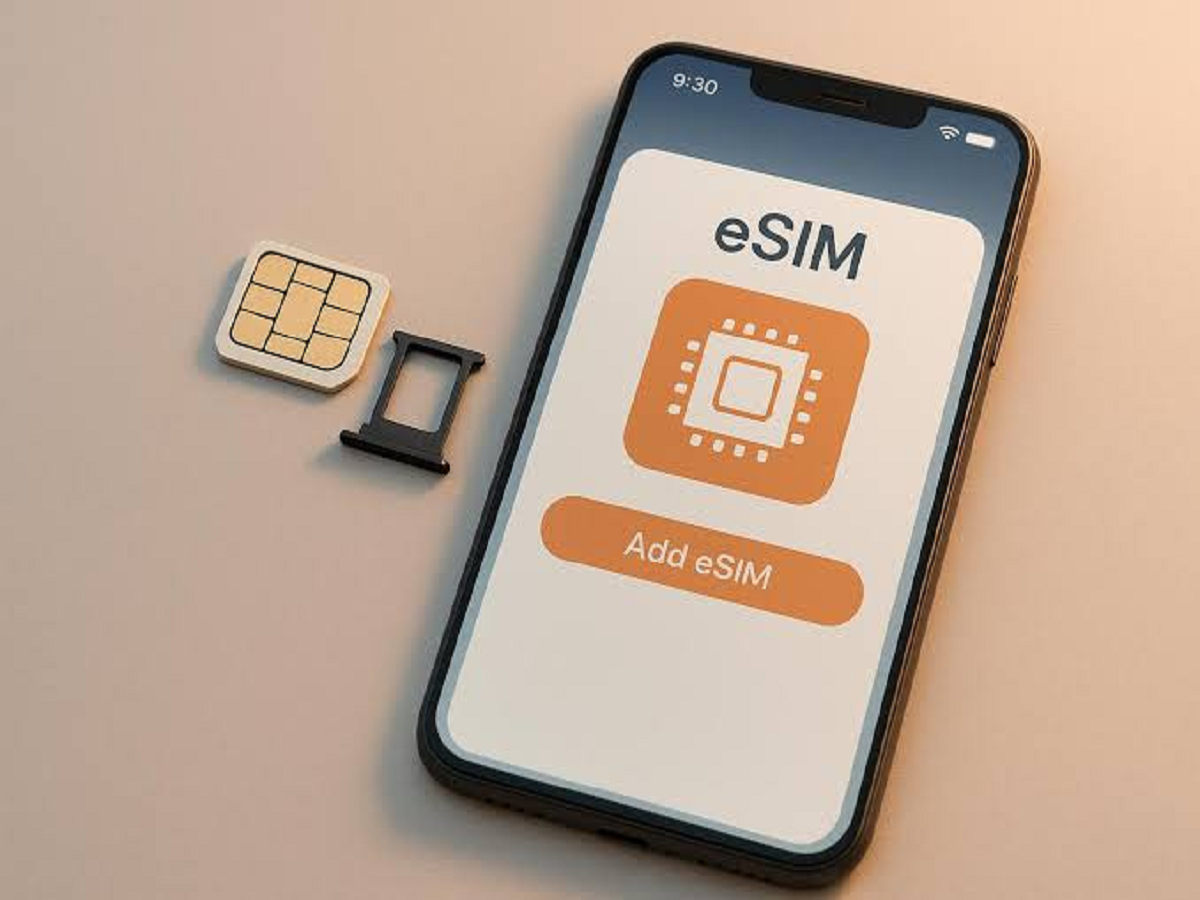
The way people connect their smartphones to mobile networks is gradually changing. For decades, physical SIM cards have been an essential part of mobile phones, allowing users to access calling, messaging and internet services. However, the arrival of eSIM technology is changing this traditional system. Several smartphone manufacturers and telecom operators are increasingly supporting embedded SIM technology, which allows users to activate mobile network services without inserting a physical SIM card.
What exactly is an eSIM?
An eSIM, also known as an embedded SIM, is a digital SIM that is built directly into a smartphone or another compatible device. Unlike traditional SIM cards, it does not need to be physically inserted or removed.
Users can activate an eligible mobile connection by downloading a digital SIM profile provided by their telecom operator. Depending on the device and operator, activation can take place through a QR code, an application or the phone's settings.
Once activated, the eSIM performs the same basic functions as a conventional SIM card. Users can make calls, send messages and access mobile data without carrying a separate physical card.
What are the biggest advantages of eSIM technology?
One of the biggest benefits of eSIM technology is convenience. Users no longer need to visit a mobile store or wait for a physical SIM card to arrive in many situations.
It can also be particularly useful for people who frequently travel internationally. Instead of purchasing and inserting a new physical SIM card in every destination, travellers can activate compatible international mobile plans digitally.
Another advantage is that eSIM technology can make device design more flexible. Removing the physical SIM tray can create additional internal space that manufacturers can use for other components or design improvements.
Furthermore, compatible smartphones can support multiple SIM profiles, although the number of profiles that can be stored and used simultaneously depends on the device.
Is eSIM available in India?
Yes, eSIM services are already available in India through major telecom operators, including Jio, Airtel and Vi, subject to device compatibility and operator requirements.
Several smartphones from Apple, Samsung, Google and other manufacturers support eSIM functionality.
However, users should check whether their particular smartphone model supports eSIM and whether their telecom operator offers the service for their connection.
The activation process may differ between operators. In some cases, users can convert their existing physical SIM into an eSIM by following the operator's prescribed procedure.
Is eSIM safer than a physical SIM card?
eSIM technology offers certain security advantages. Since the SIM is embedded inside the device, someone cannot simply remove the SIM card and insert it into another phone after stealing the device.
However, this does not mean that eSIMs are completely protected against fraud. Criminals may still attempt SIM-swap attacks through social engineering or fraudulent account-access requests.
Users should therefore protect their telecom accounts, avoid sharing OTPs and immediately contact their operator if they notice suspicious activity.
Can users switch back to a physical SIM?
In most cases, yes. If a smartphone supports both technologies and the telecom operator permits it, users can request a physical SIM instead of continuing with an eSIM.
However, the process depends on the operator's policies. Users should also remember that transferring an eSIM to a new smartphone may require a fresh activation or profile transfer.
Will physical SIM cards disappear completely?
Physical SIM cards are unlikely to disappear overnight. They remain useful for people who frequently change devices, use older smartphones or prefer the simplicity of inserting a SIM card.
Nevertheless, eSIM adoption is expected to increase as more smartphone manufacturers and telecom operators support the technology.
In the coming years, digital SIM activation could become a standard feature across a wider range of smartphones. This would make mobile connectivity more flexible and reduce dependence on traditional physical SIM cards.