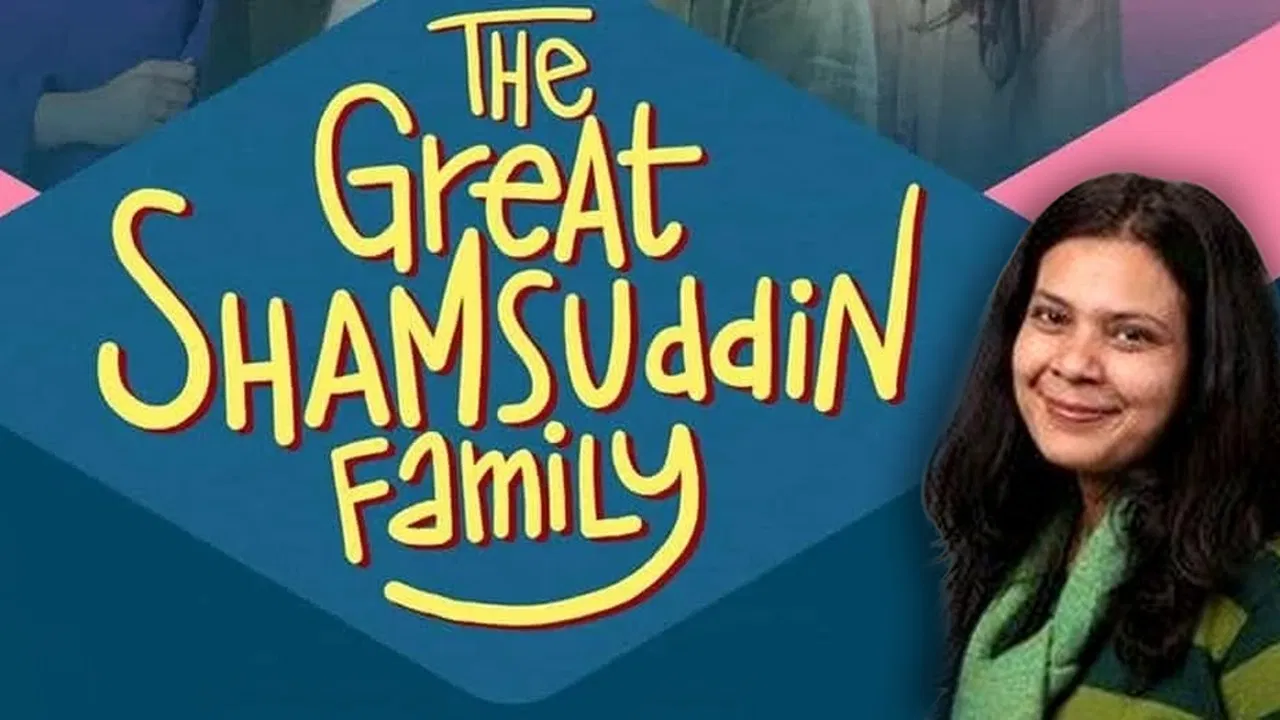
Director-writer Anusha Rizvi, best known for Peepli Live (2010), has returned with a much smaller yet deeply impactful film titled The Great Shamsuddin Family. Unlike her earlier political satire, this new film is intimate in scale but broad in thought, using a single apartment and one chaotic day to reflect the emotional and social churn of the country and the world.
Starring Farida Jalal, Kritika Kamra, Purab Kohli, Shreya Dhanwanthary, Sheeba Chaddha, Juhi Babbar, and Dolly Ahluwalia, the film unfolds entirely inside a metropolitan flat. What makes it stand out is not spectacle, but sharp writing, layered performances, and a quietly powerful message. Written and directed by Rizvi herself, the film avoids controversy and confrontation, choosing instead to focus on coexistence and collective problem-solving.
A family drama that mirrors the nation
As members of the Shamsuddin family gather one by one, buried secrets, half-truths, and personal compromises slowly surface. Each character carries their own baggage, yet together they form a larger picture—much like a country made up of individuals with different fears, desires, and contradictions.
While the conflicts appear personal, their emotional reach is far wider. The film subtly reflects anxieties around identity, migration, money, religion, and social pressure, without turning preachy or overtly political.
No satire, no system-bashing—only quiet realism
Unlike Peepli Live, The Great Shamsuddin Family does not rely on sarcasm, political mockery, or direct criticism of the system. There are no slogans, protest songs, or dramatic confrontations. Instead, Rizvi shifts focus to the lived reality of an urban Muslim family, their aspirations, and their moral dilemmas.
Streaming on JioHotstar, the film marks a conscious departure from Rizvi’s earlier style. Rather than attacking institutions, it reflects on adjustment, resilience, and coexistence in a fractured environment.
“A country is like a family”
One of the film’s most discussed moments comes toward the end, when Amitabh (Purab Kohli) tells Vani Ahmed (Kritika Kamra),
“A country is like a family… there’s constant turmoil here. Wherever you go in the world, the situation is more or less the same.”
This line has resonated widely on social media, becoming central to discussions around the film.
Kritika Kamra delivers a nuanced performance as Vani Ahmed, a divorced woman living alone and preparing an important project for a US-based company. On the very day her deadline looms, relatives and friends begin arriving unexpectedly, forcing her to choose between personal ambition and emotional responsibility.
Money, migration, and mistrust
One key subplot involves Vani’s cousin Iram (Shreya Dhanwanthary), who arrives with ₹25 lakh in cash—dowry money left behind after her failed marriage. The problem of what to do with the cash becomes symbolic of larger issues: corruption, fear, and social hypocrisy.
When Vani expresses her desire to work in the US, her friend Amitabh asks, “Why America?”
She replies simply, “Seeing the situation here…”
That unfinished sentence captures the unease many viewers relate to.
Religion, relationships, and resolution
The story takes a turn when Zoheb (Nishank Verma) arrives with Pallavi (Anushka Banerjee), whom he wants to marry. The complication: Zoheb is Muslim, Pallavi is Hindu. What follows is not outrage or melodrama, but uncomfortable conversations, hesitation, and gradual understanding.
The film briefly touches upon communal tension, even referencing a moment on the Delhi–Gurugram road, but balances it with themes of friendship, interfaith harmony, and human connection.
One of the film’s sharpest yet light-hearted lines sums it up perfectly:
“Brother, bribery is secular.”
Why the film is being discussed
What sets The Great Shamsuddin Family apart is its refusal to offer escape. No one runs away from problems. Instead, the characters stay, argue, laugh, lie, forgive, and ultimately help each other.
In doing so, the film delivers its core idea gently but firmly:
Just like a family, a country survives not by denial or division, but by sitting together and finding solutions.
This quiet, thoughtful approach is exactly why this small film has sparked such a big conversation.