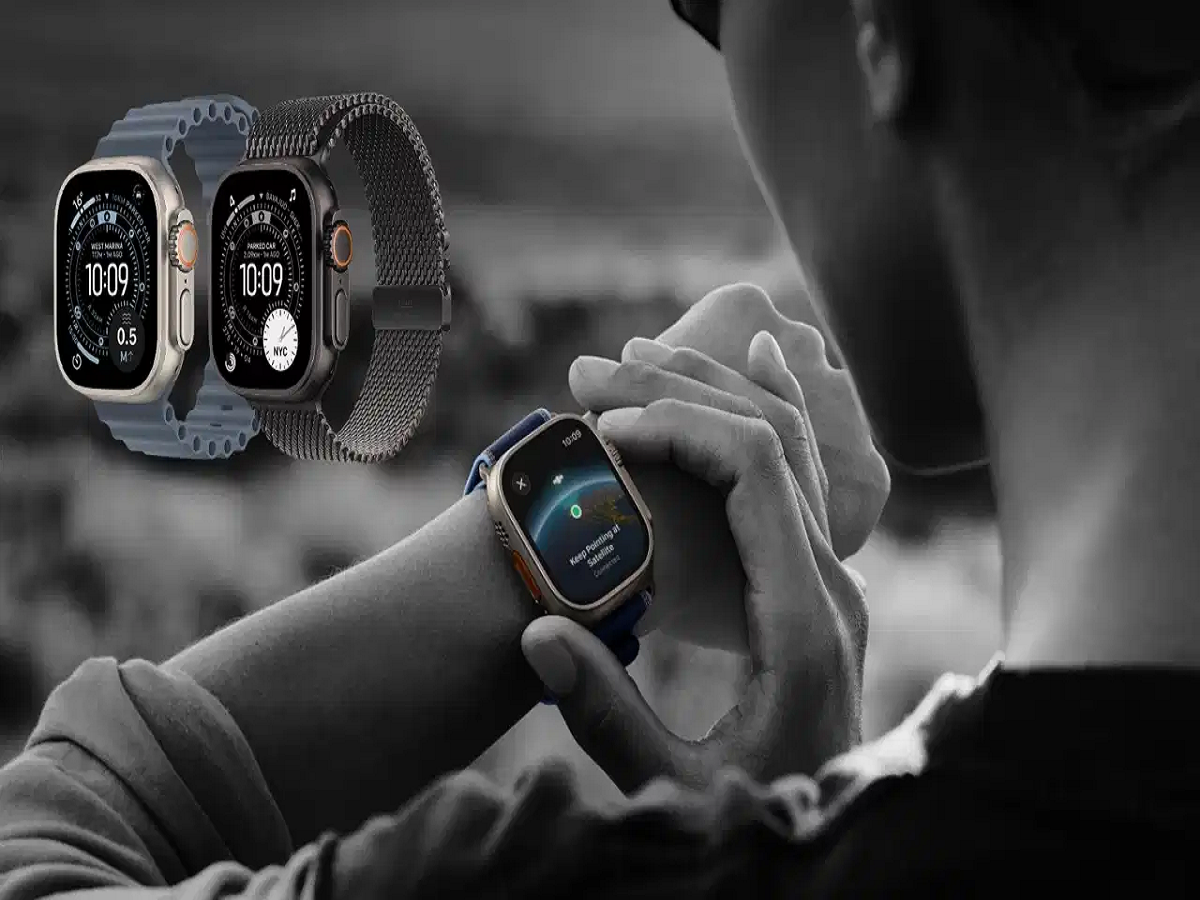
Apple Watches have become popular for fitness tracking, health monitoring and staying connected without constantly reaching for a phone. However, some of the newer features have sparked a fresh debate over privacy.
According to Luke Heemsbergen, a senior lecturer in communication at Deakin University in Australia, certain Apple Watch features can interact with sounds and conversations around the wearer. In an article published by The Conversation, he questioned whether the issue is simply about data security—or whether people nearby should have any say when their conversations are captured or processed by a device.
Apple says your audio is not recorded or stored
According to Apple, the company has designed these features with privacy protections in place. Apple says audio is not recorded or stored, individual voices are not linked to specific people, and the relevant data is encrypted.
The company also maintains that it cannot access or read the protected data.
But Heemsbergen argues that privacy concerns go beyond whether a company stores or protects the information. The bigger question, he says, is whether someone wearing a smartwatch should be able to digitally process a conversation involving other people without their knowledge or consent.
Should only the watch wearer have the right to opt in?
Apple describes these features as optional, meaning the person using the Apple Watch can decide whether to activate them.
However, there is an important privacy question: what about everyone else involved in the conversation?
For example, the Live Rewind feature can transcribe the previous 15 seconds of a conversation when activated. The feature reportedly provides signals such as a beep, an animation and a microphone indicator when it is being used.
Another feature, Siri Recap, can work in the background and later provide a summary of conversations. According to Heemsbergen, this raises a different concern because people nearby may not receive an equally obvious indication that their conversation is being processed.
A constant beep or visual warning would make such a feature difficult to use frequently. But removing obvious signals could also mean that people around the watch wearer have no idea whether their conversation is being captured or converted into digital information.
Privacy concerns could be bigger in sensitive environments
The issue becomes even more complicated in places where confidentiality is particularly important.
This could include private conversations at home, workplaces, business meetings, medical settings or legal discussions. In such environments, people may reasonably expect conversations to remain within the room.
Heemsbergen refers to the broader concept of "contextual integrity", developed by information scientist Helen Nissenbaum. The idea is that personal information should remain within the social context in which it was shared and should be used according to the expectations and rules of that environment.
A conversation at a dinner table, for example, is normally intended for the people sitting at that table—not for an electronic device that can potentially turn it into a text or summary.
Smart devices are already facing similar privacy questions
The debate is not limited to smartwatches.
Camera-equipped smart glasses have also raised concerns because they can potentially record or process information without everyone nearby being aware of it. Heemsbergen notes that such devices have already faced restrictions in certain workplaces and events.
As wearable technology becomes increasingly capable of listening, recording, transcribing and summarising information, similar privacy questions could become more common.
Can consumers fully trust tech companies with private data?
Another concern highlighted by Heemsbergen is public trust in technology companies.
He cites research examining thousands of apps that found instances of companies failing to comply with their own privacy policies. Another study involving children's apps also identified significant privacy-law compliance problems.
These findings contribute to a wider debate about whether users should rely solely on a company's privacy promises when devices are capable of processing highly personal information.
Apple itself faced a major privacy-related legal case involving Siri. In 2025, the company agreed to a US$95 million settlement over allegations that Siri was sometimes accidentally activated and that private audio was subsequently shared with contractors. Apple did not admit wrongdoing and continued to emphasize its privacy policies.
The bigger question: Security or social consent?
The Apple Watch debate ultimately raises a question that goes beyond encryption and cybersecurity.
Even if data is securely processed, people may still wonder whether a device should be allowed to listen to or analyse a conversation simply because its owner has enabled a particular feature.
As smartwatches and other wearable devices become more intelligent, privacy may increasingly depend not only on how securely data is handled, but also on whether everyone affected by that technology understands what is happening.
For users, the takeaway is simple: before enabling features that interact with conversations or ambient sound, it is worth understanding exactly what the feature does, when it operates and what information is processed.