AUTO
Can Your Electric Car Replace a Home Inverter During a Power Cut? Know How EV Batteries Can Power Household Appliances
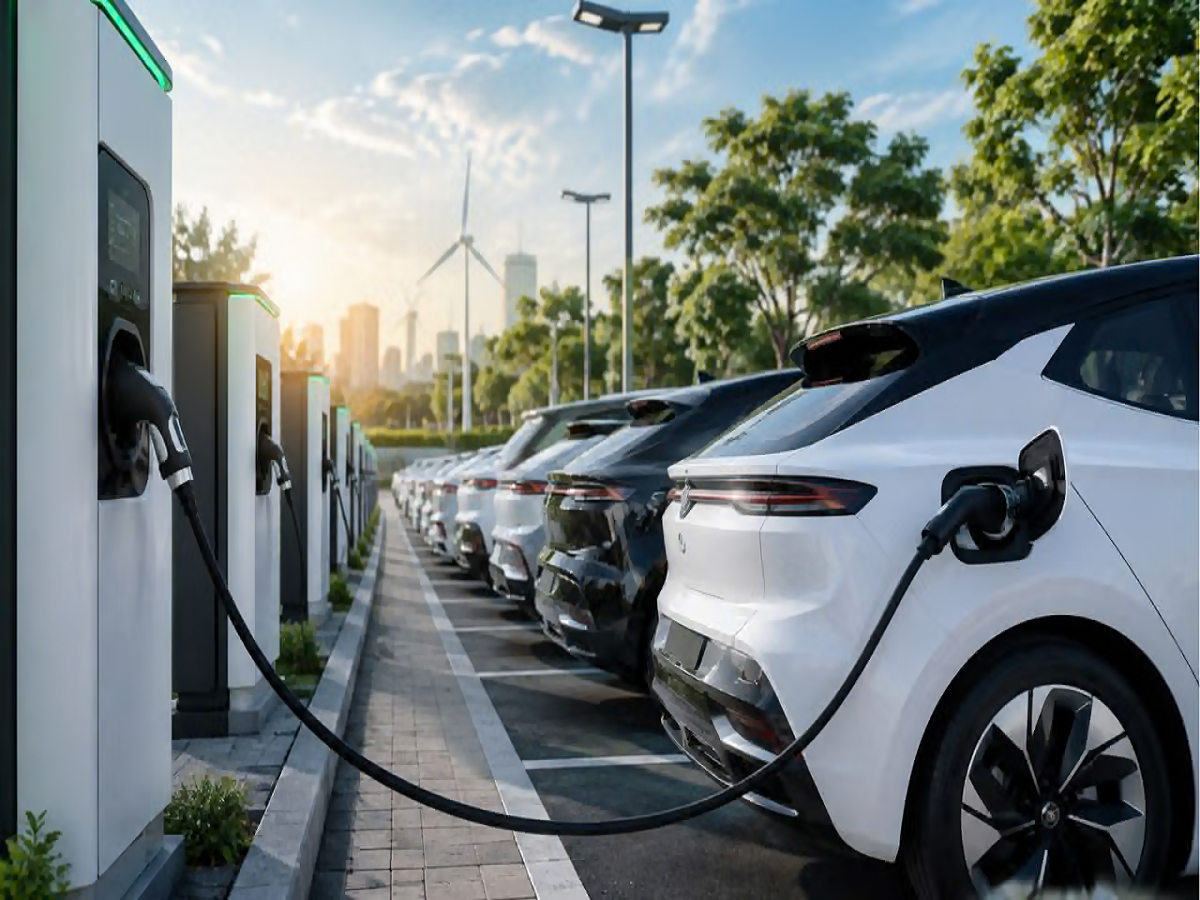
Imagine a situation where electricity suddenly goes out at home, and instead of switching on an inverter or generator, you use your electric car to keep essential appliances running. It may sound surprising, but modern electric vehicles are gradually making this possible.
Some electric cars come equipped with advanced technology that allows their batteries to supply electricity to external devices. This means you may be able to operate fans, LED lights, laptops and mobile chargers using your car's battery during a power outage.
However, this facility is not available in every electric vehicle. It depends on whether the vehicle supports technologies such as V2L or V2H. Let's understand how these technologies work and whether an electric car can actually become a backup power source for your home.
1. What Is V2L (Vehicle-to-Load) Technology?
V2L stands for Vehicle-to-Load. It is a technology that allows an electric vehicle to supply electricity from its battery to external electrical devices.
An EV generally stores electricity in its battery in the form of direct current (DC). Through an onboard power conversion system, this electricity can be converted into alternating current (AC), which is used by many everyday electrical appliances.
Depending on the vehicle, users can connect appliances through a dedicated power socket or a manufacturer-provided adapter.
With V2L technology, you may be able to operate:
-
Electric fans
-
LED lights
-
Mobile phone chargers
-
Laptops
-
Small electronic devices
-
Certain low-power household appliances
This feature can be particularly useful during power cuts, outdoor trips and camping.
2. How Long Can an EV Run Fans and Lights?
The backup duration depends on three major factors: the battery capacity of the electric vehicle, its available charge and the total electricity consumption of connected appliances.
For example, imagine you want to operate one 60-watt fan and four LED lights rated at 10 watts each.
The total electricity consumption would be:
-
One fan: 60 watts
-
Four LED lights: 40 watts
-
Total consumption: 100 watts
If these appliances operate continuously for 10 hours, they will consume approximately 1,000 watt-hours, equivalent to 1 unit of electricity.
A sufficiently charged EV battery can supply this amount of electricity without difficulty, provided its V2L system supports the connected load.
However, it is important to maintain enough battery charge for driving. You should also consider conversion losses and any minimum battery level restrictions set by the manufacturer.
3. Can an Electric Car Run Every Appliance at Home?
Although V2L technology is useful, it does not mean that an electric car can operate every household appliance simultaneously.
Every EV has a maximum power output limit, which varies depending on the model. Some vehicles support approximately 3.3 kW of external power, while others may offer higher output.
Low-power appliances such as fans, LED lights, laptops and mobile chargers are generally suitable.
However, appliances such as air conditioners, geysers, microwave ovens and electric heaters consume significantly more electricity. Before connecting them, you must check their power requirements and ensure that they fall within the vehicle's permitted output capacity.
Exceeding the recommended power limit can cause the system to shut down or trigger its electrical protection mechanisms.
4. What Is V2H Technology? Can It Power Your Entire Home?
Apart from V2L, another advanced technology known as V2H (Vehicle-to-Home) can make electric vehicles even more useful during power outages.
Unlike V2L, which generally supplies power to individual appliances through an external outlet, V2H allows electricity stored in an EV battery to be supplied to a home's electrical system.
This can potentially turn an electric vehicle into a home backup power source.
However, using V2H requires specific equipment and infrastructure, including:
-
An electric vehicle that supports bidirectional power transfer.
-
A compatible bidirectional charger.
-
A suitable home electrical connection and control system.
-
Proper isolation and safety arrangements to prevent electricity from flowing back into the utility grid during an outage.
Not every electric car or home charger supports this technology. Therefore, compatibility must be checked before installation.
5. What Should You Check Before Using Your EV as a Backup?
If you are planning to use your electric car as an alternative power source, keep a few important things in mind.
First, check whether your vehicle supports V2L or V2H. Simply having a large battery does not mean that an EV can automatically supply electricity to external appliances.
Second, understand the maximum power output supported by the vehicle. Avoid connecting appliances that exceed the permitted limit.
Third, maintain sufficient battery charge so that you do not compromise your driving range.
Finally, always use manufacturer-approved adapters and electrical connections. Never attempt to connect an EV directly to your home's wiring through an ordinary socket or extension cable.
Final Words
Electric vehicles are gradually becoming more than just an alternative to petrol and diesel cars. Technologies such as V2L and V2H are expanding their usefulness by allowing their batteries to supply electricity to external devices and, in compatible setups, entire homes.
While V2L can help operate essential appliances during a power cut, V2H offers a more advanced home backup solution.
However, these features are not available in every EV. If you are planning to purchase an electric car, checking its external power supply and bidirectional charging capabilities could be an important factor in your decision.