TECH
Cyber Fraud Alert: Lost money in online fraud? Do this immediately, your chances of getting your money back may increase
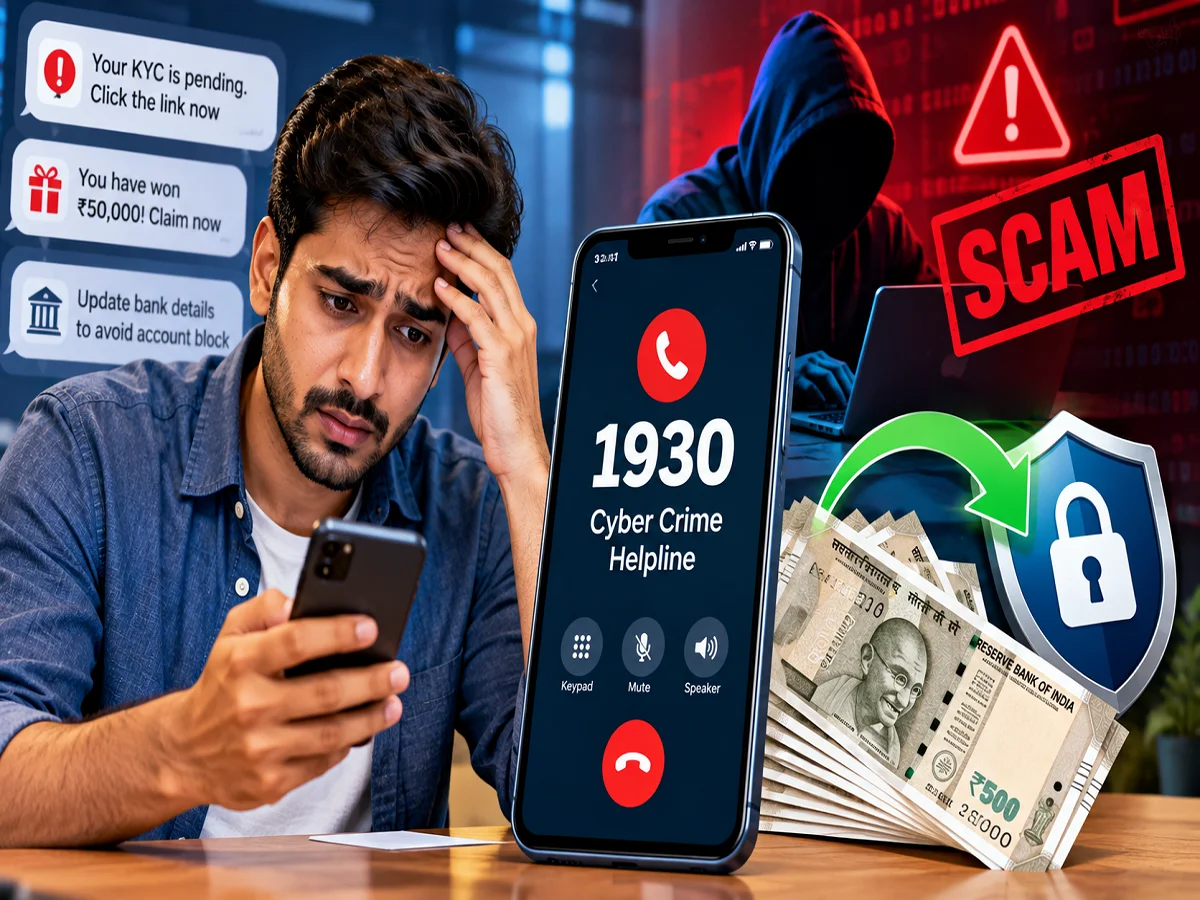
Online banking, UPI, and digital payments have made sending money incredibly easy, but with this convenience has also increased the risk of cyber fraud. Through fake calls, suspicious links, APK files, fake websites, OTP fraud, and other methods, criminals can withdraw money from bank accounts in minutes. The biggest question is: can money lost to cyber fraud be recovered?
According to information shared by CyberDost, a government cybersecurity awareness platform, there may be a possibility of recovering the defrauded amount in some cases. However, the most important thing is for victims to report the fraud immediately upon discovering it.
In case of cyber financial fraud, you can call the helpline number 1930. You can also file a complaint through the National Cyber Crime Reporting Portal (NCRP).
Why is it important to complain immediately after cyber fraud occurs?
Time is crucial in cases of online financial fraud. Once the money is received, the fraudsters may attempt to transfer it between accounts, withdraw cash, or use other means.
If the victim lodges a complaint at an early stage, the concerned banks, financial institutions and cyber crime agencies may have a higher chance of tracking the suspicious transaction and freezing the available funds.
This doesn't mean you'll definitely get your money back immediately after filing a complaint. Recovery can depend on where the money has landed, how much of it is available, and whether the relevant bank is able to hold or freeze it in time.
Call 1930 after cyber fraud
If money has been fraudulently withdrawn from your bank account, UPI or any other digital medium, it is important to contact the National Cyber Crime Helpline number 1930 as soon as possible.
It can be helpful to have transaction details ready when filing a complaint. This can include details like the transaction number, amount, bank account details, and the time of the fraud.
Apart from this, the victim can also lodge a complaint by visiting the official cybercrime reporting portal of NCRP.
You can also file a complaint on NCRP
Cybercrime can be reported online through the National Cybercrime Reporting Portal. It's important to provide accurate and complete information when filing a complaint after a financial cyber fraud.
It may also be useful to preserve fraud-related SMS, bank transaction messages, suspicious mobile numbers, emails, website or app information, screenshots and other available evidence.
After the complaint is lodged, the concerned agencies can take further action depending on the nature of the case and the information available.
How can the Money Restoration Module help?
Money Restoration Module i.e. MRM has also been mentioned in the information shared by CyberDost.
It has been said that in eligible cases, this system can help in the process of returning the money withheld in cyber financial fraud to the victim.
When a cyber-fraud complaint is lodged in time and the relevant amount is blocked in a bank account, the role of the bank and the concerned cybercrime authority is important in the further process.
However, each complaint is unique based on its facts and circumstances. Therefore, MRM does not automatically mean that full funds will be returned to the account in every cyber fraud case.
In what cases can the chances of getting the money back increase?
The chances of getting the money back may be better in cases where the concerned bank or financial institution is successful in stopping all or part of the defrauded amount in time.
For example, if there is a cyber fraud of ₹50,000 and after the complaint, some part of the amount is held in the concerned account, then action can be taken to get back the available amount as per the rules and prescribed procedure.
Conversely, if the fraudsters withdraw the money immediately or send it to multiple accounts and channels, the process of tracking and recovering the money can be more difficult.
For this reason, there should be no delay in complaining about financial cyber fraud.
Immediately inform the bank
Apart from complaining on 1930, it is also useful to report suspicious transactions to your bank or the concerned payment service provider.
Use only the official customer care channels provided by the bank. Avoid calling an unknown customer care number found on Google Search or social media, as fake helplines also target people.
Apart from this, after the fraud, do not share OTP, UPI PIN, card CVV, internet banking password or other sensitive information on the request of any unknown person.
Keep this evidence safe in case of cyber fraud
Don't delete chats, SMS, emails, phone numbers, screenshots, UPI IDs, bank transaction IDs, and other payment records related to the fraud. This information can be useful in complaints and investigations.
If the fraud is caused by a suspicious app or APK file, take necessary steps to secure the relevant account and device for banking security.
No money-back guarantee
It is important to understand that calling 1930 or filing a complaint with NCRP may provide a possibility of getting the money back, but it does not guarantee a refund.
Recovery will depend on how promptly the complaint is lodged, where the money was transferred, how much of it could be withheld and the further legal and banking procedures involved in the matter.
Therefore, it's better to act quickly once you discover cyber fraud rather than waiting. Immediate complaint on 1930 , reporting to NCRP, and notifying the relevant bank can play a crucial role in preventing further transfer of funds and initiating a potential recovery process.