Meghna Gulzar's films often explore difficult social issues without turning them into straightforward lectures. Her latest film, Daayra, follows a similar path, using a crime thriller to examine the complicated relationship between law, justice and public anger.
At the heart of the film is a debate over police encounters involving rape accused. Can immediate punishment be considered justice when the legal process has not yet reached a conclusion? Or does crossing the boundaries of the law create another problem altogether?
The film does not present the issue as a simple black-and-white debate.
Two Police Officers, Two Ideas of Justice
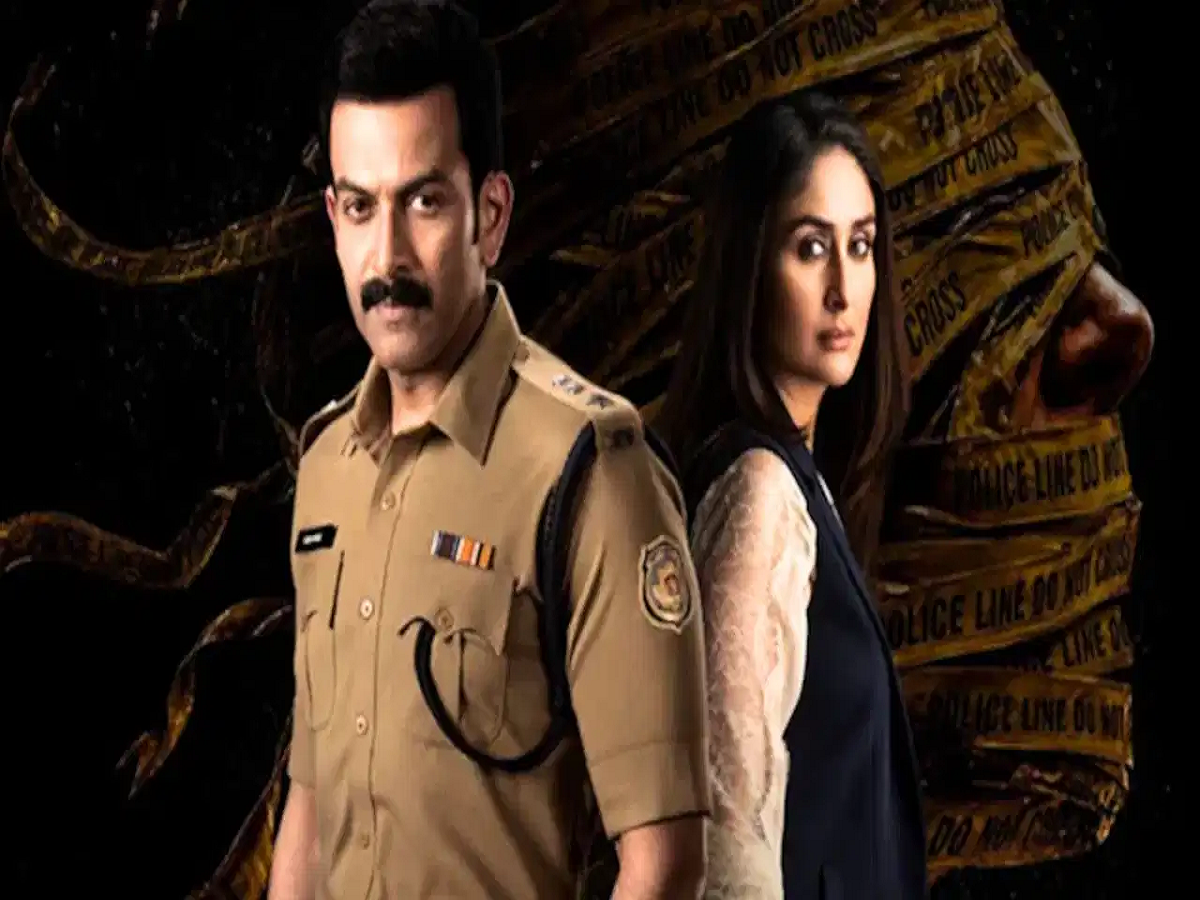
Prithviraj Sukumaran plays DCP Raman Kumar, a police officer who appears calm and restrained but carries the weight of public anger, media scrutiny and the emotions surrounding a brutal crime.
His character represents a more direct approach to dealing with criminals, while Kareena Kapoor's DCP Ajooni Kohli believes that punishment must remain within the boundaries of the legal system.
Their contrasting perspectives become an important part of the narrative.
Ajooni investigates an encounter involving suspects accused in a gang rape and murder case. As the investigation progresses, questions begin to emerge about the actions of the police officers involved and the circumstances surrounding the encounter.
Inspired by the Hyderabad Case
Daayra draws inspiration from the 2019 Hyderabad gang rape and murder case, which triggered widespread public outrage across the country.
The accused were subsequently killed in a police encounter, leading to a strong public reaction. While many people celebrated the incident, it also sparked questions about due process, human rights and whether police encounters can be considered a substitute for judicial proceedings.
The film uses a similar situation as its starting point and then moves into a deeper examination of what happens when public demand for immediate justice collides with the established legal process.
Prithviraj Plays a Quiet but Intense Character
As DCP Raman Kumar, Prithviraj Sukumaran plays a restrained character whose emotions are largely conveyed through his expressions and actions rather than lengthy speeches.
He is not presented as a conventional action hero. Instead, the character carries the pressure of public opinion, the victim's family's pain and his own understanding of what he believes is necessary.
This gives the character a somewhat different dimension from the typical larger-than-life police officer often seen in commercial cinema.
Kareena Kapoor’s Role Is Limited but Important
Kareena Kapoor plays DCP Ajooni Kohli, an officer who approaches the encounter investigation through the framework of the law.
Although her screen time is relatively limited, her character serves an important purpose in the story. Through her investigation, the film raises questions about police accountability and the consequences of taking justice into one's own hands.
Her controlled performance complements Prithviraj's quieter portrayal.
Meghna Gulzar Keeps the Focus on the System
The film continues Meghna Gulzar's interest in stories built around real-world social and institutional issues. Her earlier films, including Talvar, Raazi, Chhapaak and Sam Bahadur, have explored subjects ranging from crime investigations to historical and social themes.
With Daayra, she turns her attention to the difficult question of instant justice and the functioning of the criminal justice system.
Rather than focusing solely on the accused or the encounter, the film also examines the failures and pressures within the system that can contribute to such situations.
A Question Rather Than an Easy Answer
The central strength of Daayra lies in the question it leaves with the audience: when society demands immediate punishment for a horrific crime, should the legal process still be allowed to take its course?
The film places two contrasting approaches side by side—one that seeks swift action and another that insists on judicial procedure.
Instead of providing an uncomplicated answer, Daayra uses its characters and investigation to explore the tension between public anger, police action, individual rights and the rule of law.
Ultimately, the film asks viewers to consider where the boundary between justice and punishment should lie—and what happens when that boundary is crossed.