LIFESTYLE
Dandruff and Hair Fall Together? Dermatologist Reveals What You Should Do and Which Mistakes to Avoid
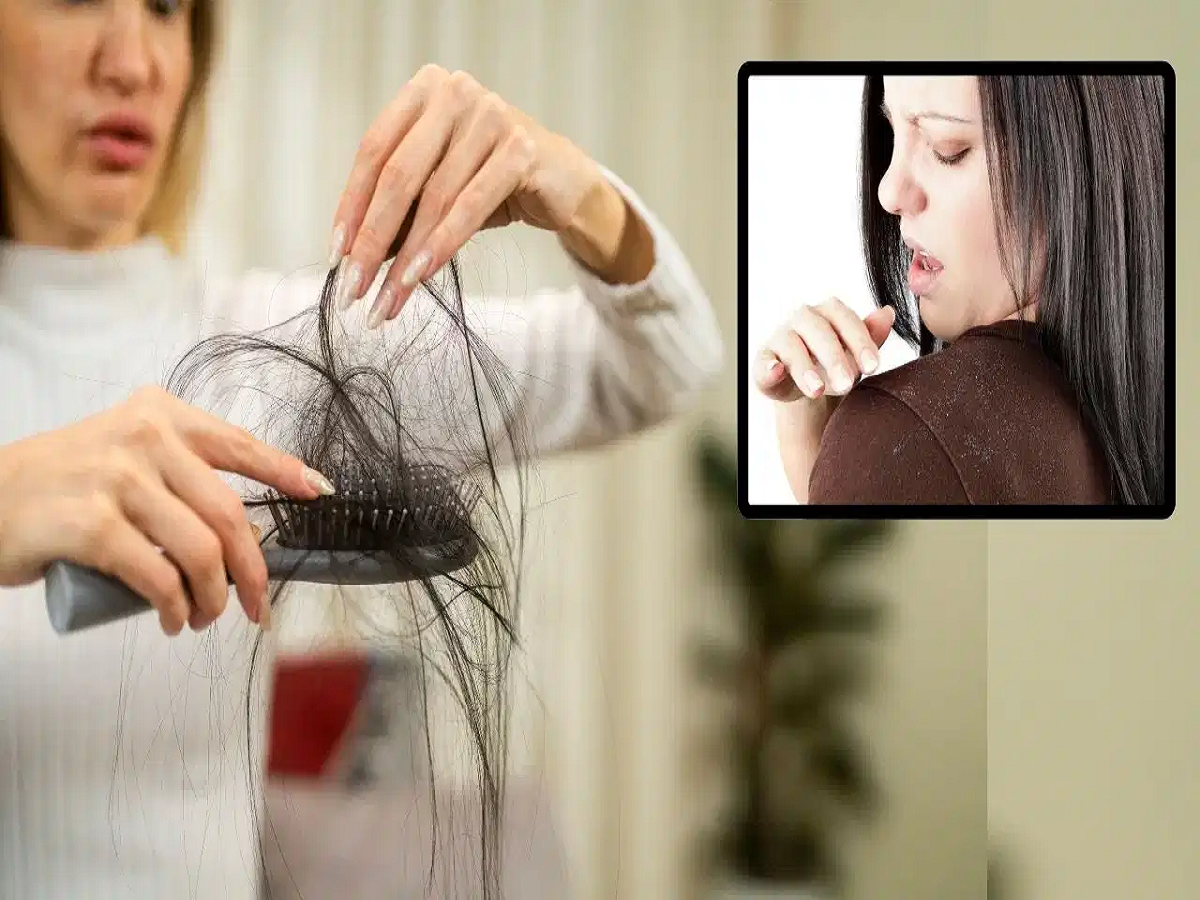
Seeing a few strands of hair fall every day is normal. However, when hair shedding becomes excessive, it can become a cause for concern. The worry can increase even more when dandruff and hair fall start appearing together.
But does dandruff actually cause hair loss? And what should you do if both problems are troubling you at the same time?
To understand the connection, TV9 spoke with Dr. Arju Pahwa, Consultant Dermatologist at Kailash Deepak Hospital. The dermatologist says people experiencing both conditions should not immediately panic or assume that dandruff is directly responsible for their hair loss.
Does Dandruff Really Cause Hair Fall?
According to the dermatologist, ordinary dandruff generally does not cause permanent hair loss. However, the intense itching that often accompanies dandruff can indirectly contribute to increased hair shedding.
When the scalp becomes itchy, people tend to scratch it repeatedly. Excessive scratching can irritate and inflame the scalp. In severe cases, continued irritation may affect the hair follicles and contribute to increased hair fall.
This is why controlling the scalp problem and avoiding repeated scratching is important.
First Find Out What Is Actually Causing the Dandruff
Not every flaky scalp is simply dandruff. Sometimes, a condition that looks like dandruff may actually be seborrheic dermatitis, which can cause itching, flaking and an oily or greasy scalp.
Other scalp conditions, including psoriasis, eczema and fungal infections, can also produce symptoms that resemble dandruff. Some of these conditions may themselves be associated with hair shedding.
Therefore, if the problem is persistent or severe, identifying the actual cause is important rather than simply continuing to treat it as ordinary dandruff.
Anti-Dandruff Shampoo Can Help
For mild dandruff, an over-the-counter anti-dandruff shampoo may be useful. Products containing ingredients such as selenium or zinc can help manage dandruff.
Some people may require an antifungal shampoo containing ketoconazole, particularly when a fungal component or seborrheic dermatitis is suspected.
However, these products should be used according to their instructions. The shampoo may also need to remain on the scalp for a specific amount of time before being rinsed off, so don't wash it away immediately unless the product instructions say otherwise.
If dandruff keeps returning, becomes severe or does not improve with basic treatment, consulting a dermatologist is advisable.
Avoid These Common Hair-Care Mistakes
When dandruff and hair fall occur together, certain everyday habits can make the situation worse.
Try to avoid:
-
Scratching the scalp repeatedly
-
Brushing the hair aggressively
-
Pulling or tugging at the hair
-
Wearing hairstyles that keep the hair tightly pulled
-
Handling the scalp roughly when washing or drying your hair
These habits can increase irritation and place additional stress on the hair and scalp.
When Should You See a Dermatologist?
Hair loss deserves further evaluation if it continues even after the dandruff has improved. You should also consult a dermatologist if your hair is falling out in large clumps, the scalp itching is severe, or the problem continues to worsen.
In such cases, it is important to investigate other possible causes of hair loss instead of automatically blaming dandruff.
The Bottom Line
Having dandruff and hair fall at the same time does not necessarily mean that one problem is directly causing the other. Dandruff usually does not lead to permanent hair loss, but severe itching and repeated scratching can irritate the scalp and contribute to increased shedding.
The best approach is to control the scalp condition, avoid damaging hair-care habits and seek professional advice if the hair loss is persistent or severe.