TECH
Doctor Number Searched on Google, Couple Loses ₹18 Lakh in New Cyber Fraud Using Fake Appointment App
Fake Doctor Appointment App Used in ₹18 Lakh Cyber Scam
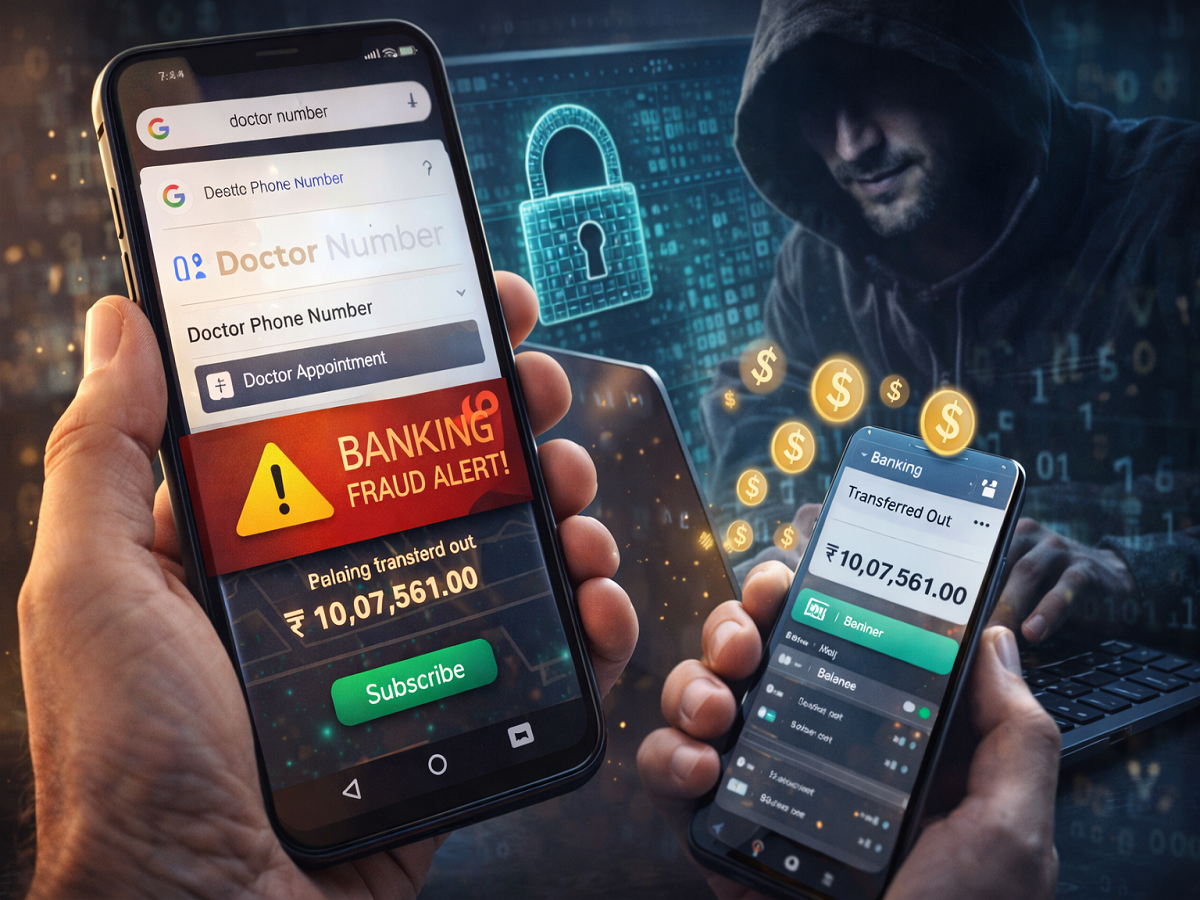
A shocking cyber fraud case has emerged from Anupshahr in Uttar Pradesh, where a couple allegedly lost ₹18.61 lakh after searching for a doctor’s contact number on Google Search. Cybercriminals reportedly tricked the victims into downloading a fake mobile application named “Doctor Appointment,” which allowed them to remotely access the victims’ smartphone and carry out unauthorized bank transactions.
The complaint has been registered at the local cybercrime police station, and authorities have launched an investigation into the incident.
According to reports, the fraud began when the victim attempted to find a doctor’s phone number online for medical consultation. Instead of reaching a legitimate service, the search result led him to a scammer posing as a medical assistant.
How the Cyber Fraud Took Place
The victim, a resident of the Kedar Sahay locality in Anupshahr, reportedly searched online for a doctor’s phone number on December 1, 2025, after experiencing health issues.
When he called a number displayed in the search results, the person on the other end claimed to be associated with a doctor and offered to schedule an appointment immediately. To complete the booking process, the caller instructed the victim to download a mobile app called “Doctor Appointment.”
Because the victim needed urgent medical advice, he followed the instructions and installed the app on his phone.
During installation, the app requested several permissions related to device access. Without suspecting anything unusual, the victim granted those permissions.
Cyber investigators believe that these permissions allowed the fraudsters to gain remote access to the phone, enabling them to monitor screen activity, intercept OTP messages, and access sensitive banking information.
Multiple Bank Transactions Over Several Days
At the time of the incident, the victim was reportedly ill and did not regularly check phone notifications or bank messages.
Taking advantage of this situation, the scammers allegedly conducted multiple unauthorized transactions from his bank account over several days.
Between February 19 and February 25, 2026, fraudsters reportedly transferred ₹10,07,561 from the victim’s bank account through nearly 20 different transactions. Investigators suspect the amount was divided into smaller transfers to avoid raising immediate suspicion.
Wife’s Account Also Targeted
The scammers also managed to access the bank account of the victim’s wife.
Between February 20 and February 26, a total of ₹8,54,409 was withdrawn from her account through several transactions.
The couple discovered the fraud on February 26 after noticing a series of debit messages on their phones. They immediately contacted the bank and requested the accounts to be blocked to prevent further losses.
Police Investigation Underway
Following the complaint, cybercrime police have begun investigating the case by examining:
-
Transaction records
-
Beneficiary bank accounts
-
Digital evidence linked to the fraudulent app
Authorities are also trying to trace the individuals responsible for creating and distributing the fake “Doctor Appointment” application.
Experts Warn About Fake Numbers in Online Searches
Cybersecurity experts warn that criminals increasingly exploit online searches to target victims. Fake phone numbers and fraudulent service listings can appear in search results and mislead users into contacting scammers.
Experts advise users to:
-
Verify doctor or service contact details through official hospital websites
-
Avoid downloading unknown apps suggested by strangers
-
Carefully review app permissions before granting access
-
Never share OTPs or banking information with unknown individuals
If suspicious activity occurs, victims should immediately contact the cybercrime helpline (1930) or report the incident on the official cybercrime portal.
Growing Threat of App-Based Cyber Fraud
Cases involving fake service apps and remote-access scams have been rising across India. Cybercriminals often use urgent situations—such as medical help, delivery services, or banking assistance—to manipulate victims into installing malicious applications.
Authorities urge people to remain cautious while downloading apps and to rely only on trusted sources when searching for essential services online.