BUSINESS
Explained: Will cash transactions come to an end in the coming days? 57% prefer UPI, making transactions untraceable
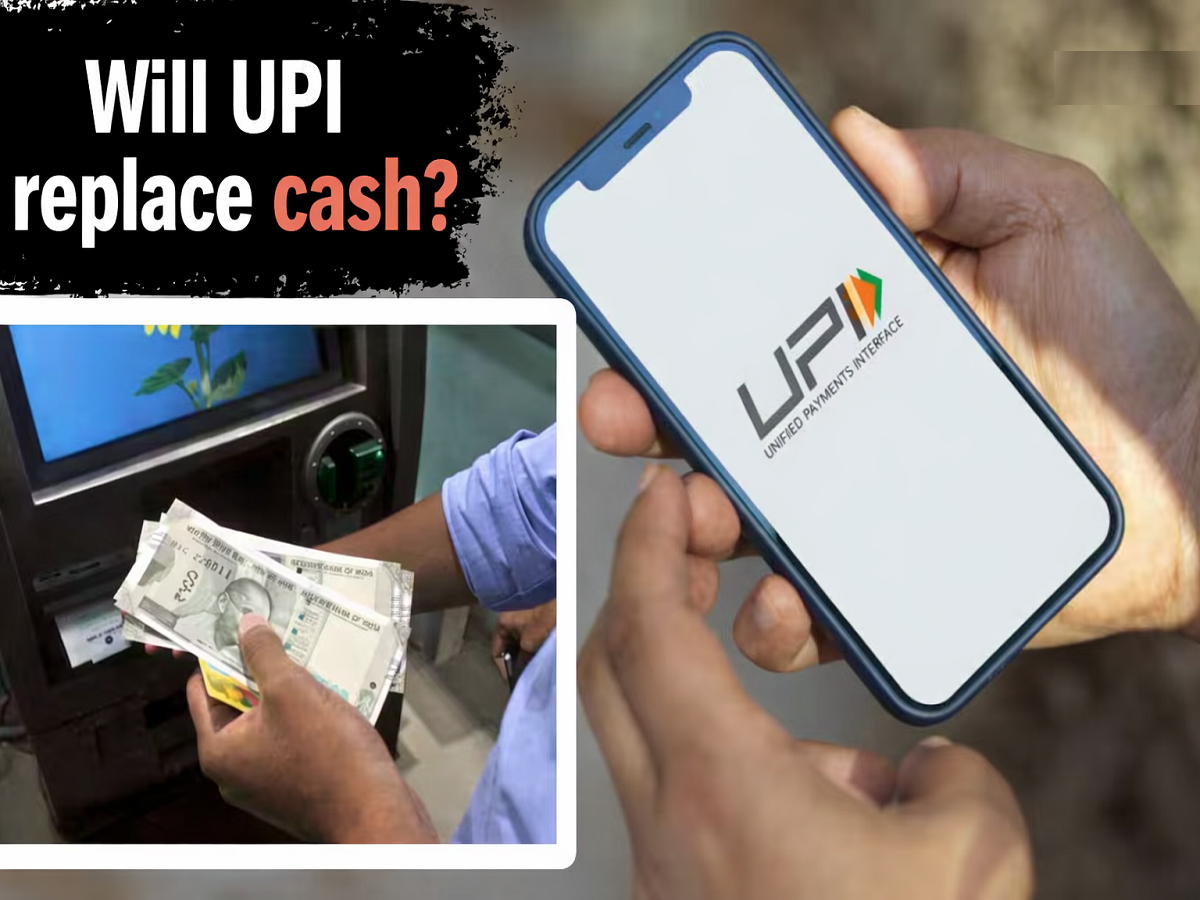
UPI vs. Cash Income Tax Tracking: Once upon a time, the sound of crisp notes resonated in our ears, but now, thanks to UPI, our wallets can't seem to fill up. So, will we run out of notes in the future?
UPI has now become the king of everyday payments in India. According to official data from NPCI, DFS, and RBI, UPI has surpassed cash in both the number and value of transactions. However, surprisingly, the total amount of cash is still increasing. The question is: will the cash system disappear completely? Will every customer become accustomed to taking out their phone and making payments in 3-4 seconds? Let's understand this in an explainer...
Question 1: How has UPI surpassed cash? What does the DFS survey say?
Answer: In July-August 2025, the Department of Financial Services (DFS), Ministry of Finance, in collaboration with NPCI, conducted a large-scale survey. It interviewed 10,378 people across 15 states, including 6,167 general users, 2,199 shopkeepers, and 2,012 service providers. The survey was conducted through face-to-face interviews in urban and semi-urban areas.
The results were surprising. UPI's share of daily payments reached 57 percent, while cash fell to just 38 percent. UPI usage among youth aged 18-25 increased even more, reaching 66 percent. Among small shopkeepers, 94 percent now accept payments via UPI QR code. 90 percent of users find UPI and RuPay cards more secure than cash. Both ATM withdrawals and cash usage have declined.
The survey shows that from 2021-22 to 2024-25, the government provided incentives worth ₹8,276 crore to promote UPI. Digital transactions increased 11-fold due to cashbacks, lower fees, and easier onboarding. UPI now handles 80 percent of total digital payments. Small merchants also benefited from increased sales. 57 percent said digital payments increased their sales.
Question 2: What are the month-on-month UPI figures telling us?
Answer: NPCI releases data every month, and the entire year 2025-26 is full of records. Let's take a look at them one by one:
NPCI Official Report

Tier-2 and Tier-3 cities and rural areas now account for 45 percent of traffic. The number of UPI QR codes has surpassed 700 million. UPI has become the default everywhere, from small grocery stores to pharmacies to transportation.
Question 3: But the total amount of cash is also increasing? How?
Answer: Yes, it is increasing. Currency in circulation (CiC), or total cash, reached a record level of ₹40 lakh crore in January 2026, an increase of 11.1 percent year-on-year. January's UPI value (₹8.33 lakh crore) represents approximately 70 percent of CiC. This means that UPI handles as many transactions in a month as a significant portion of the total cash stock.
SBI research clearly shows that the economy is growing, and people are hoarding cash for safety. ATM withdrawals, especially in the unorganized sector, have increased following GST and tax notices. The good news is that the CiC-GDP ratio is declining, from 14.4 percent in 2021 to around 11.2 percent now. This means that the relative share of cash in the overall economy is declining. Despite UPI transaction values exceeding CiC, cash continues to be used as a store of value.
Question 4: What does the UPI outage of April 1, 2026 teach?
Answer: On April 1, 2026, UPI experienced a major outage. Transactions failed in several cities, including Delhi, Mumbai, Bengaluru, Jaipur, Pune, Kolkata, Guwahati, and Chennai, and apps were unable to load. SBI received over 500 complaints, while UCO Bank received 40. The reason: SBI's scheduled maintenance was extended and lasted until 12:30 pm. SBI itself apologized in a post on X, citing UPI Lite, the eRupee (CBDC) app, and ATMs as alternatives.
The problem was resolved within a few hours. There was no major statement from NPCI or other banks, but this incident is a reminder that while trust in UPI has increased, the system is still not 100% fail-proof. Yet, people haven't rushed back to cash. Record figures from March 2026 prove that trust remains.
57% of people no longer prefer cash payments.
Question 5: So will the era of cash really end?
Answer: No, not completely, but the era of cash for everyday small payments is almost over. UPI has paved the way for 80-90 percent of transactions to become digital within 5-10 years. NPCI's target is 1 billion transactions daily by 2027. The government is further strengthening the Digital Public Infrastructure (DPI).
Cash will still be there because:
- Internet and smartphone access is still limited in rural areas.
- People prefer cash for large amounts, emergencies or unorganized business.
- As the economy grows, the total amount of cash will also increase, even if its percentage decreases.
PC:ABPNews