TECH
Google Launches Dreambeans in India: AI App Delivers Personalised Stories Without Repeated Searches
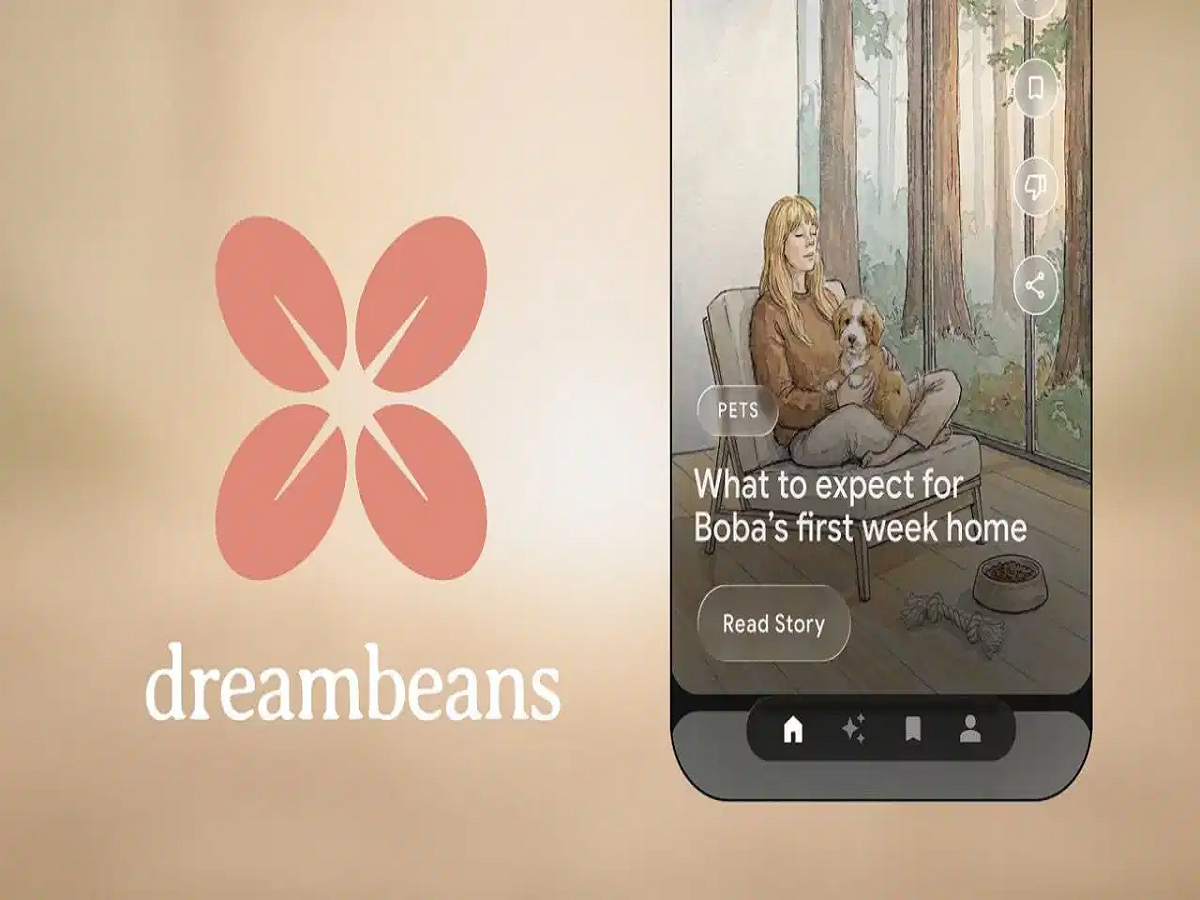
Google has introduced a new experimental application called Dreambeans in India. Developed under Google Labs, the app aims to change how people discover information by delivering AI-generated stories based on their interests and daily activities.
Instead of repeatedly searching the internet or scrolling through social media to find relevant updates, users can receive personalised content automatically. The app is designed to make information discovery more convenient by bringing together insights from different Google services.
Dreambeans is available for users aged 18 and above on both Android and iOS devices.
What Is Google Dreambeans and How Does It Work?
Dreambeans is an experimental AI-powered app that creates personalised stories using information from services connected to a user's Google account.
Depending on the services and permissions enabled, it can draw relevant context from Gmail, Google Calendar, Google Photos, Google Search, Gemini and YouTube.
The app uses this information to understand a user's interests, activities and upcoming plans. It then generates stories that may be relevant to their everyday life.
For instance, Dreambeans could suggest places to visit, highlight upcoming events, remind users about pending tasks or recommend activities related to their interests.
Users can tap on individual stories to explore them further. They can also save interesting content for later, share stories with others and provide feedback to help improve the recommendations.
AI-Generated Stories Will Reduce the Need for Repeated Searches
One of Dreambeans' main features is its ability to deliver information proactively.
Normally, users have to search for topics they are interested in or browse multiple platforms to discover useful content. Dreambeans aims to simplify this process by presenting selected information in a personalised story format.
This could be useful for people who want to stay updated about their interests, discover new activities or keep track of upcoming plans without manually searching for everything.
However, the relevance of the stories will depend on the information available through connected Google services and the permissions granted by users.
Dreambeans Can Turn Images Into Videos Using Google's Veo AI
Another interesting feature is the ability to animate images included in selected stories.
Google is using its Veo AI video-generation technology to transform certain static images into moving visuals. This means users may see animated versions of images rather than only traditional photographs.
The feature adds a visual element to the stories and demonstrates how Google's video-generation technology can be integrated into everyday applications.
Google Dreambeans Supports 14 Languages
Google has introduced Dreambeans with support for 14 languages, making the app accessible to users across different regions of India.
The supported languages are:
-
English
-
Hindi
-
Bengali
-
Telugu
-
Marathi
-
Tamil
-
Urdu
-
Gujarati
-
Kannada
-
Malayalam
-
Odia
-
Punjabi
-
Assamese
-
Nepali
Users can select one language at a time for generating their personalised stories.
Availability: How Can You Download Dreambeans?
Dreambeans is currently available in India as an experimental Google Labs application. Users aged 18 and above can download it on compatible Android and iOS devices.
Since the app uses information from connected Google services, users should review the permissions and privacy settings before enabling access. They should also check which accounts and services are connected and understand how their information is being used.
Can Dreambeans Change the Way People Discover Information?
Google Dreambeans introduces a different approach to finding information. Rather than waiting for users to search for something, it attempts to bring relevant content to them through AI-generated stories.
Its integration with Google's ecosystem, multilingual support and AI-powered image animation make it an interesting experiment.
However, its usefulness will ultimately depend on the accuracy of its recommendations, the quality of the generated stories and how comfortably users can manage their personal data and privacy settings.