BUSINESS
Government Launches ‘Sabki Yojana, Sabka Vikas’ Campaign: How Villagers Can Help Decide Local Development Priorities
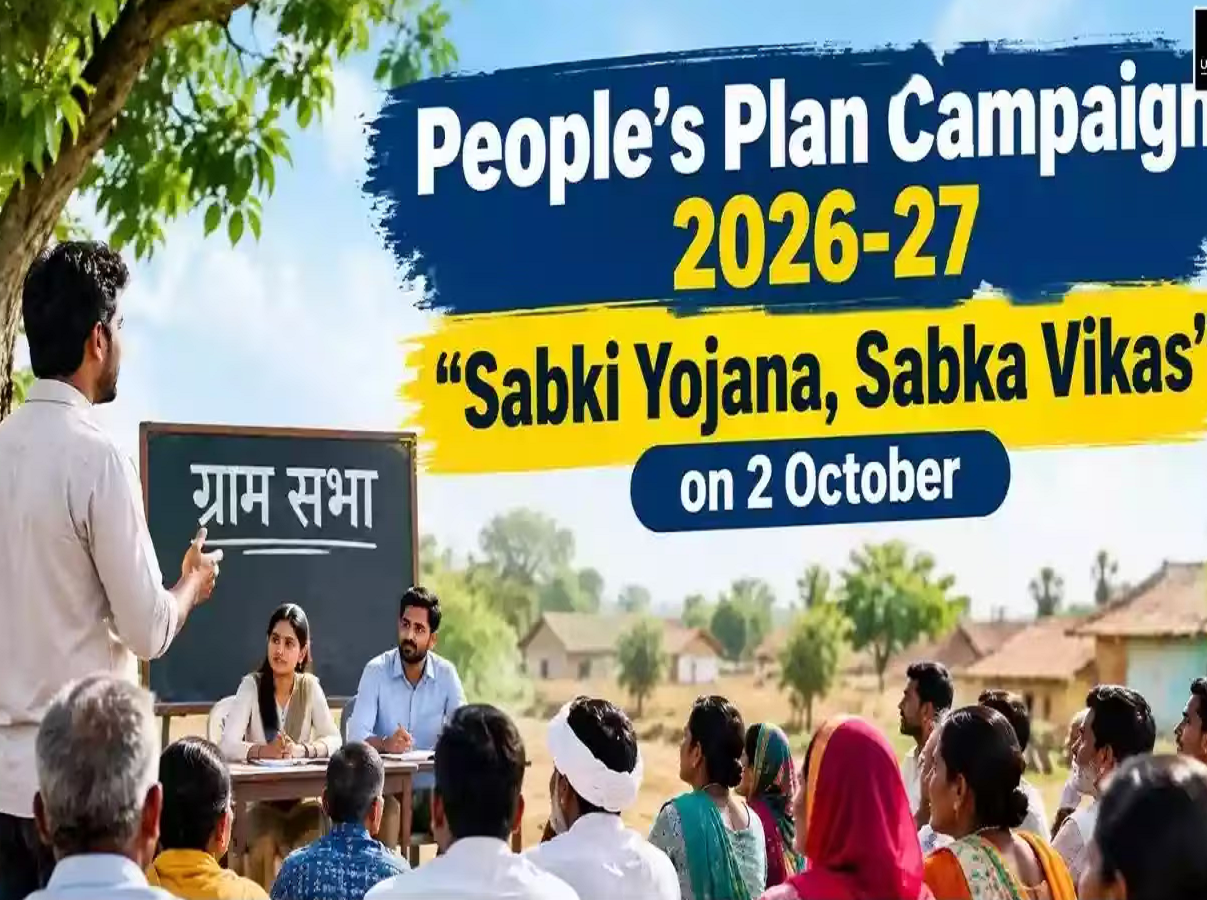
The Government of India has launched the People’s Plan Campaign 2026–27, titled “Sabki Yojana, Sabka Vikas”, to strengthen village-level planning and encourage greater public participation in rural development. The initiative was announced alongside special Gram Sabha meetings held on October 2, 2026, where citizens and local representatives were encouraged to discuss government schemes, identify local problems and decide development priorities. <Cite refs={["turn169806view0"]} />
The campaign focuses on preparing Gram Panchayat Development Plans for the financial year 2027–28. Its central idea is to make village development plans more inclusive by considering the actual needs of residents rather than relying only on decisions made at higher administrative levels.
What Is the ‘Sabki Yojana, Sabka Vikas’ Campaign?
The People’s Plan Campaign is an initiative through which Gram Panchayats prepare development plans based on local requirements and available resources.
The programme has been implemented across states and Union Territories since 2018. According to the Ministry of Panchayati Raj, more than 2.55 lakh Gram Panchayats prepare and upload their development plans through the eGramSwaraj platform. <Cite refs={["turn169806view0"]} />
Under the 2026–27 campaign, the planning process is intended to help villages identify gaps in public services, review the implementation of government schemes and set priorities for the coming financial year.
What Issues Will Be Discussed in Gram Sabha Meetings?
Gram Sabha discussions are intended to cover a broad range of issues affecting rural households. These include basic infrastructure, employment, drinking water, sanitation, land records and access to welfare programmes.
Key areas highlighted for discussion include:
-
Rural employment: The Viksit Bharat–Guarantee for Rozgar and Ajeevika Mission (Gramin), which provides a statutory guarantee of 125 days of wage employment under its framework.
-
Drinking water: The Jal Jeevan Mission, which focuses on rural household tap-water connections.
-
Sanitation: The Swachh Bharat Mission (Grameen), including sanitation and solid and liquid waste management.
-
Water conservation: Initiatives promoting rainwater harvesting, groundwater recharge and watershed development.
-
Food security: One Nation One Ration Card and the Pradhan Mantri Garib Kalyan Anna Yojana.
-
Land records: The Digital India Land Records Modernization Programme, which aims to improve access to digitised land records.
-
Consumer protection: The National Consumer Helpline and the e-Jagriti platform for consumer grievance redressal. <Cite refs={["turn169806view0"]} />
These discussions are intended to help residents understand available programmes and identify where improvements are needed in their villages.
How Can Ordinary Citizens Participate?
The Gram Sabha provides villagers with a direct platform to raise concerns and share suggestions with local representatives.
Residents can use these meetings to discuss issues such as damaged roads, drinking-water shortages, drainage problems, waste disposal, school infrastructure and gaps in the delivery of welfare benefits.
For participation to be meaningful, residents should describe the problem clearly, identify the affected area and explain what action is needed. Where possible, they can bring relevant documents or information that helps local representatives understand the issue.
Citizens can also ask whether a particular development work has already been proposed, whether funding is available and how progress will be monitored.
The exact procedure for raising proposals and following up on decisions may vary according to state rules and local Panchayat arrangements.
How Will Digital Platforms Help Village Planning?
Digital governance is another important part of the campaign. The government has highlighted platforms such as eGramSwaraj and AuditOnline, which support Panchayat-level planning, accounting and transparency.
Digital records can make it easier to track proposed development works, review financial information and monitor the implementation of approved plans.
The Panchayat Advancement Index is also intended to help local bodies identify achievements and gaps across important development indicators. This information can support more evidence-based decisions when village development priorities are discussed. <Cite refs={["turn169806view0"]} />
However, digital tools are most effective when residents can access the information, understand the proposed works and participate in decisions that affect their communities.
What Does This Mean for Rural Development?
Village-level planning can help local authorities identify problems that may not be fully visible in broader district or state-level planning.
For example, one village may prioritise drinking-water infrastructure, while another may need improved drainage, better roads or measures to support local livelihoods. A participatory planning process can help each Gram Panchayat focus on its specific requirements.
The campaign also encourages coordination between government departments so that development priorities can be considered alongside existing schemes and resources.
The final results will depend on the quality of local participation, the availability of funds, administrative coordination and how effectively approved works are implemented.
What Should Villagers Do Next?
Residents interested in participating should contact their Gram Panchayat to learn about upcoming meetings, local development plans and the process for submitting suggestions.
They can also ask how to access information about proposed works, available funds and the status of ongoing projects.
People should remember that raising an issue during a Gram Sabha does not automatically guarantee that the proposed work will be approved. Decisions depend on planning priorities, applicable rules, available resources and the relevant approval process.
A Step Towards More Participatory Governance
The “Sabki Yojana, Sabka Vikas” campaign places local needs and citizen participation at the centre of village development planning. By encouraging residents to discuss public services, identify gaps and contribute to development plans, the initiative aims to make Panchayats more responsive to their communities.
For rural households, the campaign offers an opportunity to engage directly with local governance and understand how development priorities are decided.
Its long-term impact will depend on whether public suggestions translate into practical plans, transparent spending and measurable improvements in village life.