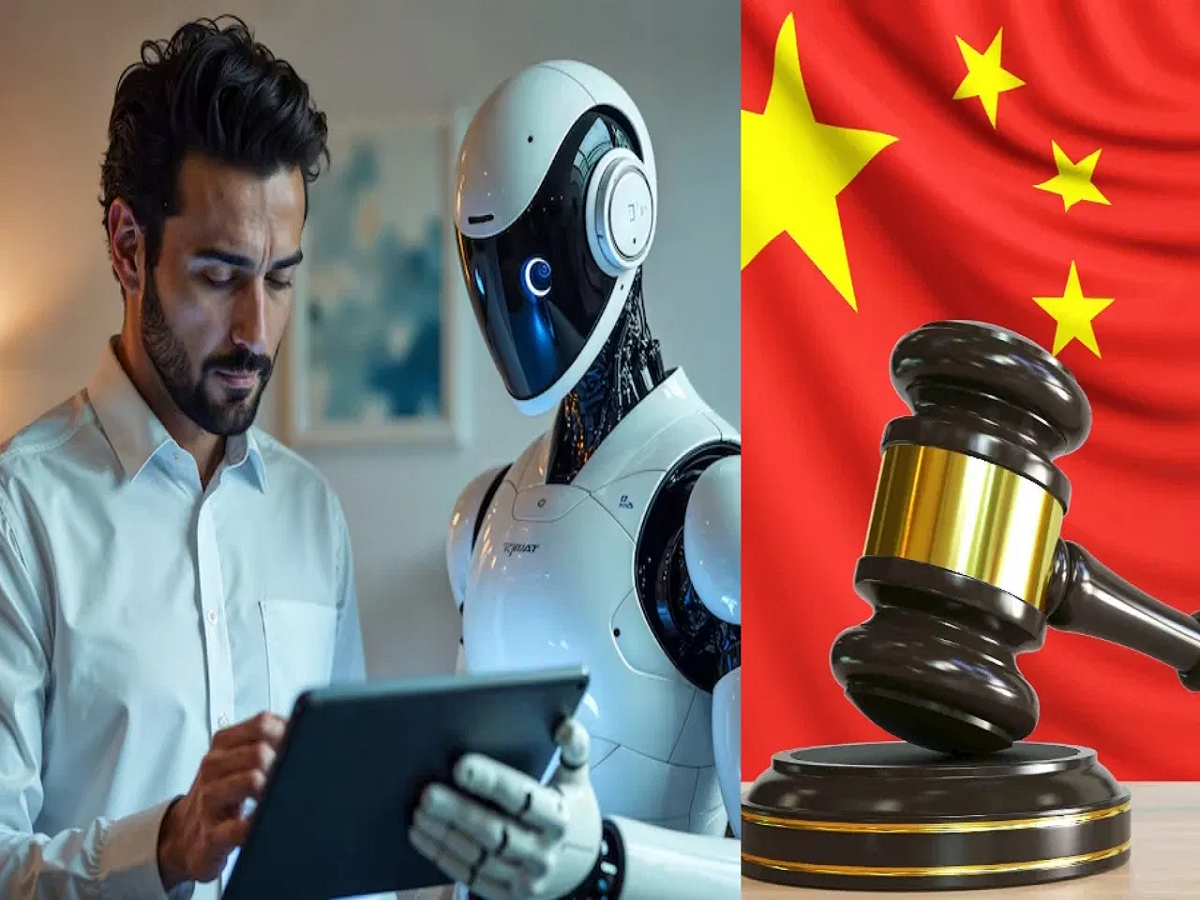
In a landmark legal decision that could set a global precedent, a Chinese court has ruled that companies cannot terminate employees simply because their roles have been automated by Artificial Intelligence. The Hangzhou Intermediate People's Court issued the ruling, signaling a significant victory for labor rights in an era of rapid technological disruption.
The court’s message is clear: while AI can augment or streamline a task, it does not provide a legal "blank check" to replace human workers.
The Dispute: AI vs. Quality Assurance
The case centered around an employee identified as Zhou, who was hired in 2022 as a quality assurance supervisor for an AI firm.
-
The Role: Zhou was responsible for auditing the output of large language models and filtering inappropriate content, earning a monthly salary of 25,000 yuan.
-
The Conflict: As the company’s AI systems became more advanced, management began automating Zhou’s core responsibilities.
-
The Ultimatum: The company eventually offered Zhou a demotion to a different role with a significantly reduced salary of 15,000 yuan. When Zhou refused to accept the pay cut, the company terminated his contract.
The Legal Ruling: Technology is Not a "Major Change"
Zhou challenged his dismissal, eventually bringing the case to the Hangzhou Intermediate People's Court. The court ruled in his favor, citing several critical points:
-
Illegal Termination: The court declared that replacing a human role with AI does not constitute a legal basis for firing an employee under existing labor laws.
-
Invalid Reassignment: Offering a lower-paying role as the only alternative to termination was deemed an invalid reassignment of duties.
-
No "Change of Circumstances": The company argued that the rise of AI represented a "major change in objective circumstances." The court rejected this, stating the company failed to prove that Zhou’s original job had become "impossible" to perform.
A Warning to Global Tech Giants
This ruling comes at a critical time, as reports from organizations like Anthropic and other AI leaders continue to analyze the long-term impact of automation on the global workforce. The Chinese court’s decision reinforces the idea that AI should be used as a tool for efficiency rather than a direct replacement for human livelihood.
Key Takeaways for the AI Era:
-
Human Oversight: The court highlighted that while AI can simplify tasks, the human element of judgment and oversight remains essential.
-
Precedent for Future Cases: This is the second major ruling in China to favor employees in AI-related disputes, strengthening the legal shield for workers in the tech sector.
-
Corporate Responsibility: Companies are being warned that they must prioritize employee rights and ethical transitions when adopting new technologies.
As businesses worldwide race to implement AI to cut costs, this ruling serves as a vital reminder that the law still views the "human role" as a mechanical necessity that cannot be easily coded away.