ENTERTAINMENT
Independence Day Special: When Indian Films Alarmed the British Raj and Faced Colonial Censorship
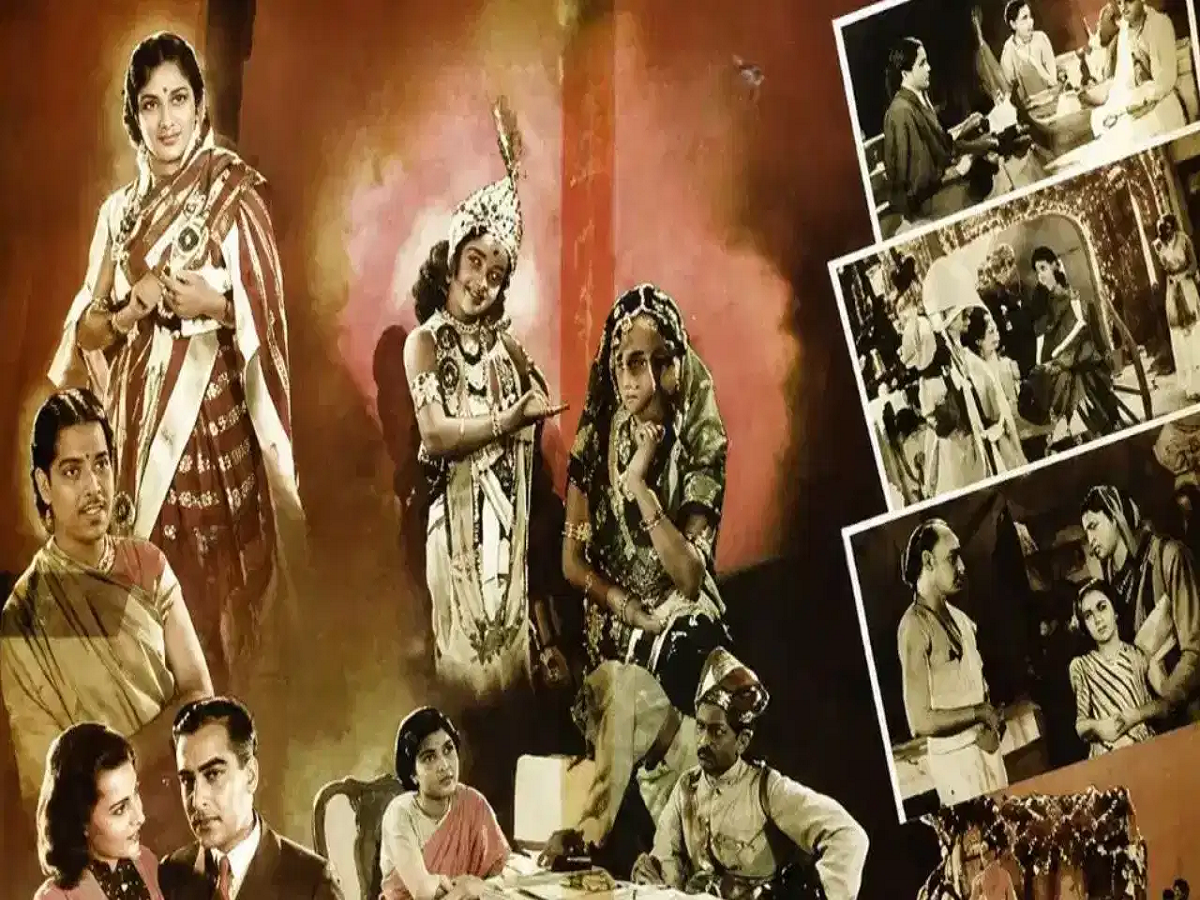
India's struggle for independence wasn't fought only through protests, political movements and acts of civil disobedience. Cinema also became a powerful medium through which filmmakers could communicate ideas of freedom, nationalism and resistance.
During British rule, however, filmmakers could not always express these ideas openly. Some turned to mythology and historical stories, using familiar characters and events as symbols for contemporary political struggles.
When colonial authorities believed that such films could encourage nationalist sentiment, they responded with censorship, cuts and, in some cases, restrictions on screenings.
On Independence Day, here is a look at two early Indian films that became famous for their encounters with British censorship.
1. Bhakta Vidur (1921)
Bhakta Vidur occupies an important place in the history of Indian cinema and colonial-era censorship.
Directed by Kanjibhai Rathod and produced by the Kohinoor Film Company, the silent film was inspired by Vidura, the wise character from the Mahabharata.
On the surface, it appeared to be a mythological story. But audiences and colonial officials could see parallels with India's contemporary freedom movement.
Dwarkadas Sampat, who played Vidur, appeared in clothing associated with Mahatma Gandhi, including a Gandhi-style cap and khadi attire. The film also reportedly included imagery connected with the charkha, which had become a powerful symbol of the Swadeshi movement and economic self-reliance.
These visual references transformed what appeared to be a mythological film into something that could also be interpreted as a political statement.
Why Did the British Object to Bhakta Vidur?
Colonial authorities reportedly believed that the film was using the Mahabharata story to promote Gandhian political ideas and nationalist sentiment.
At a time when Gandhi's influence was rapidly growing and the Non-Cooperation Movement was mobilising people across India, even indirect political messages attracted official scrutiny.
The film subsequently faced restrictions in parts of British India, including Madras and Karachi, and is widely remembered as one of the earliest Indian films to face a colonial ban.
Its history also demonstrated something that would become increasingly important in Indian cinema: filmmakers could use mythology, symbolism and historical narratives to discuss contemporary political issues without explicitly naming them.
2. Swarajyacha Toran (1930)
Nearly a decade later, another film attracted the attention of British censors.
Swarajyacha Toran, associated with legendary filmmaker V. Shantaram, told the story of Chhatrapati Shivaji Maharaj and the establishment of Swarajya.
The story focused on Shivaji Maharaj's capture of Torna Fort, an event closely associated with the early expansion of his power and the idea of self-rule.
But the timing of the film made the word "Swarajya" politically sensitive.
The year was 1930. Mahatma Gandhi's Civil Disobedience Movement was gaining momentum, and the demand for complete independence had become increasingly prominent.
Against this political backdrop, a film celebrating the establishment of Swarajya could easily be interpreted as more than a historical drama.
Why Did Swarajyacha Toran Face Censorship?
British censors reportedly objected to the nationalist implications of the film, particularly its use of the concept of Swarajya and politically sensitive imagery.
The film subsequently underwent changes before it could reach audiences.
Its title was changed to Udaykaal, while material considered objectionable by the colonial authorities was reportedly removed or modified.
For the filmmakers, this presented a difficult choice: make changes demanded by the authorities or risk preventing the film from reaching the public.
Why Cinema Worried Colonial Authorities
Movies could reach large numbers of people regardless of literacy levels. Audiences didn't need to read political books or newspapers to understand visual symbols such as khadi, the charkha, resistance to an unjust ruler or the establishment of self-rule.
That made cinema particularly powerful.
A mythological character dressed like a contemporary nationalist leader could communicate a political message without explicitly mentioning the British government. Similarly, a historical story about establishing Swarajya could resonate strongly with audiences living under colonial rule.
This symbolic storytelling allowed Indian filmmakers to explore nationalism even while operating under strict censorship.
When the Silver Screen Became Part of the Freedom Story
Bhakta Vidur and Swarajyacha Toran show that the history of Indian cinema is closely connected with the country's political and social history.
Filmmakers of the period worked within severe restrictions, yet some found creative ways to communicate ideas of self-rule and national identity through mythology and history.
Today, these films are remembered not simply as early cinematic experiments but also as examples of how popular culture interacted with India's freedom movement.
As India celebrates Independence Day, their stories offer another perspective on the struggle for freedom—one in which the battle for ideas was fought not only on the streets and in political meetings, but also on the silver screen.